


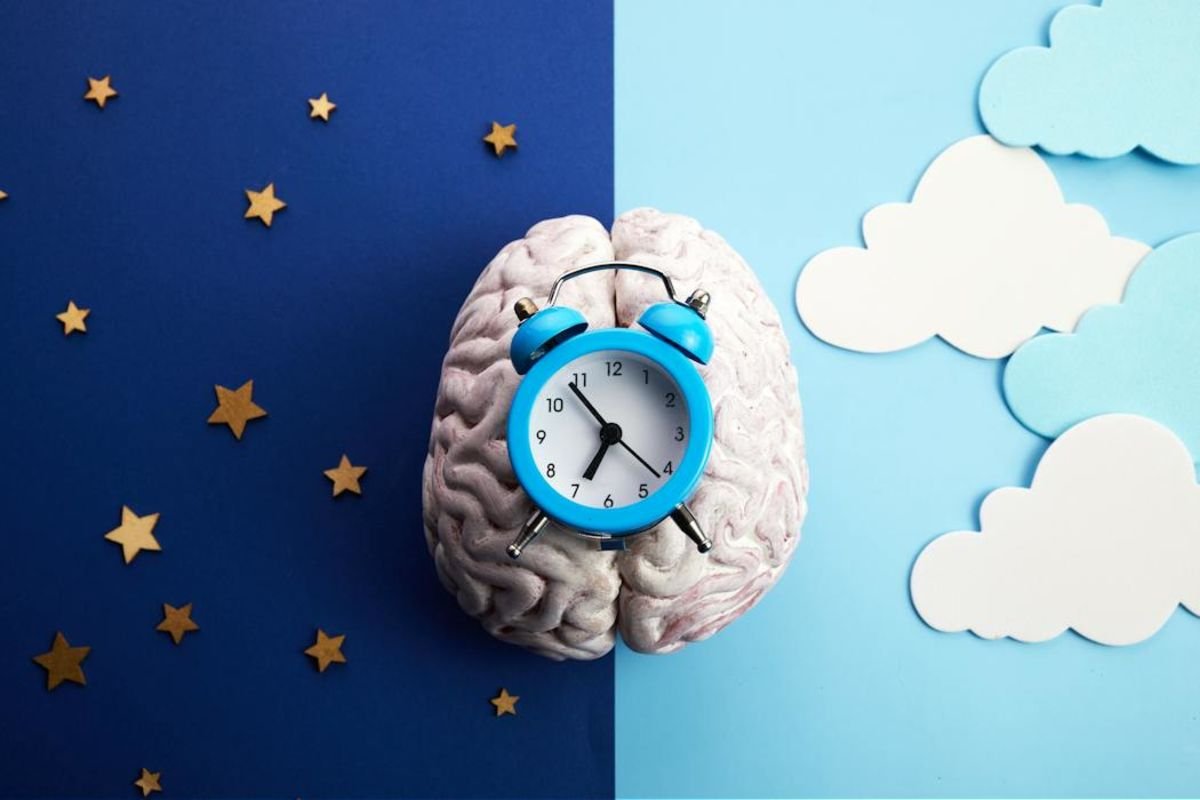
Ever wondered why a bad night’s sleep can leave you irritable, anxious or sad? Poor sleep affects our emotions, but its timing also plays a role.
Our circadian rhythms are nearly 24-hour cycles that regulate alertness, hormones, body temperature and digestion.
Deep inside the brain, a cluster of nerve cells called the suprachiasmatic nucleus (SCN) acts as the body’s master clock. It uses light signals from the eyes to coordinate clocks in other organs, including the brain, liver, heart and gut.
When daily routines fall out of sync with this clock, mood can suffer. Research suggests circadian disruption may contribute to mental health challenges.
Our internal clock helps regulate hormones, including melatonin and cortisol. Melatonin helps regulate the sleep-wake cycle. Levels stay low during the day, rise in the evening as darkness falls (signalling to the brain that it is time to rest), peak in the middle of the night, and drop off in the morning. Cortisol, which helps us respond to stress, typically rises towards morning.
These changes prepare the body for activity and rest, while influencing emotional wellbeing.
In a 2024 laboratory study, my colleagues and I investigated whether our internal clocks influence mood independently of everyday activities.
We studied 19 healthy adults over 32 hours, measuring mood while minimising changes in their surroundings and behaviour.
We found that anxiety-like and depression-like mood were highest at around 8am to 9am, while participants reported greater mental fatigue and lower physical comfort between approximately 6am and 8am. These patterns were linked to their internal biological clocks, suggesting that mood can fluctuate according to biological time, independently of everyday routines.
Circadian disruption has also been linked to depression and bipolar disorder, a condition involving episodes of depression and elevated or irritable mood.
The relationship also works in both directions. Mental health difficulties can disrupt sleep and circadian rhythms, potentially creating a cycle in which low quality sleep and psychological distress reinforce one another.
What happens when our clocks fall out of sync
Night shift workers may need to stay awake when their bodies are preparing for sleep and rest when their internal clocks promote alertness.
This mismatch is known as circadian misalignment.
In a 2020 study, we investigated how this misalignment affected mood in two controlled laboratory experiments involving people with and without shift-work experience.
Participants followed schedules designed to simulate day and night shifts while all other behavioural and environmental factors were controlled for, including light exposure, physical activity, food intake and opportunities for sleep.
We found that mood and wellbeing reduced when participants’ sleeping and waking schedules were misaligned with their internal body clock. The effects were observed in non-shift workers as well as shift workers.
These findings suggest circadian misalignment can influence mood, although larger studies are needed to establish the long-term consequences.
Outside the laboratory, many people experience a mismatch known as social jetlag. This occurs when people’s sleep and waking times differ substantially between working days and days off.
Artificial light can also affect our internal clocks. Bright light in the evening, including light from electronic screens, can suppress melatonin and delay our sleep time.
My research on light sensitivity has highlighted differences between individuals. Some people’s circadian rhythms are much more sensitive to evening light than others, meaning the same exposure may have different effects.
Could changing meal times help?
Light is the strongest environmental signal for the master clock, but eating also influences the timing of biological processes in other organs.
In a 2022 study, my colleagues and I investigated whether changing meal times could reduce the effects of simulated night work on mood.
Nineteen healthy volunteers followed carefully controlled schedules designed to mimic night shifts. One group ate during both the day and night, while the other ate only during the daytime.
A study of simulated night shifts found that participants who ate during the day and night experienced worsening mood, while those who ate only during the day did not show the same changes.Krakenimages.com/Shutterstock
Among participants who ate during both periods, ratings of depression-like mood increased by 26.2% and anxiety-like mood by 16.1% compared with their baseline measurements.
We did not observe significant increases in either measure among those who ate only during the daytime.
These findings suggest that the timing of meals may influence how circadian disruption affects mood. However, the study involved a small group of healthy volunteers under laboratory conditions. Further research involving shift workers is needed to establish whether eating only during the daytime can help reduce symptoms of anxiety and depression.
How to support your body clock
Although we may not control our working hours or sleep schedules, some daily habits may help keep our internal clocks aligned.
Get morning daylight. Light is the most powerful environmental signal for the master clock. Spending time outdoors after waking can support alertness and help regulate the timing of sleep later. The amount of light needed varies between people.
Read more: Tired, irritable and craving carbs? Why darker days affect our bodies and brains
Reduce bright light before bed. Dimming household lights and limiting screen use in the evening/night-time may help the body prepare for sleep. The NHS recommends avoiding electronic screens for at least an hour before bedtime.
Keep a regular sleep-wake schedule. Going to bed and waking up at reasonably consistent times can help reinforce circadian rhythms. A systematic review associated regular sleep patterns with better health outcomes, including diabetes, heart diseases and depression.
Consider food and exercise timing. Consistent and earlier food times may help support the body’s daily rhythms for physical health, although research is needed to establish the best eating schedules for mental health. Regular physical activity can also benefit sleep. A review of studies found that evening exercise generally did not interfere with sleep, although vigorous exercise ending very close to bedtime sometimes did.
Protecting sleep and mental health
Research suggests that the timing of sleep and daily activities can influence mood, although more evidence is needed to establish whether changing these routines can help prevent or treat mental health conditions.
Maintaining consistent routines and getting enough sleep may support emotional wellbeing, but these habits cannot replace appropriate treatment. Anyone experiencing persistent sleep or mood problems should seek medical advice. Understanding how our internal clocks influence mood may eventually offer new ways to support mental health.
This article is republished from The Conversation under a Creative Commons license. Read the original article.
Sarah Chellappa does not work for, consult, own shares in or receive funding from any company or organisation that would benefit from this article, and has disclosed no relevant affiliations beyond their academic appointment.
