


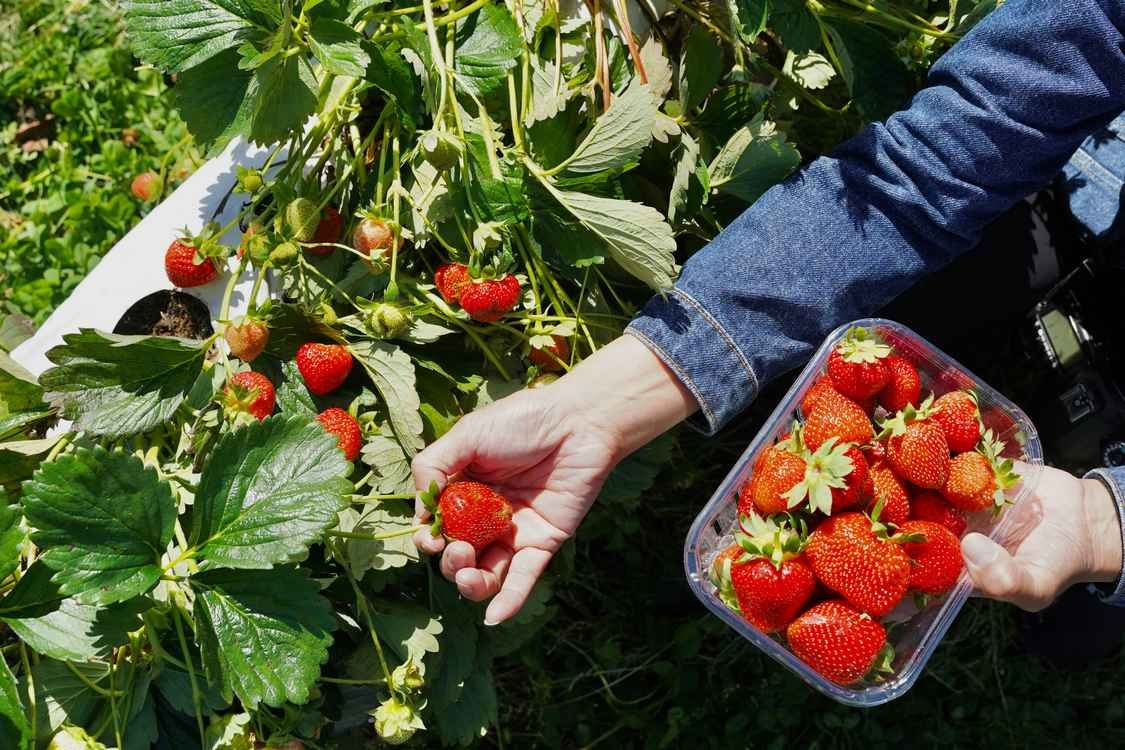
A mere puff of steam could be the ticket to much larger and reliable strawberry yields in California, the LA Times reported.
University of California Santa Cruz (UCSC) researchers have been developing boiling water vapor as an alternative to chemical fumigants for the sterilization of the soil strawberries are grown in, which are believed to harm the environment, other animals, and even the growers themselves.
Just recently, the UCSC team enrolled 4 organic strawberry growers for a trial that saw sophisticated machines inject gouts of steam into the growing beds before the strawberries were planted.
Longtime strawberry farmer Rod Koda was one of those who participated, and he told the LA Times that the results were bigger plants, healthier plants, and more strawberries.
The steam is used to kill soil bacteria, fungi, and weeds which can harm, kill, or delay strawberry plants. For years, strawberry farmers had no alternative to the chemical fumigants other than to simply “roll the dice” on losing their entire harvest to soil-born diseases like fusarium wilt.
Yet certified organic produce cannot be grown with such toxins, and so organic strawberry growers had to take gambles that might lead to bankruptcy, or else grow them through hydroponics. Now though, with steam fumigation, there seems to be an effective alternative.
In reality, steam has been used for decades in greenhouses as a pesticide. The injection of it into soil is just a novel take on a classic growing application.
“We’re going back to the future, where we’re looking back at an older technology but we’re finding more ways to engineer more efficiently and use it,” said Jenny Broome, a UCSC researcher working on the project.
Strawberries are one of California’s most valuable and largest crops, with some 35,000 acres dedicated to these delicate delicacies.
ORGANIC GROWING IN AMERICA: Patagonia Helping to Revolutionize California’s Farms
Growing well in shade, close to the ground, and with such soft fruit, the strawberry is a tempting target for pests of all classes. Growing them organically can be a real challenge, and perhaps that’s why agri-tech researchers focus on developing innovative solutions to improve their yields, such as through hydroponics and other indoor methods.
GNN just recently reported on the adoption of a 3D textile, originally meant for insect-proof body armor lining for America’s military, as a sort of strawberry security blanket. Draped over fields, they tripled yields of strawberries grown in North Carolina by keeping out insects and letting in breeze, moisture, and sunlight.
SHARE This Great Holistic Technique For Growing Strawberries Organically…
