


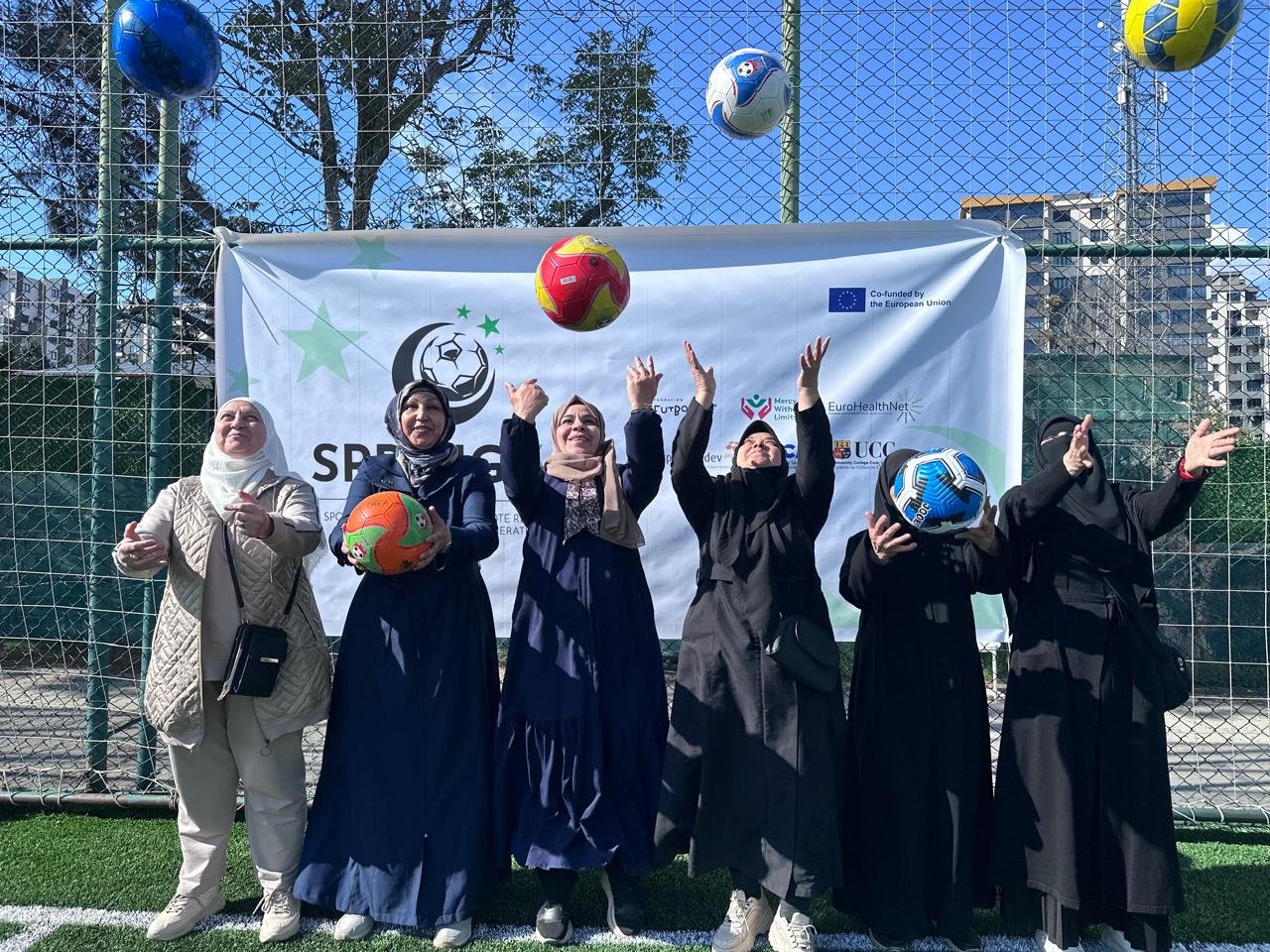
What happens when a sport for development programme goes one step further — providing a safe space not only for children, but also the adults who care for them?
In Gaziantep, Türkiye, Syrian and Tukish team members are using the SPRING 3.0 approach to sport and play to strengthen children’s wellbeing and resilience. But they are also providing the children’s caregivers with a shared space to build the knowledge and skills that create more supportive environments at home.
This caregiver involvement is a standout element at the heart of SPRING 3.0. Sport4Development to Promote Resilience and Inclusion in New Generations, a programme supporting displaced children, adolescents and caregivers in Gaziantep, southeastern Türkiye, through sport, play and community-based activities.
Located close to the epicentre of the devastating 7.8-magnitude earthquake that struck Türkiye and Syria in 2023, Gaziantep has experienced the profound effects of crisis and displacement. When communities face crisis and displacement, the support for children cannot stop at the playground or the sports field. Children’s wellbeing is closely connected to the families, caregivers and communities around them and SPRING 3.0 is responding to this reality by bringing children and caregivers into the same journey. For families living through recovery and difficult life experiences, creating safe and supportive environments for children is an essential part of rebuilding resilience.
SPRING 3.0 fourth event video | Watch on YouTube
Supporting children — and the people around them
The programme combines socio-sport activities for children with dedicated awareness sessions for their caregivers, in this case their parents. While children participate in scheduled sport and play activities, caregivers have the opportunity to take part in parallel sessions designed to strengthen their knowledge, confidence and practical skills.
The aim is simple but important: to strengthen the role of families in protecting children, supporting their healthy development and creating safe, supportive and nurturing home environments.
The caregiver sessions cover topics including positive communication, psychosocial support, physical activity, healthy nutrition and positive parenting. They also address issues that directly affect children’s safety and wellbeing, including the causes and consequences of child marriage, the importance of girls’ and women’s continued education, recovery following difficult life experiences, online safety and the risks associated with social media.
Rather than relying solely on traditional awareness-raising, the sessions use participatory and interactive approaches. The parents gather to share experiences, discuss real-life situations and reflect on how the topics relate to their own families. This creates space to learn together, listen and be heard, and connect with one another.
The sessions helped me better understand the challenges my children may face and gave me practical ideas on how to communicate with them, protect them, and better support their development.”
—Anonymous caregiver
From the sports field to the family home
For SPRING 3.0, sport is part of a wider approach to strengthening children’s social and emotional development and the relationships that support them.
Through play, recreational activities and sport, children develop their teamwork, communication, trust and other social and emotional competencies. At the same time, caregivers are encouraged to understand how these skills can continue to be nurtured at home.
The programme also creates opportunities for children and their parents or caregivers to interact through shared play and recreational experiences. These are meaningful opportunities for families to spend time together that help strengthen communication and trust.
Caregivers and parents are also able to exchange experiences and strengthen their own social support networks. Discussions connect physical activity and healthy nutrition with mental wellbeing and positive parenting, highlighting how these areas complement one another in supporting children’s development.
In this way, the impact of the programme extends beyond the scheduled sessions. The knowledge and relationships developed through the project can continue within families and communities.
207 caregivers, 121 children — and a growing community
As SPRING 3.0 continued to expand, 207 caregivers participated in awareness sessions and 185 of those participated in events or a committee, demonstrating the growing engagement of families as active partners in the programme. A further 121 children (of which 55% are girls) participated in scheduled socio-sport sessions. The programme also brought together 335 children and their families with community and sports events, including a community picnic. These activities created informal spaces for connection, participation and enjoyment, while reinforcing the sense that recovery and resilience are collective processes.
Sessions also explored the importance of education and the role families can play in creating supportive learning environments. Caregivers discussed practical ways to encourage children’s motivation and academic engagement, while learning how interactive approaches, including sport-based activities, can contribute to children’s holistic development and overall wellbeing.
Alongside these activities, the caregivers’ community committee continued to support project implementation and strengthen community participation. Comprising 10 members, the committee provided feedback on ongoing activities and proposed recommendations to encourage greater participation among children and caregivers in future sessions. Committee members act as advocates for the programme in their communities. During this project cycle, members also met to discuss ways to promote personal hygiene among children, sharing experiences and practical solutions to the challenges families face in establishing healthy daily habits. The discussion highlighted the important role caregivers play in reinforcing positive behaviours and supporting children’s overall well-being, while ensuring that project activities remain responsive to the needs and priorities of the community.
Resilience is a shared journey
SPRING 3.0 offers an important reminder for sport for development programmes working in communities affected by crisis: children do not grow and recover in isolation. Their wellbeing is shaped by the relationships, environments and support systems around them. By actively engaging caregivers alongside children, SPRING 3.0 is helping strengthen family relationships, promote healthy behaviours, enhance psychosocial wellbeing and encourage greater community participation and social cohesion. The project’s approach goes beyond asking what children need. It also asks a complementary question:
How do families help children thrive?
In Gaziantep, the answer is being explored through sport, play, conversation, shared experiences and community connection. Building resilient generations does not only happen on the sports field. It starts with the people and relationships that surround a child — and often, it starts at home.
About SPRING 3.0
SPRING 3.0 (Sport4Development to Promote Resilience and Inclusion in New Generations) is a project co-funded by the European Union under the ERASMUS-SPORT-2024-SCP programme. The project aims to foster more inclusive and resilient communities while improving the wellbeing of children, young people, and families affected by forced displacement and humanitarian crises, with a particular focus on displaced populations in Türkiye and communities impacted by the 2023 earthquake.
SPRING 3.0 brings together five partners from academia, the NGO sector, public health networks, and social sport foundations: Mercy Without Limits Türkiye, The International Platform on Sport and Development, Fútbol Más Spain, University College Cork, and EuroHealthNet.
