


DR AMIT DIAS, MD
For The Goan
The theme for World Cerebral Palsy Day, observed on October 6, is “Challenging barriers and pushing for a more inclusive world”, which celebrates the individuality of people with cerebral palsy while bringing their voices together to create meaningful change.
It is a reminder that inclusion is not about making everyone fit into the same mould; it is about creating a world where everyone can participate.
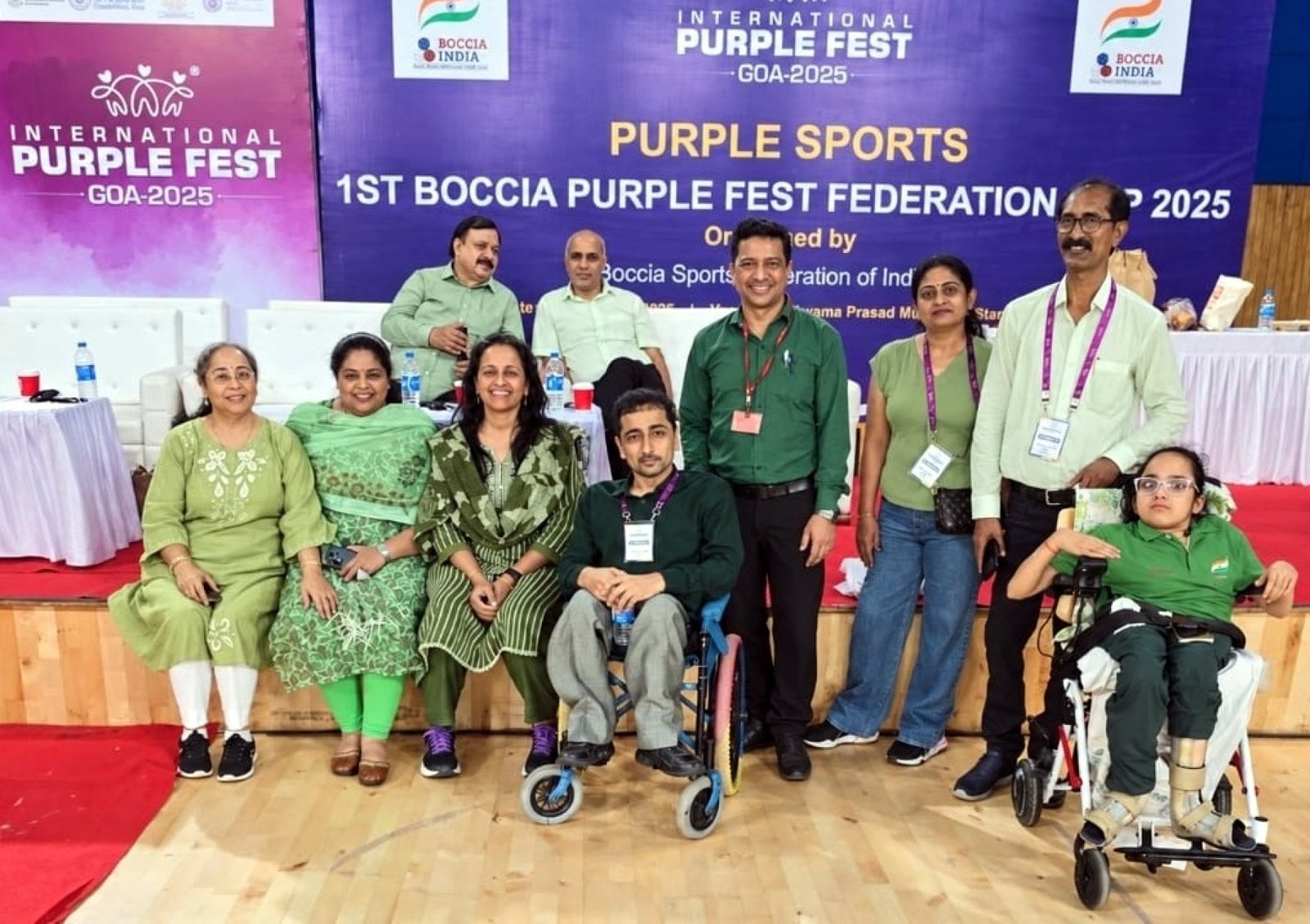
I was reminded of this at the Boccia Games held in Goa during the Purple Fest last year. It was heartening to see assistive technology and simple adaptations helping participants with different levels of physical disability compete on a more equal footing.
For a few hours, the focus shifted from what their bodies could not do to what they could do. They had an opportunity to participate, compete, interact—and, most importantly, belong.
Think about it this way. My office at Goa Medical College is on the seventh floor. I can reach it because they have provided a lift and stairs. If these were not available, my ability to reach my office would suddenly become a “disability”—not because anything had changed about me, but because the environment had failed to meet my needs.
People with cerebral palsy have additional needs, and assistive technology can bridge this gap. Moreover, there is a need to innovate and develop assistive devices locally to reduce the cost.
Understanding cerebral palsy
Cerebral palsy (CP) is a group of disorders affecting movement and posture resulting from disturbances to the developing brain. It is a lifelong condition, but its effects vary enormously.
Some children may walk independently but have difficulty with balance or fine movements. Others may need walkers or wheelchairs. Some have considerable difficulty controlling their arms and hands. Others may have problems with speech and communication, swallowing, vision or hearing. Epilepsy and learning difficulties can also occur.
Importantly, cerebral palsy does not automatically mean intellectual disability. A child may understand everything happening around them while being unable to communicate easily or control their movements.
It is estimated that more than 50 million people worldwide live with cerebral palsy. The prevalence is approximately 1.6 per 1,000 live births in high-income countries, with rates reported as high as about 3.4 per 1,000 in available data from low- and middle-income countries. The estimated prevalence in India is approximately 2.95 per 1,000 children surveyed.
Technology changes possibilities
For a child with cerebral palsy, assistive technology can make an extraordinary difference. A child who cannot hold a conventional pencil may use an adapted pencil grip, writing support, tablet or computer to demonstrate what they know.
A child with severe mobility limitations may benefit from a properly fitted wheelchair, walker, gait trainer, standing frame or orthosis. These are not merely medical devices. They can mean going to school, moving independently, playing with friends, and participating in family life.
I find our own Frederika Menezes from Goa very inspiring. She is a TEDx speaker and a perfect example of how one can contribute fruitfully with the right kind of support despite having the condition.
She uses a wheelchair and has become a prominent disability rights advocate and champion for the differently-abled in Goa. Despite her physical limitations, she is a widely respected author, poet, and digital artist who paints and types using a smartphone or tablet.
Children with limited hand control may benefit from adapted keyboards, switches, touchscreens and specialised computer interfaces. For children who cannot speak clearly, augmentative and alternative communication technologies can be life-changing. Pictures, symbols, text-to-speech applications and specialised communication devices can give children a means to express their needs, feelings, opinions and aspirations.
For a child unable to use their hands reliably, eye-gaze technology can allow them to control a computer simply by looking at the screen. A screen can become a voice.
Learning from rATA in Goa
The ICMR-supported research using the Rapid Assistive Technology Assessment (rATA) approach provides an important message: there is a substantial need for assistive products in India, while many needs remain unmet. There is a need for more cost-effective products.
Our own work in Goa using the WHO rATA approach reinforces this message. When we systematically ask people what assistive products they need and whether they are actually using them, a significant gap emerges. Our preliminary impression from our work emphasises that much more can be done for people with disabilities with the help of technology.
But providing a device is only the beginning. A wheelchair must fit the child. An AAC device requires assessment and training. Parents and teachers need to know how to use the technology. Equipment needs maintenance and replacement as children grow.
Assistive technology works best when combined with rehabilitation, training, follow-up, and an accessible environment.
(The writer is an assistant professor at the Department of Preventive and Social Medicine at the Goa Medical College and the principal investigator for the ICMR- rATA study on the unmet needs for assistive technology in Goa)
