


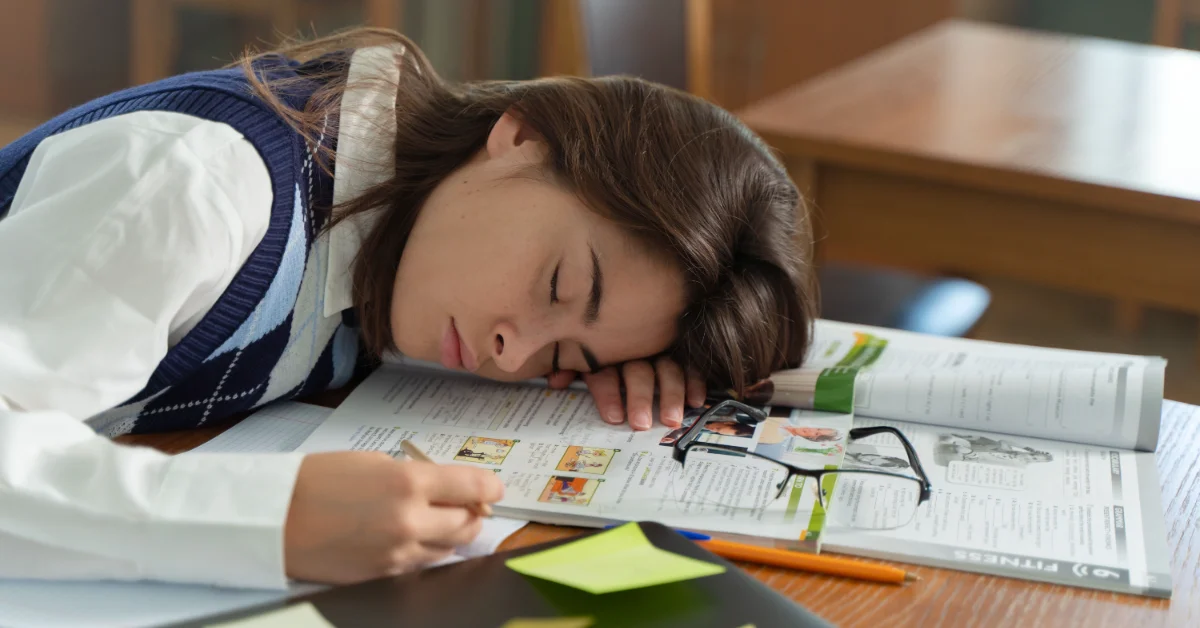
Paying college students about $5 a night to sleep seven hours got them a quarter more nights of adequate sleep — and better grades.
That is what we found in a study we published in July 2026.
We gave more than 1,100 undergraduates at University of Pittsburgh a Fitbit — a wearable activity tracker that looks similar to a watch — and an app that sent bedtime reminders and morning feedback. We randomly chose 468 students and paid them about $5 for every night they slept at least seven hours, over the course of four weeks. We verified how much they slept using the device they wore.
The students were about 19 years old, on average, and half of them were first-year students. Roughly 72% of them were women. About 55% were white, 28% Asian, 9% Black and 4% Hispanic.
Our study shows that offering an immediate financial reward can help students meet a seven-hour sleep goal, and that those effects can persist up to a month beyond when the students are paid.
Not just a student problem
About one-third of American adults sleep less than seven hours a night, and a similar share say they wish they slept more. Among adolescents and young adults, roughly two-thirds routinely fall short of getting seven hours of sleep a night — the amount of shut-eye that health authorities recommend.
One prominent sleep researcher has called sleep deprivation the most prevalent high-risk behavior.
Short sleep is linked to obesity, diabetes, high blood pressure, heart disease, stroke, and early death.
Irregular sleep predicts mortality risk even more than sleep duration does. Sleep loss shows up in decision-making, even when it comes to issues like whether people vote.
Students are running on empty
Before we changed anything, the average student in our study slept 6.6 hours a night.
Half were going to bed after 1 a.m. on average — a quarter after 2 a.m.
Students got the recommended seven hours of sleep on a typical weeknight on only 43% of their nights, and more than 85% fell short at least once a week.
They also did not know how much sleep they were getting. Two-thirds told us they usually slept seven hours — the trackers showed only about one-third of students slept that much on even three nights out of five.
And 94% said their ideal night of sleep was longer than the one they were getting.
What the money bought
The 468 students we offered nightly payments reached seven hours of sleep on 26% more nights than 380 students who were not offered the money. That is a large shift for a group in which fewer than half were hitting the mark to begin with.
Students receiving the monetary incentive slept 19 more minutes per school night, roughly the difference between closing the laptop at 11:40 p.m. or at midnight.
Among students receiving the payment incentive, their GPA rose by about 0.08 points that semester — roughly a quarter of the gap between students who arrived with above-average and below-average high school grades.
Once the payments stopped after four weeks, students who had received the money were still sleeping about eight minutes longer per night for the remaining three to four weeks of the study. The effect was smaller than during our study, but our findings suggest that some of the change in sleep habits persisted for up to a month after the end of the incentive.
The effects of the intervention on sleep and GPA were largest among first-term freshmen, whose routines are not yet necessarily fixed.
Arina Krasnikova/Pexels
Rewards work – if they come right away
Timing mattered too: Delivering the payment as a lump sum at the end of the semester, rather than every morning, produced only about two-thirds of the effect on sleep.
The effects of the intervention on GPA faded over a couple of academic terms. Grades remained higher in the following semester, but two semesters later we could no longer detect an effect.
Bedtime reminders and morning feedback on their own — with no money attached — had little effect. Students who received them slept only marginally more. The problem was not motivation: Nearly all said they wanted more sleep than they were getting. The challenge was following through on that intention night after night.
Investing in sleep
Our results show that universities should look at how the environment they create fosters or discourages good sleep habits.
Late evening deadlines to submit assignments and early classes can both make it harder for students to get enough sleep. Changing some of these features costs little compared with many academic support programs, and it may be worth testing alongside other interventions aimed directly at students.
Reminders and feedback might also work better if they change over time, rather than becoming familiar and easy to tune out.
Very few universities or students treat sleep as part of an investment in education, or ask whether the schedules and incentives schools create make adequate sleep harder. Our results suggest they should.
This article was written by Osea Giuntella from the University of Pittsburgh, Sally Sadoff from the University of California, San Diego, and Silvia Saccardo from Carnegie Mellon University and was originally published on The Conversation.
Featured Image: Yaroslav Shuraev/Pexels
