


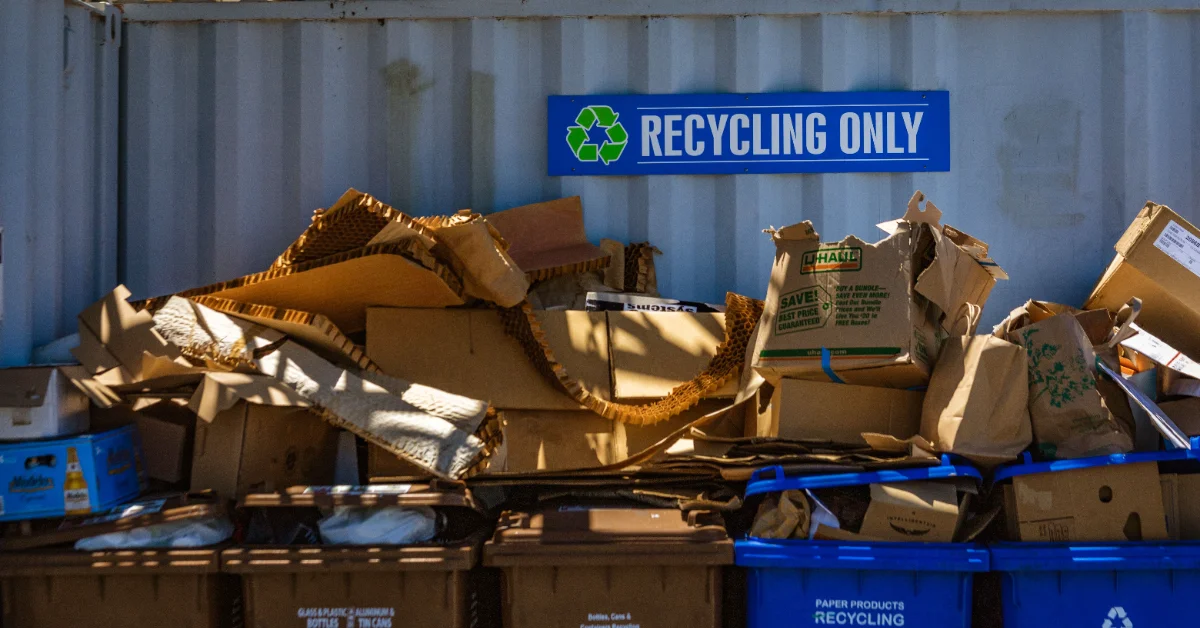
Canada produces an enormous amount of waste. In 2020, total solid waste across the country hit nearly 40 million tons (or 36 million tonnes).
Most of this garbage, known in the industry as residual waste, ends up in landfills or incinerators. Aside from shrinking landfill space and the environmental toll of burning trash, this approach to waste management is unsustainable and irresponsible.
This is far from only a Canadian issue. The United Nations’ Sustainable Development Goal 12 calls for substantially reducing waste worldwide through prevention, reduction, recycling, and reuse by 2030. However, Canada is lagging behind.
The European Union set a target of recycling at least 50% of household waste by 2020. Wales, one of Europe’s recycling success stories, had already surpassed its own 64% target and is now on track to reach 70%.
Meanwhile, Canada’s national waste diversion rate hovers around 27%. Federal efforts aim to reduce total waste by 30% by 2030, alongside regulations targeting plastic waste.
While reducing the amount of waste Canadians produce remains essential, improving what happens to the waste we already generate is part of this process. Municipalities can increase the proportion of waste diverted from landfills and incinerators and to recycling and composting.
Rethinking curbside collection
My co-researcher, economics Ph.D. student Kailun Cao, and I wondered whether municipalities could improve diversion simply by optimizing their existing curbside collection programs.
Our study investigated what variations in curbside collection programs correlated with increased recycling rates. We examined collection frequency, requirements to sort recyclables into separate bins, and the availability of organic food and yard waste composting services.
We selected England and Wales because their mandatory reporting systems make recycling data relatively transparent and accessible. In Canada, by contrast, this data is fragmented and sparse, making it difficult to evaluate.
Even so, our findings offer potential insights for Canada and other countries, where curbside collection programs share many of the same basic features.
Make composting easier
Unsurprisingly, weekly food waste collection was strongly correlated with higher recycling rates. It increased waste diversion while keeping methane-producing food scraps out of landfills and allowing nutrients to be recovered as useful fertilizer.
We also found that a free, separate yard waste collection for composting outperformed those that cost money. This suggests fees are a barrier to participation.
Our next finding was less obvious: boroughs that collected just garbage less frequently (every three weeks or longer) recycled and composted more. Recycling collection frequency, meanwhile, was not significantly associated with recycling rates.
One possible explanation is that the inconvenience of holding onto trash for longer periods of time pushes people to increase their participation with recycling and composting, particularly when food scraps are thrown in the general trash and left to rot and smell. Less frequent garbage pickup may also signal that a city prioritizes waste prevention and recovery over disposal.
What shapes recycling behavior?
Our study also examined demographic factors associated with recycling rates, with the aim of helping municipalities target recycling education and policies.
Lead author Jonathan Wilansky, left, with co-researcher Kailun Cao. Courtesy of Concordia University
Higher levels of education were associated with better recycling performance, while unemployment and single-person households did the opposite. These findings suggest that education, time and resources, social connections, and accountability may all influence recycling behavior.
Our model suggests the following collection policies to optimize recycling rates: weekly food waste collection, garbage collection every three weeks, and a free yard waste collection service.
Since recycling collection frequency and the requirement to sort recyclables into separate bins were not significant, we recommend that districts adapt their recycling programs to align with their specific infrastructure and needs.
Abel Matthew/Pexels
How to improve waste diversion
One advantage of these recommendations is that they fit within the existing framework of collection systems already used by municipalities across Canada. The changes would involve adjusting existing services rather than redesigning waste collection from scratch.
Aside from increasing recycling and composting rates, municipalities could also reduce operational costs and greenhouse gas emissions from having fewer garbage trucks on the road.
Changing collection schedules would also require some residents to change their habits, but people quickly adapt when they realize the benefits. By composting food waste and recycling all product packaging, a small garbage bag can sit for several weeks, odor-free, before it needs to go out.
In my own kitchen, keeping food scraps in a small container on my counter and emptying it into a compostable bag in the freezer each night has made waste management in my home a breeze.
Of course, changing collection schedules is only one part of the solution. The next step should be infrastructure and technological improvements aimed towards making waste management truly convenient and sustainable on a mass scale.
In-home composting appliances, packaging that’s clearly labelled and designed to be recyclable, compostable or reusable, and more secure compost bins that control odors and keep animals out could all become part of that transition.
Canada has an opportunity to improve its low national waste-diversion rate to be more in line with the most resonant source of its national identity — nature.
Wales has shown that a dramatic turnaround is possible, moving from one of the poorest recycling performers to a global leader in a remarkably short time. With smarter policies and a bit of habit-shifting, we can take the next step towards sustainable waste management.
This article was written by Jonathan Wilanksy from Concordia University and was originally published on The Conversation.
Featured Image: Robert So/Pexels
