


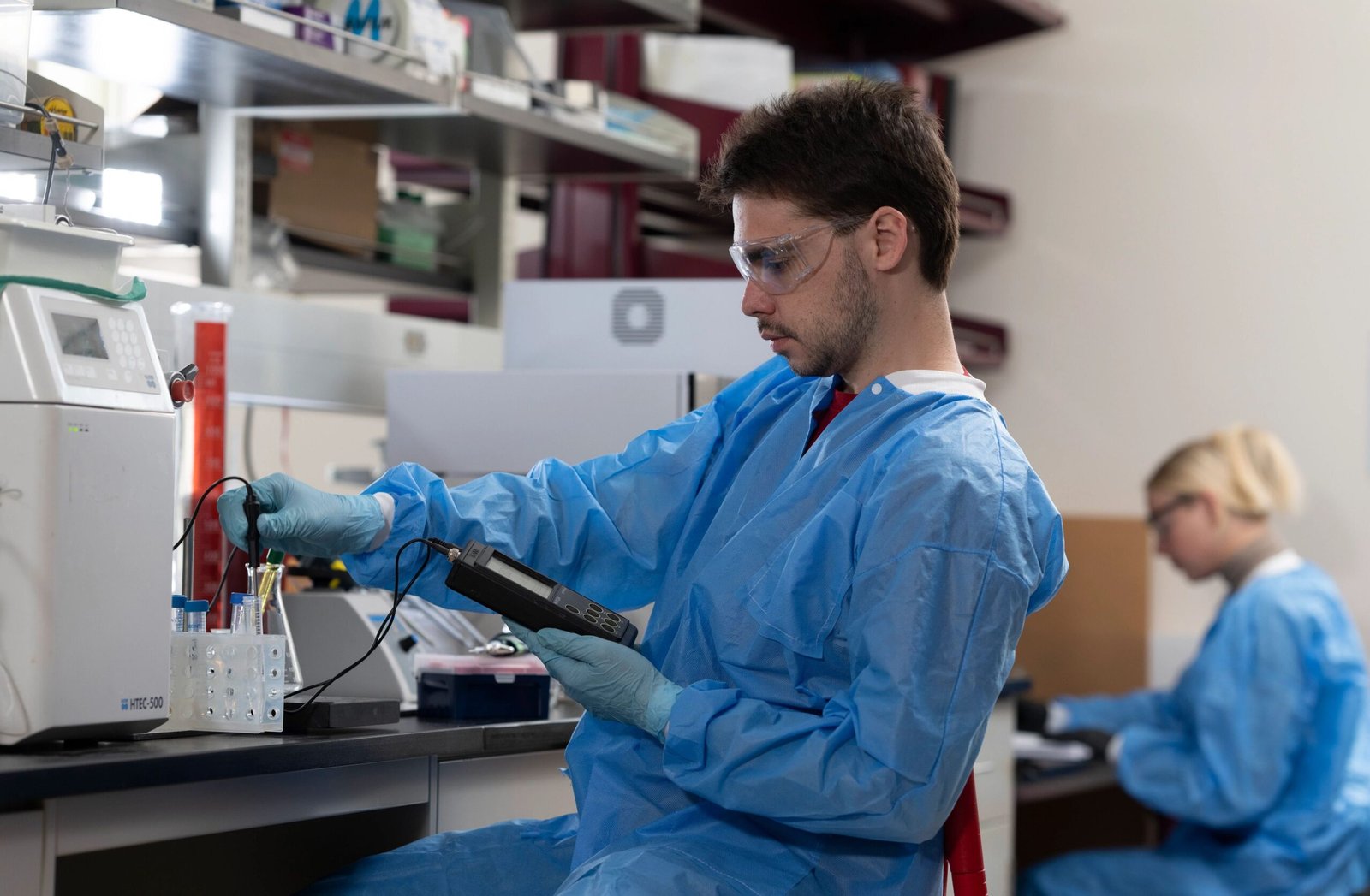
When one thinks of the skills required to work in a lab, “resilience” might not be at the top of the list—but to Sharon Milgram, PhD, the former director of the Office of Intramural Training and Education at the National Institutes of Health, navigating life’s curveballs is essential to the job.
Last spring, DU’s Resilience Lab, part of the University’s Four-Dimensional (4D) Experience, hosted Milgram’s five-webinar series called “The Resilient Scientist.” The event was a hit: More than 1,200 students, faculty, and staff registered from universities across the country, and several hundred attended each week.
“The level of engagement really reflects the significant interest in practical strategies to build resilience in STEM research and learning environments,” says Laura Perille, executive director of the 4D Experience.
Milgram has long been aware of the need for resilience training in STEM and ramped up her trainings during the COVID-19 pandemic, when she saw increased reports of burnout in scientists, academics, and healthcare workers. Her “Resilient Scientist” series equips students with tools to challenge negative self-talk, advocate for themselves, navigate conflict, and confront failure—all situations she says are common in scientific fields.
“Life is hard, but science is unique in that it’s supposed to fail a lot,” says Milgram. “Probably 80% of what we do is in notebooks, in ideas that never come to fruition.”
The series fits in well with DU’s 4D Experience, which encourages students to develop not just their intellect but also their character, well-being, and sense of purpose. In surveys and reflections after the event, participants reported they found the webinars helpful and applicable to their lives in and out of the classroom.
“There have been times when I have felt stuck, unsure how to respond to stress, or unsure how to move forward after a setback. Sometimes I knew I needed to change something, but I did not know exactly what to change or how to begin,” wrote Benarjee Sudeep Sampath Pyla, a graduate student at the University of Colorado Boulder who attended the spring series. “This series helped me put language to some of those experiences and gave me tools to think about them more clearly.”
Coming up: “Raising a Resilient Scientist”
Building on the success of the spring event, Milgram will present another series this fall with a focus on how faculty and staff nationwide can foster resilience in students. Called “Raising a Resilient Scientist,” the four-webinar series is designed for those who supervise, mentor, or support trainees in academic and research environments, teaching them how to manage their own stress, build trust with their mentees, tackle hard conversations, and create a sense of belonging in their labs and classrooms.
“Mentor-mentee relationships can be rewarding and at the same time challenging. I hope to have an honest discussion about the challenges and to offer strategies that research supervisors can use to provide support and promote learning,” says Milgram.
“Raising a Resilient Scientist” will meet online via Zoom every other Tuesday at noon MT from Sept. 15 to Oct. 27. All sessions are free to attend and will consist of a one-hour presentation followed by a brief Q&A. Participants are encouraged to attend the series in full but can choose from the individual sessions below:
- Sept. 15: Cultivating Resilience
- Sept. 29: Empathic Communication to Build Trust in Relationships
- Oct. 13: High-Stakes Conversations
- Oct. 27: Cultivating Belonging and Inclusion
Register for each of these sessions here.
Another series for students and postdoctoral fellows is being planned for 2027. Until then, students can find recordings of the spring “Resilient Scientist” series here.
