


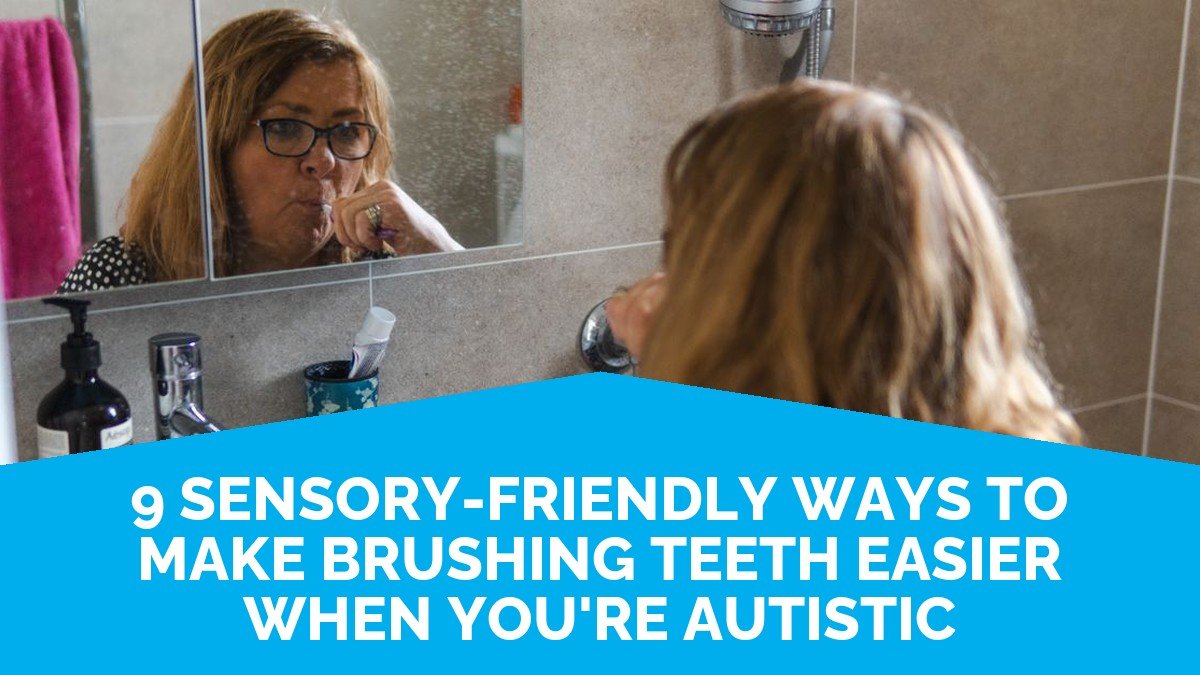
Mint does not taste clean to everyone. For a lot of autistic people it burns, and the foam that comes with it feels like too much happening in one small space at once. Add a brush scraping the gums, water pooling at the back of the throat, and the wet-face feeling at the sink, and brushing your teeth stops being a two-minute chore and starts being something you brace for.
If you go days without brushing and then feel bad about it, you are not being dramatic and you are not lazy. Brushing teeth with autism is genuinely harder because the mouth is the most sensory-loaded part of the whole hygiene routine, and the standard advice to just build a habit skips right past the reason it keeps breaking down.
This guide is for autistic teens and adults doing their own oral care, not for a parent brushing a small child’s teeth. It sorts the swaps by the exact sensation that trips you up, mint, foam, texture, gag, or the brush itself, and gives the real tradeoff for each, including the catches the quick tips skip.
TL;DR
If brushing your teeth feels genuinely awful rather than just boring, the autism brushing teeth struggle almost always comes down to a specific sensation you can change. Here is what tends to help autistic teens and adults, grouped by what is going wrong:
- Taste and foam: swap burning mint for a mild or flavorless paste, and go SLS-free so it stops foaming (swaps 1 and 2).
- Texture and the brush: change the paste texture with a gel, powder, or mouthwash first, and move to a soft, small, or 3-sided brush (swaps 3 and 4).
- Gag reflex and vibration: calm the gag with slow breathing and less pooling, and trial an electric brush on purpose, since the buzz soothes some people and overwhelms others (swaps 5 and 6).
- Getting it done: move where you brush, anchor it to something you already do instead of a clock, and add one outside cue (swaps 7, 8, and 9).
This is educational, not dental or medical advice. Bleeding gums, ongoing pain, or a tooth that hurts are worth a dentist’s eyes, not a workaround.
Why Brushing Teeth Is So Hard With Autism
Autism brushing teeth problems are rarely about the teeth themselves. Most hygiene tasks ask one sense to cope, but brushing asks all of them at once. Taste, texture, touch, temperature, sound, and a gag reflex that can fire without warning all land in the same two minutes, which is why it can feel wildly out of proportion to how small the task looks from the outside.
That mismatch is not a willpower problem.
Sensory sensitivity to taste, texture, and touch is documented, not a personal quirk. A 2022 systematic review in Health Expectations, built with autistic contributors, gathered the research on autistic children and teens and found sensory sensitivity among the most-cited barriers to toothbrushing.
The adult picture is real too, and it is not about caring less. A 2015 study in BMC Oral Health of intellectually able autistic adults found they brushed less often in the mornings, had lower saliva flow, and more gum recession, and that the most common reason for a missed dental visit was simply forgetting. Lower saliva matters because a dry mouth raises risk even on the days brushing does happen.
Sensory profiles vary, so none of this lands the same for everyone. Some autistic people are sensory-avoidant and dread the whole thing; others are sensory-seeking and brush often because they cannot stand the feeling of anything on their teeth.
A useful first move is to get specific about which part bothers you most. LSA’s free How My Body Pays Attention exercise is one way to map that: is it the mint, the foam, the bristles, or the gag? Once you can name the culprit, you can aim a fix at it instead of white-knuckling the whole routine. If the overwhelm reaches past your mouth, our guide to sensory regulation covers the bigger picture.
Autism Brushing Teeth: 9 Sensory-Friendly Swaps to Try
These autism brushing teeth swaps are grouped by the sensation that breaks brushing for you, so start with your own sticking point. You do not need all nine. One or two aimed at the right spot will do more than a full overhaul you cannot keep up.
1. Ditch the Mint
Mint is the most-named culprit, and for good reason. Peppermint and winter-blast flavors can register as a burn instead of a clean feeling, and they sting more over any small cut or bit of swelling. A milder flavor, such as fruit, bubblegum, chamomile, or fennel, removes the part that makes you flinch before you have even started.
Flavorless paste is another route, with one catch: unflavored reads faintly salty to some people, so it is not automatically the answer. Buy the smallest tube you can find and test it for a few days first.
2. Kill the Foam (Go SLS-Free)
Foam is a separate problem from flavor. The ingredient that makes toothpaste lather is sodium lauryl sulfate, usually listed as SLS, and for a lot of autistic people that expanding foam feels invasive, like the mouth is filling up faster than you can deal with. SLS-free, non-foaming pastes cut that feeling and sit better with a strong gag reflex.
3. Fix the Texture (Gel, Powder, or Mouthwash First)
If the gritty, pasty feel gets you rather than the flavor, change the texture instead of the taste. A clear gel spreads thinner than a thick paste, tooth powder skips the paste feel entirely, and some people brush with just water and rinse with mouthwash so their mouth never fills with paste.
A few autistic adults brush with mouthwash alone on the hardest days. It is not ideal, but a mouthwash-only brush beats not brushing at all and keeps the routine from collapsing.
4. Change the Brush
The brush carries a lot of the tactile load, so a smaller, softer one lowers it fast. A soft-bristle, small-head brush covers less ground per stroke, a silicone or finger brush is gentler on the gums, and a 3-sided brush wraps around each tooth to clean every surface in roughly one pass. Less time with a brush moving around your mouth means less to tolerate.
The edel+white CleanCurl 3D toothbrush is one soft, 3-sided option made for adults, not kids only, which matters because a lot of sensory brushes are sized and marketed for children. If a full brush head is still too much, a silicone finger brush is a gentler place to start.
5. Calm the Gag Reflex
A hair-trigger gag reflex is its own barrier, separate from taste and texture. Breathing slowly through your nose, humming, or focusing on your feet gives your brain something to track other than the brush at the back of your mouth. Keeping less water and paste pooled in there helps too, since it is often the pooling, not the brushing, that sets the gag off.
Working front to back, and saving the back teeth for last once your mouth has warmed up, is easier than starting where you are most sensitive.
6. Trial Vibration Deliberately
Electric brushes split the autistic community down the middle, so treat one as an experiment rather than a must-buy. For some people the steady vibration is soothing and the built-in timer removes the guesswork about how long to go. For others the buzz is intolerable and makes the whole thing worse. Borrow or buy the cheapest version first and give it a week before deciding.
7. Move the Location
Nothing says brushing has to happen at the bathroom sink. The bathroom can be its own sensory pile-on, with bright light, echo, and cold tile, so brushing at the kitchen sink or somewhere calmer is a legitimate move, not cheating.
Brushing in the shower is the version people call surprisingly smart once they try it. You are already wet, so the wet-face feeling that stops a lot of people at the sink is off the table, and you get two things done at once. If the bathroom is the real sticking point, a calmer, sensory-friendly space lowers the load on every hygiene task, not just this one.
8. Anchor to an Event, Not a Clock
Brush at 8 p.m. falls apart the moment a day runs long or sleep drifts, which it often does for autistic and ADHD folks. What autistic adults reach for instead is anchoring the brush to an event you already do: brush before bed whatever time that is, right after your shower, or before you leave the house.
Stacking it onto an existing routine, a technique called habit stacking, gives the new step something solid to hang onto. Staying consistent is really an executive function job, so if that is your wall, the executive function side of hygiene gets its own guide. For readers where autism and ADHD share one brain, the sensory swaps here and the consistency systems there usually work best together.
9. Add an External Cue
Even a fixed anchor can slip your mind, so put the reminder outside your head. A sticky note on the mirror, a phone alarm labeled for the exact step, or a two-minute song or video you only play while brushing all move the memory off your working memory and onto something you cannot miss.
Pick one cue and let it be boring. The point is that it works, not that it is clever.
A Quick Word on Fluoride
There is one catch worth flagging before you swap your way to a mouth-friendly routine. Kids’ toothpaste is a popular fix for the mint problem because the flavors are gentler, but many children’s pastes carry less fluoride than adult ones, and fluoride is what does the actual cavity prevention.
You do not have to choose between comfort and healthy teeth. A low-flavor or flavorless paste made with adult-level fluoride gets you both. Look for an SLS-free, unflavored option that lists an adult fluoride amount rather than defaulting to a low-fluoride kids’ paste, or pair the gentler flavor with fluoride from another source your dentist suggests. Trading a sensory win for more cavities is the one swap that is not worth making.
What the Research Says About Autism Brushing Teeth
A compact reference on the sensory and routine barriers behind autism brushing teeth, for anyone who wants to quote or cite the underlying research.
Finding
What it means
Source
Autistic adults brushed less often in the mornings, had lower saliva flow and more gum recession, and the most common reason for a missed dental visit was forgetting (2015).
The autism brushing teeth barrier is sensory and routine, not caring less, and a dry mouth raises risk even on the days brushing happens.
Blomqvist et al., BMC Oral Health (2015)
A 2022 systematic review of autistic children and teens found sensitivity to taste, texture, and touch among the most frequently cited barriers to toothbrushing.
Changing the sensory inputs (flavor, foam, bristle, timing) is an evidence-aligned first move, not a workaround.
Erwin et al., Health Expectations (2022)
In one US sample, 52% of parents of autistic children reported difficulty with three or more sensory variables, compared with 6% of parents of non-autistic children (2022).
Sensory sensitivity around tasks like brushing is far more common for autistic people, though this particular figure comes from a child sample.
Erwin et al., Health Expectations (2022)
Frequently Asked Questions
Is the autism brushing teeth struggle real, or just an excuse?
It is real and well documented, not an excuse. Research across dozens of studies ties sensory sensitivity to taste, texture, and touch directly to toothbrushing difficulty, and adult studies show it affecting real habits. Struggling with this is common, and it is not a character flaw.
What toothpaste is best for autism brushing teeth if you hate mint?
For autistic adults who cannot stand mint, the best toothpaste is usually a mild non-mint flavor, such as fruit, bubblegum, chamomile, or fennel, or an unflavored SLS-free paste that does not foam. Test a small tube first, since flavorless can taste faintly salty to some people.
Just check the fluoride: if you drop to a kids’ paste for the flavor, make sure it still has enough, or pick an unflavored adult paste that keeps the full amount.
How would an autistic person describe brushing their teeth?
Autistic people often describe it in sensory terms rather than as a boring chore. Mint gets called a burn or described as spicy, and it can leave the whole mouth feeling raw. The foam gets described as invasive, or like the mouth is filling up faster than it can be dealt with.
Then there is the physical side. The bristles dragging across the gums and tongue can feel scratchy or sharp, reaching the back teeth can set off a gag, and the sound and pooling water pile on at the same time.
That stacked, all-at-once quality is why the swaps in this guide are sorted by sensation. When you can name whether the mint, the foam, the texture, or the gag is the real problem, you can point a single change at it instead of forcing the whole routine.
Is an electric toothbrush better or worse for sensory issues?
It depends on the person, and there is no way to know in advance. The steady vibration and a built-in timer make brushing easier for some autistic people and genuinely worse for others who cannot tolerate the buzz. The only real test is to try an inexpensive one for a week or two and pay attention to whether it helps or adds to the overwhelm, then keep it or drop it based on that.
Is it OK to brush your teeth in the shower?
Yes. Brushing in the shower is a common and reasonable workaround, especially if the wet-face feeling at the sink is part of what stops you. You are already wet, you save a step, and for a lot of people it is the small change that finally makes brushing stick.
Next Steps
The swaps above only help if you pick one and really try it this week, so keep the first move small and specific.
- Name your one villain. Before you buy anything, decide whether the mint, the foam, the texture, or the gag is the part that stops you, then aim your first swap there.
- Change one thing, not five. Swap the toothpaste or the brush, not both at once. One change you keep beats five you abandon by Friday.
- Anchor tonight’s brush to something you already do, like your shower or getting into bed, and leave a note where you will see it.
- If staying consistent is the real wall rather than the sensory side, the executive function side of hygiene is a companion guide worth reading next. And if you want a person in your corner while you build routines that stick, executive function coaching is skills-focused and practical, not therapy or medical care.
