


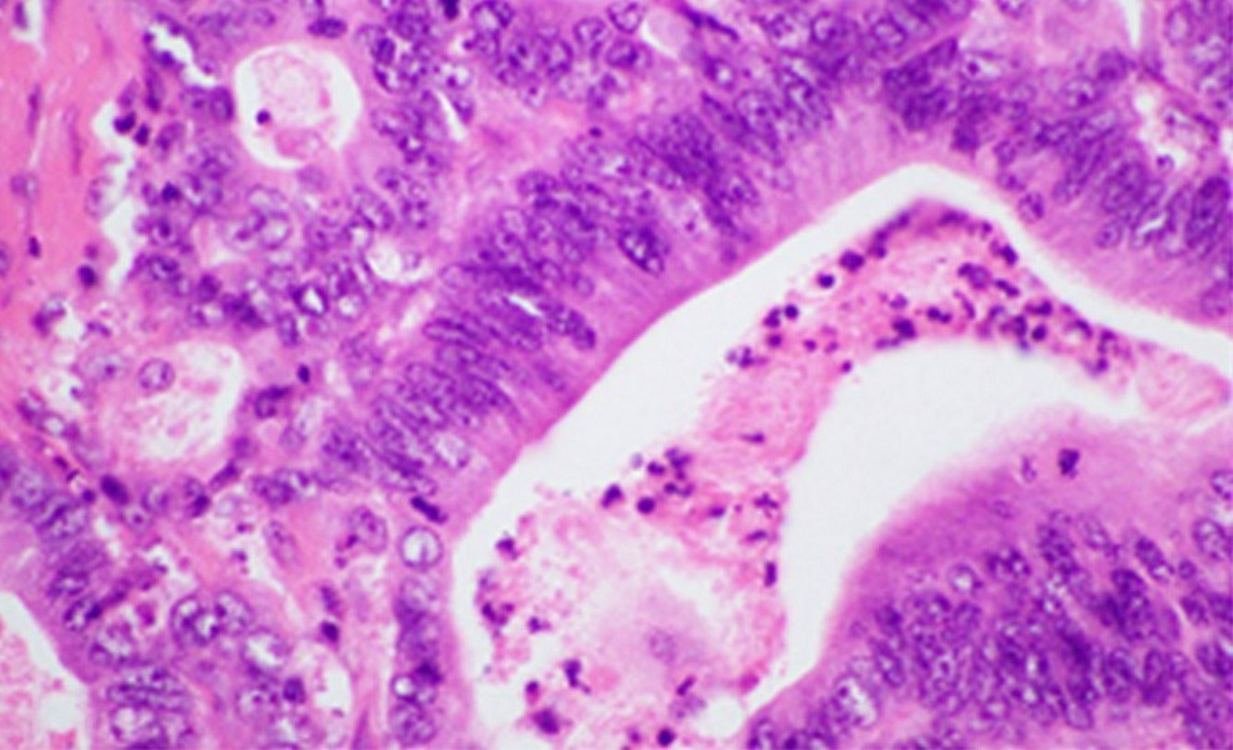
An image of pancreatic cancer – credit, PLOS ONE / DOI10.1371journal.pone.0150338 / CC 4.0. Int
Researchers at Johns Hopkins report that an experimental drug targeting one of the most common genetic drivers of pancreatic cancer was safe in humans, and generated durable immune responses aimed at preventing the cancer in people at high risk.
Pancreatic cancer has one of the lowest survival rates of any form, and the developers believe the study is the first-in-human demonstration for a drug that could safely prevent the development of the cancer for those with a high-risk gene called mutant KRAS.
Findings from the phase 1 clinical trial were published July 16th in Cancer Discovery, a journal of the American Association for Cancer Research.
Pancreatic ductal adenocarcinoma often develops over many years from precursors such as pancreatic cysts, creating a potential window for interventions that could prevent cancer from forming.
KRAS mutations are present in most pancreatic cancers and most pancreatic precancerous lesions. A drug developed by Johns Hopkins Kimmel Cancer Center and its Skip Viragh Center for Pancreatic Cancer causes the immune system to recognize and destroy cells carrying these mutations before they can develop into cancer, using a mix of peptides and an immuno-adjuvant like a vaccine.
In a phase 1 trial in humans, twenty participants with a hereditary predisposition to pancreatic cancer and a pancreatic abnormality identified through imaging received the drug between April 2022 and February 2026. 4 doses were administered over 13 weeks. Researchers monitored participants for safety and immune responses through blood testing and follow-up evaluations.
“This is just the beginning, but the findings suggest that the immune system is getting activated,” says Elizabeth Jaffee, MD, deputy director of the Kimmel Cancer Center and co-senior author of the study. “We have more work to do, but this is a good start aimed at prevention, which no one had thought about doing before.”
Researchers found that 18 of 20 participants, or 90%, developed a median 18-fold increase in mutant KRAS-specific T-cell responses, indicating that the drug successfully activated immune cells capable of recognizing KRAS mutations.
MORE IMMUNE-CANCER TREATMENTS: Cancer Vaccine Produces 49% Melanoma Reduction in Patients Five Years Later
Additional analyses showed that this response persisted for 2 years before monitoring concluded.
After a median follow-up of 16.5 months, none of the participants developed pancreatic cancer or a high-risk pancreatic lesion requiring surgical removal. All treatment-related adverse events classified as mild to moderate. The most common side effects were injection-site reactions, fatigue, chills and flu-like symptoms, all of which resolved without requiring treatment.
JOHNS HOPKINS’ GREAT WORK: Johns Hopkins Team Develops Therapeutic, Nasally-Delivered DNA Vaccine for Tuberculosis
The investigators note that the study was designed primarily to evaluate safety and immune responses and was not intended to determine whether the drug prevents pancreatic cancer. They caution that the small study size and relatively short follow-up period limit conclusions regarding clinical efficacy.
The KRAS immune treatment was first tested in 2020 in patients who had undergone surgery and were at high risk of cancer recurrence. The study, published in Nature Communications in 2026, found that when the drug generated a strong immune response, those patients remained disease-free for at least 5 years.
SHARE These Encouraging Early Results For A Deadly Cancer With Your Friends…
