


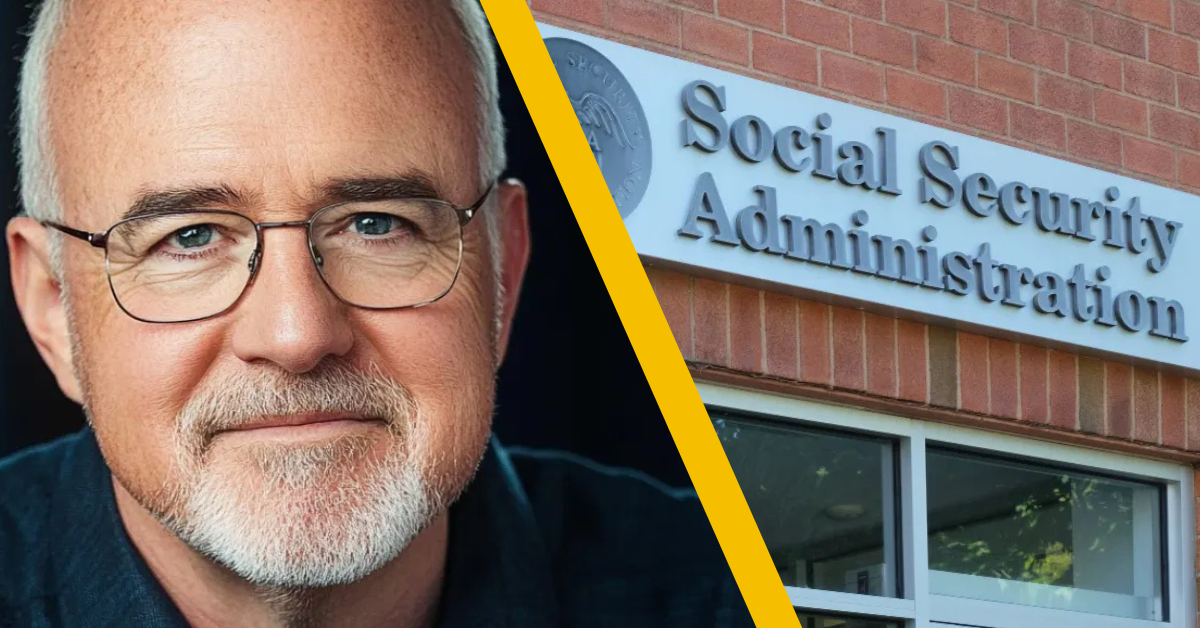
Dave Ramsey’s advice is straightforward: Don’t plan to live on Social Security.
Invest 15% of your income over your career, build a substantial nest egg, and
treat your monthly benefit as extra money.
That may be useful advice at 30. It lands differently when you’re 62 with
limited savings and retirement right around the corner. Millions of Americans
can’t rewind the clock and recover decades of missed compounding. Their goal now
is to avoid money
mistakes and make the income they have stretch further. These steps could
help.
Find Out: 13 moves seniors could benefit from but often forget about.
Ramsey’s advice works best when you have time
Ramsey Solutions recommends investing 15% of your gross income for retirement
after paying off nonmortgage debt and establishing an emergency fund. It also
describes Social Security as an added bonus rather than a complete retirement
plan.
The principle makes sense: Social Security was never intended to replace an
entire paycheck. But advice built around long-term wealth accumulation offers
only part of the answer for someone who is already approaching retirement.
Shopping for cheaper auto insurance? Enter your zip code here to get started.
Many retirees can’t treat Social Security as a bonus
Social Security is hardly spare spending money for the typical recipient. Census
Bureau research found that a substantial share of adults 65 and older receive at
least half of their family income from the program. Some depend on it for nearly
all their income.
Telling those retirees that they shouldn’t rely on Social Security doesn’t solve
the problem. A more useful approach starts with the benefits, savings, housing,
and earning ability they have today.
Find out what Social Security may actually pay
Log in to your my Social Security account and review your estimated payments
at different claiming ages. While you’re there, check your earnings record.
Missing or incorrect wages could reduce your benefit.
Anyone who is married, divorced, or widowed should also check spousal and
survivor benefits. For instance, some divorced spouses may qualify based on an
ex-spouse’s record if the marriage lasted at least 10 years. Don’t assume your
own retirement benefit is automatically the best option.
Save Money: Things to cut when living on retirement (many people ignore #11)
Think carefully before claiming at 62
Often, you can begin retirement benefits at 62. However, doing so may
permanently reduce the monthly amount. For someone born in 1960 or later,
claiming at 62 could mean receiving about 30% less than at the full retirement
age of 67.
That said, waiting isn’t realistic for everyone. Health problems, job loss, or
an empty bank account may force an earlier claim. Still, compare the numbers
before filing. Even delaying for several months could improve your monthly
benefit.
Build your budget backward from your income
Don’t start with your old salary or lifestyle when building your retirement
budget. Instead, begin with the income that will reliably arrive each month,
which might include Social Security, pensions, annuities, and conservative
withdrawals from savings.
After that, list all your fixed expenses, like housing, utilities, food,
insurance, taxes, transportation, and medical care. This approach may reveal a
shortfall early enough to address it, rather than discovering it after the
credit cards start filling the gap.
Focusing on the expenses that can move the needle
Skipping an occasional restaurant meal won’t fix a budget that is short by $800
every month. Housing and transportation are usually better places to look for
meaningful savings.
Downsizing, moving to a less expensive area, becoming a one-car household, or
renting out part of a home could make a much larger difference. These choices
aren’t easy, but one major reduction may do more than years of clipping coupons
and worrying over every grocery receipt.
Retire like the rich: 14 ways you could build wealth in your 50s.
Consider working a little longer if you can
Continuing to work can help in several ways. It delays withdrawals from savings,
provides current income, and could allow you to postpone Social Security.
Benefits are calculated using your 35 highest-earning years. Additional work
may replace a zero or low-earning year and raise your payments. If you claim
before full retirement age and continue working, though, the Social Security
earnings test may temporarily withhold some benefits. Check the current rules
before making plans.
Look for benefits that reduce monthly bills
Retirees with limited income may qualify for programs beyond Social Security.
Medicare Savings Programs can help with certain Medicare costs, while Extra Help
can lower eligible Part D prescription expenses.
Other possibilities include SNAP, utility assistance through LIHEAP, Medicaid,
property tax relief, and local transportation or meal programs. Eligibility
varies, so don’t rule yourself out based on income alone. BenefitsCheckUp and
your local State Health Insurance Assistance Program can help identify programs
worth applying for.
Protect whatever savings you do have
A modest nest egg still matters. It can cover a home repair, dental bill, or
other expenses that Social Security cannot absorb. Avoid treating a small
account as useless and cashing it out for optional spending.
If you’re still employed, continue contributing wherever you can, especially
when an employer match is available. Saving 15% may be out of reach, but the
choice isn’t 15% or nothing. Smaller contributions can still strengthen your
finances.
Never miss a way to save – follow FinanceBuzz on Google
Bottom line
Ramsey’s advice makes sense for people who still have decades to invest, but it
doesn’t solve the problem facing retirees who already depend on Social Security.
If that’s your situation, focus on what you can change now: your claiming
strategy, major expenses, available benefits, and any income you’re still able
to earn.
If you haven’t retired yet, try living on your expected income for three months
and save the difference. That test run could expose budget problems while you
still have time to adjust your retirement plan.
More from FinanceBuzz:
