


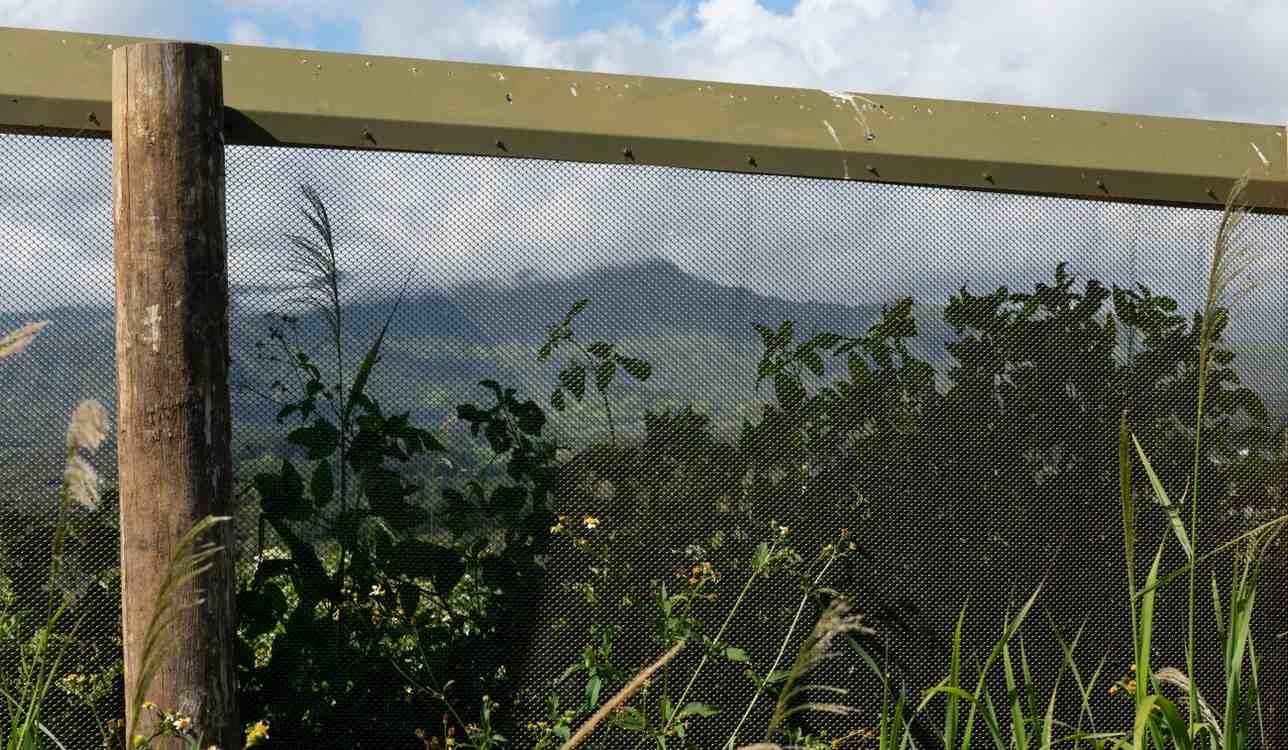
Predator Exclusion Fence – credit, Laurel Smith USFWS, Public Domain
In 2022, the longest “predator exclusion fence” anywhere in the Pacific was completed on Kauai, encircling 168 acres of prime seabird nesting habitat.
The nesting birds include endangered species that were under constant threat of ravaging feral cats and pig before the 11,200-foot-long fence was raised.
Now, 4 years later, these seabirds are following their ancestral instincts and raising their chicks just meters away from nest sites that, 5 years before, would have double as their grave sites.
Originally developed on New Zealand, a predator exclusion fence (PEF) is no mean fence. It was designed to block passage of the 4 most deadly invasive mammalian predators across the Pacific.
It’s too high for a cat or fox to jump over, is capped with a slick, claw-proof hood to prevent cats from climbing over, includes a combination rubber mat and skirt multiple inches below the ground to prevent pigs burrowing under, and boasts a metal mesh no teeth can chew through, yet also so fine that no rat can slide through it. The fence cost $1.7 million.
A similar fence on Oahu saw the number of Newell’s shearwater chicks quadruple in the first several years after it was completed. This is the kind of progress that the US Fish and Wildlife Service, in concert with local partners on Kauai, wanted to bring to Kīlauea Point National Wildlife Refuge.
A camera trap recording the unhappy destiny of most nesting birds before the fence was built – credit, Pacific Rim Conservation / USFWS
Therewithin, the hills and pinnacles of Nihokū and Mokolea Point present as ideal, and ancestrally conserved nesting habitat for a variety of birds, including Newellʻs shearwater, red-footed boobies, red-tailed and white-tailed tropicbirds, great frigatebirds, the endangered Hawaiian petrel, and the Laysan albatross. The PEF also shelters the Critically-Endangered Hawaiian hoary bat, and the Critically-Endangered nēnē or Hawaiian goose—the state bird.
HELPING HAWAII:
Nihokū and Mokolea are located on the northern shore where little artificial light pollution exists to disorient the birds, like petrels, which navigate by the stars and Moon. Neither are there any powerlines or other elevated obstructions that the birds could collide with.
Until such a time as when the island can appropriately contain, remove, or otherwise deal with invasive animals, this special fence will help create a sanctuary—a veritable seabird factory—that will keep these iconic aviators of the Hawaiian skies alive in the long term.
SQUAWK About This Brilliant Helping Hand To Hawaii’s Birds…
