


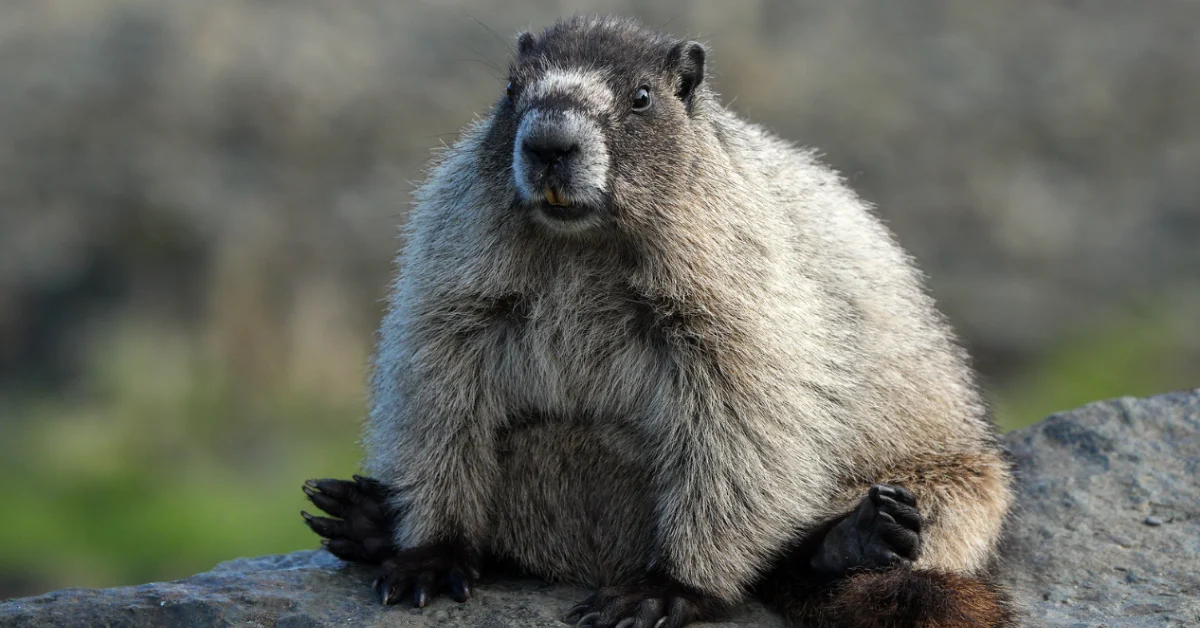
The Rocky Mountain Biological Laboratory has been tracking yellow-bellied marmots in and around Gothic, Colorado since 1962.
It remains one of the world’s longest-running studies of free-living mammals, second only to Jane Goodall’s research on chimpanzees.
But its data extends far beyond Colorado’s yellow-bellied marmot population. The RMBL’s study has helped the global science community better understand how animals communicate, evade predators, form bonds, and respond to climate change.
Daniel Blumstein, a UCLA ecology and evolutionary biology professor who has led the program for years, said that over the last decade, the study has largely been funded by the National Science Foundation.
Then, the money stopped flowing.
Since President Trump took office for the second time, his administration has frozen or slashed more than $700 million in NSF grants.
So, after three unsuccessful attempts to renew his NSF grant, the agency told Blumstein to stop applying.
Ben Hohenstatt/Flickr (CC BY 2.0)
“After the third time, our program officer told my colleague … that they will never fund us because they think we have too much data,” Blumstein said in an email to SFGate. “I don’t even know how to parse that sentence. It’s nuts.”
That’s when a lightbulb went off for Emily Renkey, a first-year master’s student in Blumstein’s lab. She started a G-rated account on OnlyFans called “OnlyMarms,” where the lab could share their research with the world.
The online subscription service is more commonly associated with adult entertainers, but on OnlyMarms, the scientists promise only “unfiltered yellow-bellied marmot content from the Rockies.”
“Sometimes I’m just posting the videos I think will get the most ‘aws,’” she explained. “But my favorite is when I find footage of a particular behavior and I can use that to educate people.”
The early success of the OnlyMarms account has inspired another campaign in the form of “Fat Marmot Week,” an online tournament that pays homage to the annual “Fat Bear Week” in Alaska’s Katmai National Park and Preserve.
Leading up to Fat Marmot Week, which is officially August 24-29, the RBML will feature “contenders” every Monday and Friday on its website.
And on August 24, voting will open to the public, who are also encouraged to donate to marmot research as they crown the inaugural Fat Marmot Week winner.
So far, only one marmot has been added to the website, a female named “Dan’s Hat.”
Davefoc/Wikimedia Commons (CC BY-SA 3.0)
On the official Fat Marmot Week website, the lab researchers described her as “the cool aunt who’s part of Stonehenge’s matriline,” adding that matrilines form when females live in a social group instead of splitting off on their own.
Although people have been praising the researchers online for their creative fundraising efforts, Blumstein said his ultimate focus is on the science itself.
“Ultimately, we should be spending our time writing papers, not thinking up out-of-the-box ways to get funding,” he said.
Renkey acknowledged Blumstein’s opinion but gently dissented, saying she doesn’t mind rising to the challenge.
While she agrees that scientists shouldn’t have to worry about their research being jeopardized by funding cuts, she believes public engagement is a worthwhile part of the job.
Although running OnlyMarms and organizing Fat Marmot Week takes time, she said, it’s an investment that pays off — especially because the OnlyMarms account introduces people to a critter they might never encounter in their day-to-day lives.
“I don’t know if I agree with the idea that scientists shouldn’t have to be opportunistic and creative. I think that’s a lot of what science and research is,” she said. “It can be intimidating to engage with the public like this, but why are we doing this work if not to help forward humanity with it?”
You may also like: Strippers are now the No. 1 donor of toys to children’s hospital in Portland. This year, they broke their own record
Featured Image: Ben Hohenstatt/Flickr (CC BY 2.0)
