


About
Imagine feeling overwhelmed at midnight, unable to sleep because your mind is racing with worries. Your therapist’s office is closed, your friends are asleep, and you need someone to talk to.
Instead of waiting until morning, you open an app and start chatting with an artificial intelligence assistant designed to support mental well-being.
What once seemed like science fiction is now becoming a reality for millions of people worldwide. AI-powered mental health tools are increasingly being used for emotional support, stress management, journaling, self-reflection, and coping with everyday challenges. As these technologies become more accessible, many people are asking an important question: Can AI therapy really help improve mental health?
While artificial intelligence cannot replace human connection, it is changing how people access mental health support. Understanding its benefits, limitations, and appropriate use can help individuals make informed decisions about whether AI therapy fits their needs.
Advertisement
AI therapy refers to digital mental health tools that use artificial intelligence to interact with users through conversations (1✔ ✔Trusted Source
Digital Mental Health Tools and AI Therapy Chatbots: A Balanced Approach to Regulation
Go to source). These systems are often designed to simulate supportive discussions, provide coping techniques, encourage self-reflection, and deliver evidence-based mental wellness exercises.
Many AI therapy platforms rely on techniques inspired by cognitive behavioral therapy, mindfulness practices, and emotional coaching. Users can type or speak about their concerns, and the AI generates responses intended to guide conversations in a helpful direction.
Unlike traditional therapy appointments, AI tools are available around the clock. This accessibility is one of the key reasons why many people are turning to AI mental health support for everyday emotional challenges.
Advertisement
Mental health concerns have increased globally, while access to professional therapy remains limited for many individuals. Long waiting lists, financial barriers, geographical challenges, and social stigma can prevent people from seeking help.
AI therapy offers a convenient alternative for individuals looking for immediate support. Since users can access these tools from their phones or computers, mental health assistance becomes available whenever needed.
Some people also find it easier to discuss sensitive emotions with an AI system. The absence of perceived judgment may encourage more open conversations about stress, loneliness, relationship problems, or personal insecurities.
Advertisement
One of the biggest advantages of AI therapy is accessibility. Support is available twenty-four hours a day, allowing users to engage whenever they feel overwhelmed or emotionally distressed.
AI tools can also help individuals develop healthier habits through reminders, journaling prompts, mindfulness exercises, and mood tracking. These features may encourage greater awareness of emotional patterns and triggers.
Another benefit is affordability. Traditional therapy sessions may not be financially feasible for everyone, whereas many AI-based tools offer free or lower-cost alternatives.
For some users, AI therapy serves as a starting point for understanding their emotions. Regular reflection and guided conversations may help build emotional awareness and improve self-understanding over time.
Many users turn to AI therapy when dealing with everyday stress, anxiety, workplace pressure, or feelings of loneliness. Guided breathing exercises, relaxation techniques, and supportive conversations may help reduce emotional distress in the short term.
AI tools can also encourage users to identify negative thought patterns and develop healthier coping mechanisms. By promoting self-reflection, these systems may help individuals manage mild emotional challenges more effectively.
People who feel isolated may find comfort in having a responsive conversation available at any time. While an AI cannot truly understand emotions in the human sense, it can provide a sense of engagement and support when human interaction is unavailable.
However, it is important to remember that AI therapy is most suitable for general emotional support rather than complex mental health conditions.
Despite its potential benefits, AI therapy has significant limitations. Artificial intelligence does not possess genuine empathy, emotional understanding, or lived human experience. Its responses are generated through algorithms rather than a true emotional connection.
Mental health conditions are often complex and influenced by personal history, relationships, trauma, and biological factors. AI systems may not fully recognize these nuances or respond appropriately in every situation.
Privacy is another important consideration. Users should understand how their conversations are stored, processed, and protected before sharing sensitive personal information with digital platforms.
There is also a risk that some individuals may rely too heavily on AI tools while delaying professional help. Serious mental health concerns require assessment and treatment by qualified healthcare professionals.
The short answer is no. While AI can provide support, guidance, and self-help resources, it cannot replace the expertise, empathy, and clinical judgment of licensed mental health professionals.
Therapists build therapeutic relationships based on trust, emotional understanding, and individualized care. They can recognize subtle behavioral patterns, assess risk factors, and adapt treatment approaches to each person’s needs.
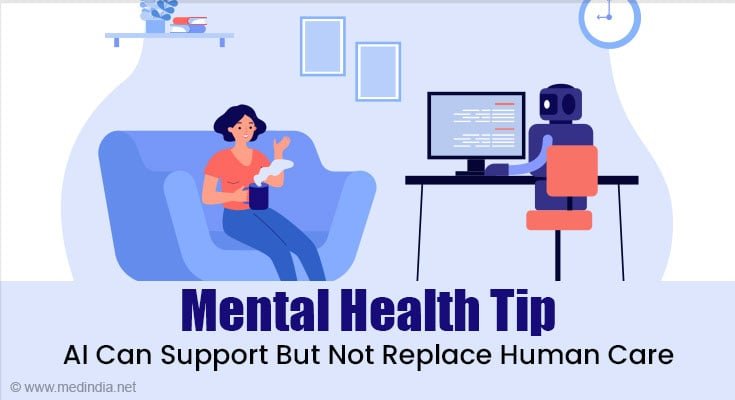
AI therapy works best when viewed as a supplementary therapy rather than a replacement. It can help bridge gaps between appointments, reinforce coping strategies, and encourage self-reflection, but it should not be considered a substitute for professional mental healthcare.
AI therapy may be useful for individuals experiencing mild stress, workplace burnout, loneliness, or everyday emotional challenges. It can also benefit those who want to practice mindfulness, develop self-awareness, or maintain a journaling habit.
People who are curious about therapy but hesitant to seek professional help may use AI tools as an introduction to mental health support. These platforms can help users become more comfortable discussing emotions and exploring personal concerns.
However, individuals experiencing severe depression, trauma, addiction, psychosis, eating disorders, or suicidal thoughts should seek professional medical and psychological care rather than relying solely on AI support.
Most AI therapy apps begin by asking questions about mood, stress levels, or personal goals. Conversations often feel similar to text messaging, with the AI responding to user inputs and guiding the discussion.
Users may receive prompts for journaling, mindfulness exercises, gratitude practices, or cognitive reframing techniques. The experience varies between platforms, but most focus on emotional support and self-improvement rather than diagnosis or treatment.
People should approach AI therapy with realistic expectations. It can provide useful guidance and emotional support, but it cannot fully replicate the depth and understanding of human interaction.
Artificial intelligence is likely to play an increasingly important role in mental healthcare over the coming years. Advances in technology may improve personalization, accessibility, and the ability to identify early signs of emotional distress.
At the same time, experts emphasize the importance of ethical safeguards, privacy protections, and responsible use. The goal should be to enhance mental health support rather than replace human care.
AI therapy represents an exciting development in digital health, but its greatest value may lie in complementing traditional therapy rather than competing with it. When used appropriately, it can become a valuable tool within a broader mental wellness strategy.
