


Discussion
Implementation of a comprehensive multidisciplinary RFTP, including PSM, per-protocol, and expanded per-protocol analyses, at our level 1 trauma center was associated with a marked improvement in patient outcomes. We found a 25% reduction in hospital LOS and intubations, as well as >50% reduction in the number of rapid responses. Some studies reported improved outcomes after introducing RFx management protocols,12 14 22 with some centered around implementing thoracic epidural management.22 23 Todd et al demonstrated that the implementation of a clinical pathway focused on patients aged >45 years and the use of respiratory therapy, physical therapy, nutrition management, and pain management led to decreased mechanical ventilator-dependent days, LOS, infectious morbidity, and mortality.13
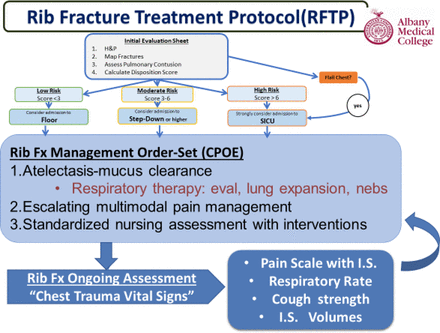
In this study, we could not analyze the exact mechanism or aspect of the RFTP responsible for its positive benefits. However, multiple factors are likely responsible for shorter LOS and decreased rate of rapid responses, including the culture change that accompanies the mere introduction of a protocol into any clinical setting24 . Services with large teams25–27 will particularly benefit from the positive effect of standardization, including the elimination of individual biases, consistency, improved efficiency, and improved patient safety. Additionally, our protocol was a combination of practices shown to improve the outcomes of patients with RFx. Furthermore, mandatory order sets likely improved compliance and outcomes.
The regimented targeted assessment by nurses contributes to improved awareness and helps identify patients at risk for delayed decompensation. This may explain the sharp decline in rapid response rates without a corresponding change in elevation of care or mortality rates. Although not specifically evaluated in this study, it stands to reason that the combination of decreased LOS and reduced rapid response led to a reduction in resource utilization.
One of the intended goals of the RFTP was to raise awareness of the complications secondary to RFx within the medical center. Each element of the protocol has been demonstrated to improve outcomes of RFx in isolation. Improved analgesia,23 respiratory support mechanisms and protocols,13 early ambulation, IS,9 28 and surgical fixation may improve patient outcomes after RFx.3 29 30 Kourouche et al31 conducted a meta-analysis of studies reporting improved patient outcomes after blunt chest injury and concluded that the key components of a blunt chest injury care management are analgesia, respiratory support, preventive methods for pulmonary complications, and surgical fixation. Our current RFTP includes a comprehensive pain management protocol, pulmonary complication prevention protocol, and respiratory support evaluation and necessary interventions.31
Mortality rates and ventilator usage significantly reduced on per-protocol analysis, although this was not echoed in the intention-to-treat and PSM analyses. Notably, post-protocol compliance was associated with markedly lower rates of mechanical ventilation (8.3% vs 23.8%) and mortality (1.8% vs 6.0%); however, these differences are likely exaggerated by selection bias, as intubated and critically ill patients were not eligible for RFTP. Nonetheless, adjusted analyses still demonstrated significant reductions in hospital LOS (−1.4 days, p<0.001), rapid responses (OR 0.55, p<0.001), and mortality (OR 0.48, p=0.026), supporting a beneficial impact of protocol adherence.
There was also no significant difference in the rate of pulmonary complications between the two groups in this study. This may be due to the overall low rate of pulmonary complications in our patient population. Studies on the development of pulmonary complications after RFx suggest that an increased number of RFx and age are related to higher morbidity due to elevated rates of pulmonary complications. Bulger et al reported that in patients older than 65 years, the rates of mortality and pneumonia increased by 19% and 27%, respectively, for each additional RFx.14 This suggests that older patients may derive the greatest benefit from a RFx care protocol and should be specifically evaluated in future studies.
The limitations of this study include the retrospective analysis of two time periods from a single institution. Compliance with the RFTP among ordering providers was initially low after implementation and remained modest at 53.3%. Low and inconsistent RFTP compliance introduces selection bias, confounding by indication where the protocol was ordered bacause the patient was older, having more pain, more fractures, worse displacement, or at a perceived higher risk of pulmonary decline, limiting attribution of differences in mortality, LOS, and rapid‑response rates to the protocol itself. Additionally, long-term patient outcomes were not reported in this study, including out-of-hospital mortality, readmission rates, and post-discharge disposition. These are all important areas of interest in follow-up studies. Another limitation is that although we performed the PSM analysis to address potential biases introduced by the low compliance rate, the criteria used for PSM selection included confounders mostly associated with outcome and severity rather than enrollment into the protocol (age, number of RFx), which may have introduced a selection bias. Outcomes in PSM-matched patients were distinctively worse in the pre-protocol and post-protocol periods, suggesting the selection of sicker patients. Finally, there were statistical differences in the baseline characteristics of the two groups. Incomplete comorbidity data also prevented the inclusion of a comprehensive comorbidity index, which may affect interpretation. Although we attempted to control for this with PSM, there were variations between the two groups that may be related to the application of the protocol. This was an intention-to-treat analysis applied to a diverse patient population in a pragmatic manner. The impact of rib fracture repair was not assessed. This led to deviations from the protocol; nevertheless, we found a significant decrease in hospital LOS and frequency of rapid responses. Future studies should test RFTP in prospective, multicenter designs to reduce selection bias and include critically ill patients. Subsequent research is needed to refine eligibility, identify which parts of the protocol drive benefit, and assess outcomes beyond hospital stay, such as recovery, cost, and equity. Broader evaluation across diverse settings will help determine generalizability and sustainability.
Conclusion
The implementation of the RFTP was associated with significant reductions in hospital LOS, rapid responses, and mortality, with consistent findings across adjusted and per-protocol analyses. The apparent improvements in ventilator use and mortality, however, likely reflect selection bias given the likely de facto exclusion of intubated and critically ill patients from protocol eligibility. These results support the potential benefit of structured protocol adherence, while underscoring the need for prospective validation and refinement to ensure applicability across broader patient populations.
