

Close Menu

    Subscribe to Updates

    Get the latest creative news from FooBar about art, design and business.

    What's Hot

    9 SMART Goals for Mentors and Mentees (With Examples)

    August 29, 2026

    Good News in History, August 29 – Good News Network

    August 29, 2026

    New NJ law requires data centers to report water and energy use

    August 29, 2026
    Facebook X (Twitter) Instagram
    Trending
    • 9 SMART Goals for Mentors and Mentees (With Examples)
    • Good News in History, August 29 – Good News Network
    • New NJ law requires data centers to report water and energy use
    • September Social Security, SSI checks on the way. When Arizonans get paid
    • September is Suicide Prevention Awareness Month | Local News
    • The cost of workplace stress ― and why employers are starting to notice
    • NCCI Court Case Update, Kentucky – August 2026
    • Social Security Benefits Snapshot Shows 75.7 Million Recipients
    Moving MountainsMoving Mountains
    Facebook X (Twitter) Instagram
    Saturday, August 29
    • Home
    • Mental Health
    • Life Skills
    • Self-Care
    • Well-Being
    • Awareness
    • Inspiration
    • Workers Comp
    • Social Security
      • Injuries
      • Disability Support
      • Community
    Moving MountainsMoving Mountains
    Home » India’s ‘red road’ prevents wildlife collisions with psychology
    Community

    India’s ‘red road’ prevents wildlife collisions with psychology

    TECHBy TECHJuly 14, 2026No Comments3 Mins Read
    Facebook Twitter Pinterest LinkedIn Tumblr Reddit WhatsApp Email
    Search
    Share
    Facebook Twitter LinkedIn Pinterest WhatsApp Email

    As 2025 came to a close, a new chapter was unfolding in Madhya Pradesh, India.

    In December 2025, the Ministry of Road Transport and Highways and the National Highways Authority of India unveiled new updates to a highway that cut through the Veerangana Durgavati Tiger Reserve. 

    The massive wildlife park is home to a wide variety of animals, including Bengal tigers, leopards, wolves, panthers, and the four-horned antelope.

    And like many roadways that cut through natural wildlife corridors, vehicle collisions posed a growing threat to animals and drivers alike. 

    NHAI has taken the threat of wildlife collisions seriously, adding 25 wildlife underpasses to points along the 7.5-mile stretch of highway that have been identified as critical animal movement locations.

    Research estimates that one wildlife crossing can prevent about 1,400 accidents over a 70-year lifespan.

    “These underpasses are integrated with natural ground levels and drainage paths to encourage regular animal use,” the NHAI and MoRTH said in a joint press release. 

    “Continuous chain-link fencing … has been installed on both sides of the highway to prevent animals from entering the carriageway and to guide them toward underpasses.”

    India has been building wildlife crossings at an increasing rate in recent years. On April 14, the NHAI opened the Delhi-Dehradun Expressway, a six-lane highway underlined by a 6.8-mile corridor for animals. 

    Within a 40-day window, before construction was even completed, researchers recorded over 40,000 images of animals using the crossing. In addition to golden jackals, spotted deer, leopards, and peacocks, there were over 60 instances of elephants using the corridor.

    Wildlife Institute of India, National Highways Authority of India

    But the NHAI hasn’t stopped there. In addition to giving animals alternate routes, the agency has employed an innovative technique to encourage drivers to slow down and keep an eye out for wildlife that may slip through the cracks.

    And they did it with color psychology.

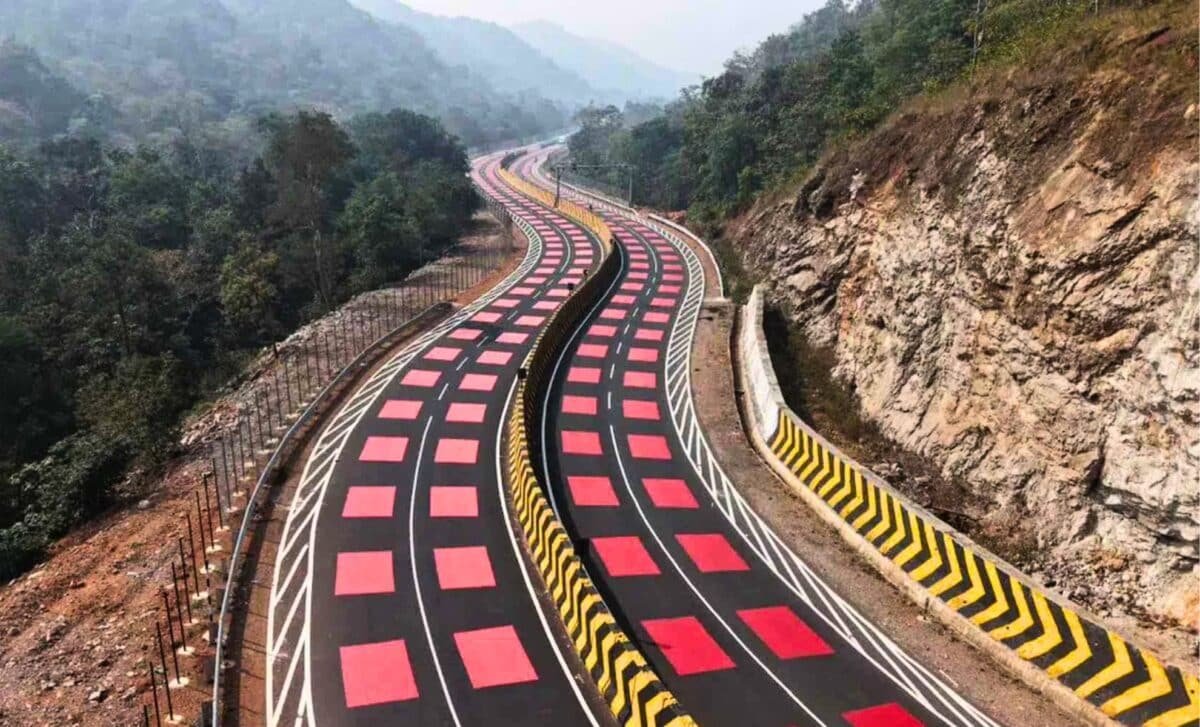
    On a critical 1.2-mile stretch of highway through the Veerangana Durgavati Tiger Reserve, the NHAI applied red, 5-millimeter-thick thermoplastic surface layers to the roads. 

    “The bright red colour immediately alerts drivers that they are entering a speed-restricted, wildlife-sensitive corridor,” the NHAI and MoRTH stated.

    Ministry of Road Transport and Highways

    There’s a scientific reason why red is typically chosen for stoplights, brake lights, and emergency signage.

    Red has the longest wavelength of visible light, which makes it highly visible in rainy or foggy weather. Studies show that the human brain processes the color red up to 10% faster than any other color.

    In addition to the red color, the slightly raised surface layer also has a subtle, but recognizable, impact on drivers.

    “The slightly raised surface generates mild tactile and audible feedback, naturally encouraging drivers to slow down, without causing discomfort or sudden braking,” the NHAI and MoRTH said in the press release.

    Overall, India’s first “red road” is meant to reduce accidents, protect wildlife, and make travel safer for all. 

    “As India continues to build critical infrastructure through diverse landscapes, this project sets a benchmark for environmentally responsible, people-centric, and wildlife-sensitive highway development, where red roads signal not danger, but thoughtful design and green intent,” the agencies emphasized. 

    ‍

    You may also like: Since 2018, over 9,000 animals have crossed this wildlife bridge in Washington. Trail cameras just spotted its first bear

    ‍

    Featured Image: Ministry of Road Transport and Highways

    Collisions Indias Prevents Psychology Red Road wildlife
    TECH
    • Website

    Related Posts

    New NJ law requires data centers to report water and energy use

    August 29, 2026

    Olivia Rodrigo’s Daisy Chain Fields raises $10M for women’s rights

    August 29, 2026

    How journalists earn back the trust of marginalized communities

    August 28, 2026
    Leave A Reply Cancel Reply

    Don't Miss
    Life Skills

    9 SMART Goals for Mentors and Mentees (With Examples)

    By TECHAugust 29, 20260

    What makes a mentoring relationship truly effective? Good communication and trust are important, but having…

    Good News in History, August 29 – Good News Network

    August 29, 2026

    New NJ law requires data centers to report water and energy use

    August 29, 2026

    September Social Security, SSI checks on the way. When Arizonans get paid

    August 29, 2026
    Stay In Touch
    • Facebook
    • Twitter
    • Pinterest
    • Instagram
    • YouTube
    • Vimeo
    Our Picks

    9 SMART Goals for Mentors and Mentees (With Examples)

    August 29, 2026

    Good News in History, August 29 – Good News Network

    August 29, 2026

    New NJ law requires data centers to report water and energy use

    August 29, 2026

    September Social Security, SSI checks on the way. When Arizonans get paid

    August 29, 2026

    Subscribe to Updates

    Get the latest creative news from SmartMag about art & design.

    About Us

    At Moving Mountains, we believe that every individual has strength, value, and purpose—regardless of mental health challenges or physical disabilities. This platform was created to inspire hope, promote understanding, and empower people to live meaningful and confident lives beyond limitations.

    Latest Post

    9 SMART Goals for Mentors and Mentees (With Examples)

    August 29, 2026

    Good News in History, August 29 – Good News Network

    August 29, 2026

    New NJ law requires data centers to report water and energy use

    August 29, 2026
    Recent Posts
    • 9 SMART Goals for Mentors and Mentees (With Examples)
    • Good News in History, August 29 – Good News Network
    • New NJ law requires data centers to report water and energy use
    • September Social Security, SSI checks on the way. When Arizonans get paid
    • September is Suicide Prevention Awareness Month | Local News
    Facebook X (Twitter) Instagram Pinterest
    • About Us
    • Contact Us
    • Privacy Policy
    • Terms & Conditions
    • Disclaimer
    © 2026 movingmountains. Designed by Pro.

    Type above and press Enter to search. Press Esc to cancel.