


Open this photo in gallery:
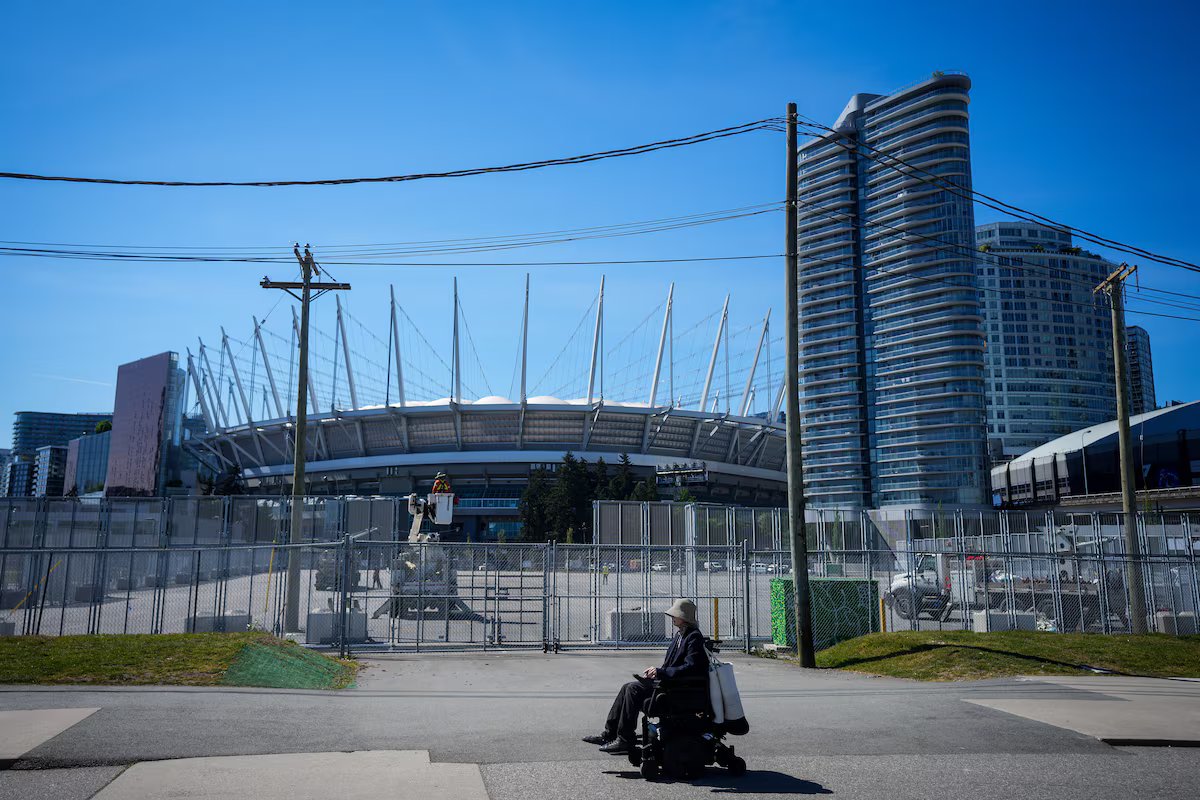
The current system routinely fails people with disabilities as they transition to adulthood, writes André Picard.DARRYL DYCK/The Canadian Press
The transition from adolescence to adulthood can be challenging at the best of times.
But for people with disabilities, it is magnitudes of difficulty more complicated, not because of biology, but bureaucracy.
Young people with disabilities, in addition to medical care, often have a number of supports designed to foster social inclusion: Access to equipment, one-on-one support to attend school, occupational therapy, transportation and more.
But when they become adults – “age out,” to use the vernacular – everything changes, and not for the better.
Take the example of Tyson Sylvester, who lives with cerebral palsy and is blind. To read documents, he uses a screen reader – software that translates visual elements to speech. But when he graduated from high school, the screen reader was no longer available, limiting his access to post-secondary education, and work. His home care hours were also slashed.
Ontario’s promise to people with disabilities left unfulfilled after more than 20 years
Similarly, when Amelia Hampton was young, getting a new wheelchair required one call. When she became an adult, it required contacting five different agencies.
So, back in 2016, Mr. Alexander and Ms. Hampton, both Winnipeg residents, filed human rights complaints, arguing they were being discriminated against on the basis of age.
Initially, the Winnipeg Regional Health Authority dismissed the claims as “frivolous” and “vexatious.” But the Manitoba Human Rights Commission agreed with the plaintiffs and, after a process of mediation, the provincial government agreed to hold public consultations and fund a pilot project to determine how things could be done differently.
The pilot, which ran from April, 2023, to September, 2025, included 33 adults. A key change was that care co-ordinators had a caseload of 16 clients, instead of the 100-135 they are usually responsible for. More importantly, the co-ordinators were told to find solutions to clients’ challenges rather than blindly follow the rules.
Last week, the results were published in a report titled “Equality, Dignity and Belonging: Building a Better System for People with Disabilities in Manitoba.”
The conclusions of the report, namely that the disability support system is “fundamentally broken,” are a surprise to no one. This is true not only in Manitoba, but much of the country.
That the current system routinely fails people with disabilities as they transition to adulthood has been glaringly obvious for a long time.
Open this photo in gallery:
The final report of the Integrated Adult Services Pilot Project concluded the disability support system is ‘fundamentally broken.’Jeff McIntosh/The Canadian Press
The 13 recommendations in the 113-page report are straightforward. They include: Create a new disability support program that is more patient-centred; reform income and funding supports, which essentially condemn people with disabilities to living in poverty; establish needs-based eligibility criteria instead of the current diagnosis- and IQ-based criteria, which discriminate against those without developmental disabilities; create centralized navigation and co-ordination between government departments; provide some relief for aging parents who carry a tremendous burden of care; create a provincial housing strategy for people with disabilities; improve access to affordable transportation; improve access to services in remote and Indigenous communities; and appoint a provincial disability advocate.
The recommendations are on point, and widely supported, but also entirely predictable. It’s tragic that it has taken 10 years since the initial human rights complaint to state the obvious.
As David Kron, executive director of the Cerebral Palsy Association of Manitoba, and chair of the pilot study’s steering committee, said: “We’re not asking for charity, we’re asking for basic human rights.”
The reality is that disability support programs across the country were created in another era, and drastically need updating.
First of all, programs were mostly designed on the assumption that people with severe disabilities would not live to adulthood and, if they did, they would require lifetime care.
The default position of most government disability policies is that people should be institutionalized, or otherwise cared for by family. The notion of independence or agency is absent from most policies.
Today, people with disabilities want to be treated equitably – to live to their full potential, not merely exist. They need housing, jobs, and the ability to participate fully in everyday life.
Yet, as Mr. Sylvester (now aged 30) has said eloquently, once they reach adulthood, people with disabilities are isolated and “locked out of life.”
For far too long, people with disabilities have been hidden away, quietly cared for by their parents, with occasional assistance from an impersonal and deeply flawed service delivery system.
It’s well past time we fixed it, in Manitoba and elsewhere.
If our commitment to rights and equity is real, then people with disabilities, young and old alike, need to be full citizens, not second-class ones begging for crumbs to survive.
