

Close Menu

    Subscribe to Updates

    Get the latest creative news from FooBar about art, design and business.

    What's Hot

    How to reduce stress – The Tech Edvocate

    July 1, 2026

    3 Reasons I’m Not Making Social Security a Huge Part of My Retirement Plan

    July 1, 2026

    World Mental Health Day – secondary assembly resources

    July 1, 2026
    Facebook X (Twitter) Instagram
    Trending
    • How to reduce stress – The Tech Edvocate
    • 3 Reasons I’m Not Making Social Security a Huge Part of My Retirement Plan
    • World Mental Health Day – secondary assembly resources
    • 10 Daily Habits that Often Waste 95 Percent of Our Time, Energy, and Potential in Life
    • A lifelong focus on prevention, wellness and women’s health
    • Health insurance payor type and care deviations in patients with trauma with lower extremity fractures
    • Social Security COLA 2026: See how much extra you’ll receive in July 2026
    • Will July 4 affect your SSI checks?
    Moving MountainsMoving Mountains
    Facebook X (Twitter) Instagram
    Wednesday, July 1
    • Home
    • Mental Health
    • Life Skills
    • Self-Care
    • Well-Being
    • Awareness
    • Inspiration
    • Workers Comp
    • Social Security
      • Injuries
      • Disability Support
      • Community
    Moving MountainsMoving Mountains
    Home » Largest and Most Detailed Picture Taken of Milky Way’s Center–With Millions of Stars and Thousands of Worlds
    Inspiration

    Largest and Most Detailed Picture Taken of Milky Way’s Center–With Millions of Stars and Thousands of Worlds

    TECHBy TECHJuly 1, 2026No Comments3 Mins Read
    Facebook Twitter Pinterest LinkedIn Tumblr Reddit WhatsApp Email
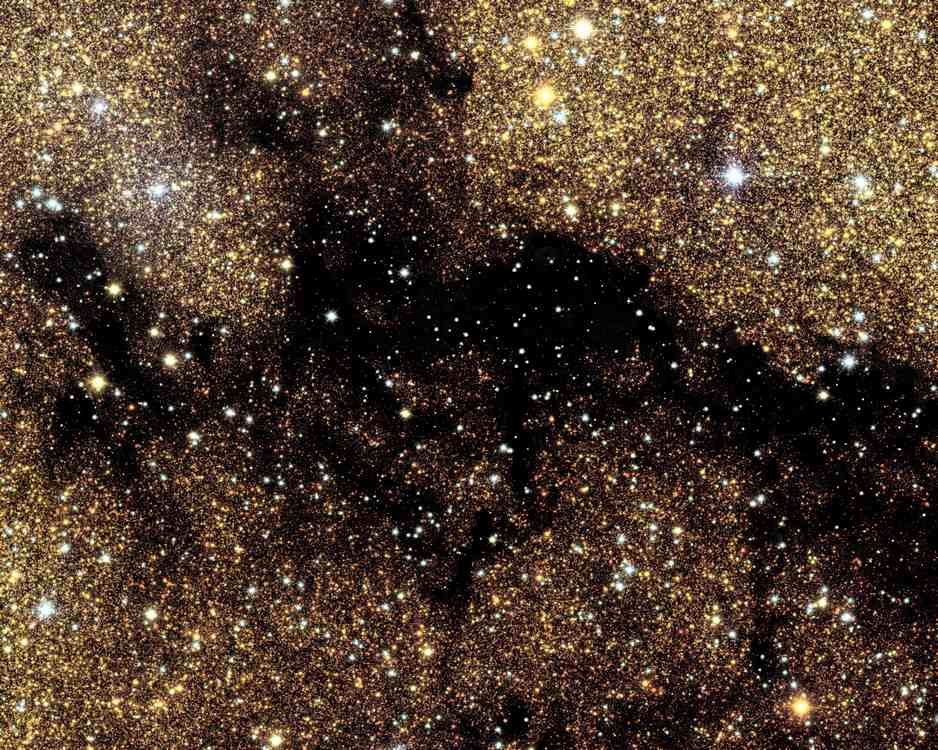
    Largest and Most Detailed Picture Taken of Milky Way's Center–With Millions of Stars and Thousands of Worlds
    Share
    Facebook Twitter LinkedIn Pinterest WhatsApp Email

    The center of the Milky Way, known as the ‘Galactic Bulge’ – credit, ESA/Euclid/Euclid Consortium/NASA, CFHT. Image processing by J-C Cuillandre and E Bertin (CEA Paris-Saclay)

    It took a new and special space telescope to parse out each one of these individual stars gleaming in a dizzying mass at the center of our own dear Milky Way galaxy.

    The European Space Agency’s Euclid Telescope, orbiting 1 million miles from Earth at the 2nd Lagrange Point—an orbit it shares with NASA’s James Webb Space Telescope—the probe took 9 of these photographs in visible light while pointed at the galactic center for 26 hours straight.

    It shows the incredible density of stars located at the center—60 million in just a snapshot of the sky the size of your average full moon, but it wasn’t aiming for the stars per se, rather the planets almost certainly to be orbiting them.

    “It was never built with this science in mind,” Dr. Eamonn Kerins, an astrophysicist at the University of Manchester, reminded the Guardian, “but it has proved to be a superb facility for the work.”

    “This data fires the starting pistol in a new age of exoplanet discovery, where we go from knowing about 6,000 exoplanets to finding more than 100,000 across the galaxy.”

    Put aside any notions you have about humans finding a new place to live or looking for aliens and exoplanet astronomy is still the most exciting aspect of the field for the average person.

    GNN’s reports on exoplanet study include such worlds as one almost as big as its star, another that orbits two stars like Tatooine from Star Wars, some which don’t rotate and have permanent dark and daytime sides, one with the density of a marshmallow, a gaseous giant with clouds that turn to stone, and one that’s shaped like a lemon where it rains diamonds.

    – credit ESA/Euclid/Euclid Consortium/NASA, CFHT. Image processing by J-C Cuillandre and E Bertin (CEA Paris-Saclay)

    Even still, as Dr. Kerins said, the Euclid telescope was built to study dark matter and dark energy.

    The universe is believed to be made up of 5% regular matter, 25% dark matter, which tends to clump around galaxies and may even be responsible for coalescing them, and 70% dark energy which is believed to be fueling the expansion of the universe.

    SPACE TELESCOPES: Citizen Scientist Spots Earth-like Planet: Now Astrophysicists Will Focus Most Powerful Telescopes on it

    Though infrared light is more appropriate for studying these invisible forces spread across so many cosmic acres, Euclid’s visible light camera is designed to image large chunks of the night sky over many hours to track star movements. This will give information on the forces moving them—even the ones that can’t be seen.

    However, it also provides an exceptional method of seeking out exoplanets: using the microlensing method of detection.

    MORE EXOPLANET RESEARCH: Two ‘Super-Puff’ Planets Lighter Than Cotton Candy Discovered by Researchers

    The way this works is through an observational phenomenon called lensing. When viewing a star located behind another star, the gravity of the nearer star bends the light coming from the farther star, making it appear brighter. If that lensing suddenly increases in intensity, it’s often because an orbiting exoplanet passed the star at its closest point, so close that its gravity intensified the light’s distortion.

    For this reason, Euclid is believed to be well-positioned to coordinate the locations of tens of thousands of exoplanets, each one ready for closer examination with a telescope like James Webb or Hubble.

    Euclid was launched in 2024.

    SHARE This Brilliant New Space Telescope’s Exciting Debut With Your Friends…

    CenterWith Detailed Largest Milky Millions Picture Stars Thousands Ways Worlds
    TECH
    • Website

    Related Posts

    Love unplugged, IRL dating, without the apps

    July 1, 2026

    Good News in History, July 1

    July 1, 2026

    12 Ways To Celebrate Disability Pride Month

    July 1, 2026
    Leave A Reply Cancel Reply

    Don't Miss
    Mental Health

    How to reduce stress – The Tech Edvocate

    By TECHJuly 1, 20260

    CDC resources on stress management.) 7. Time Management Techniques Effective time management can significantly reduce…

    3 Reasons I’m Not Making Social Security a Huge Part of My Retirement Plan

    July 1, 2026

    World Mental Health Day – secondary assembly resources

    July 1, 2026

    10 Daily Habits that Often Waste 95 Percent of Our Time, Energy, and Potential in Life

    July 1, 2026
    Stay In Touch
    • Facebook
    • Twitter
    • Pinterest
    • Instagram
    • YouTube
    • Vimeo
    Our Picks

    How to reduce stress – The Tech Edvocate

    July 1, 2026

    3 Reasons I’m Not Making Social Security a Huge Part of My Retirement Plan

    July 1, 2026

    World Mental Health Day – secondary assembly resources

    July 1, 2026

    10 Daily Habits that Often Waste 95 Percent of Our Time, Energy, and Potential in Life

    July 1, 2026

    Subscribe to Updates

    Get the latest creative news from SmartMag about art & design.

    About Us

    At Moving Mountains, we believe that every individual has strength, value, and purpose—regardless of mental health challenges or physical disabilities. This platform was created to inspire hope, promote understanding, and empower people to live meaningful and confident lives beyond limitations.

    Latest Post

    How to reduce stress – The Tech Edvocate

    July 1, 2026

    3 Reasons I’m Not Making Social Security a Huge Part of My Retirement Plan

    July 1, 2026

    World Mental Health Day – secondary assembly resources

    July 1, 2026
    Recent Posts
    • How to reduce stress – The Tech Edvocate
    • 3 Reasons I’m Not Making Social Security a Huge Part of My Retirement Plan
    • World Mental Health Day – secondary assembly resources
    • 10 Daily Habits that Often Waste 95 Percent of Our Time, Energy, and Potential in Life
    • A lifelong focus on prevention, wellness and women’s health
    Facebook X (Twitter) Instagram Pinterest
    • About Us
    • Contact Us
    • Privacy Policy
    • Terms & Conditions
    • Disclaimer
    © 2026 movingmountains. Designed by Pro.

    Type above and press Enter to search. Press Esc to cancel.