


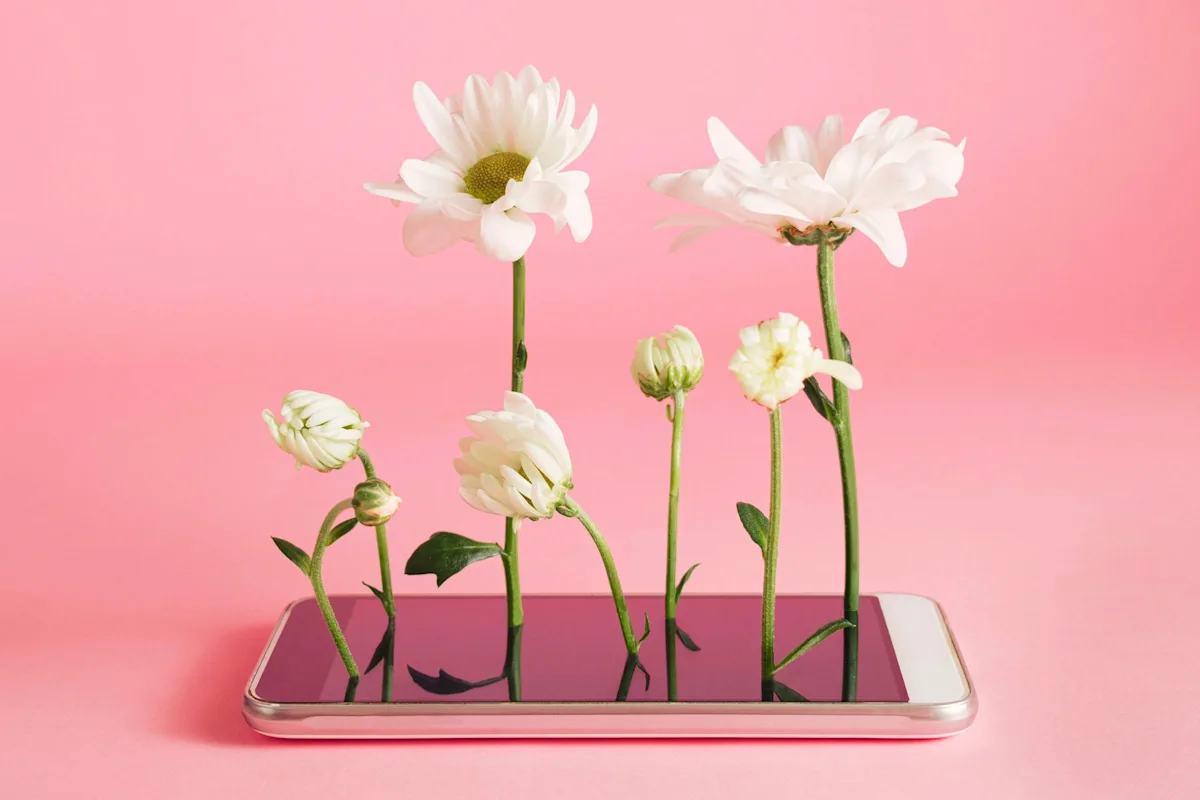
There’s little doubt that smartphones and laptops have expanded our ability to connect with other people. Sure, it’s great to catch up with old friends and make new ones on social media, but there’s such a thing as too much tech, and it can interfere with our actual lives. “When your head is focused on that rectangle, your real world is less real,” says digital detox expert Tanya Goodin, author of My Brain Has Too Many Tabs Open and Stop Staring at Screens.
But rather than pulling back from our digital lives, most of us have gone all-in. In April 2026, the typical social media user spends more than 18.5 hours a week on social media (more than 2.5 hours a day), according to data compiled by GWI market research—and that doesn’t even include texting, gaming and just goofing off on the internet. Recent Pew Research Center polling found that 41% of U.S. adults say they are online “almost constantly.” That’s a lot of time that could be spent hanging out with friends and family, learning a new skill, exercising or doing literally anything else.
Spending less time doomscrolling and mindlessly checking our socials won’t just give you hours of your life back. It may help you learn how to be happy, how to say no and how to set boundaries, as well as give you a better work-life balance. Ahead, we talk to Goodin about how to successfully pull off a digital detox and dig into the latest research about how stepping back can benefit you. Starting to think you could use a digital break? Keep reading.
Get Reader’s Digest’s Read Up newsletter for more life tips, humor, cleaning, travel, tech and fun facts all week long.
What is a digital detox?
A digital detox is a planned and mindful break from digital technology. “At its most basic, it’s putting your phone away and disconnecting from email and social media,” Goodin says. “Put the digital world aside so you can focus on the real world.” When people hear the word detox, they may think it’s a strict all-or-nothing thing, but it doesn’t have to be that extreme. Even slightly reducing the number of hours you spend with tech can be beneficial for your mental health.
The digital world can be extremely compelling, making you think you are part of a global community at any given moment. But a digital detox can ground us and connect us to our here and now. Even spending time snapping photos rather than enjoying the moment robs us of the opportunity to be present. “Our memories are more vivid if we don’t capture them on a phone,” says Goodin. “We have built the world at our fingertips, but we don’t have a moment to gaze at it through a window.”
Benefits of a digital detox
Taking breaks from social media and other time-sucking apps to appreciate what’s going on in the world around you is great for your mental well-being, not to mention your eyesight. Here are the areas of your life that will likely improve when you put down your phone more often.
Improved communication in your relationships
Texting or emailing rather than talking can create barriers with how we communicate, says Goodin. Communicating digitally can lack the finesse of an actual conversation, leading to hurt feelings and misunderstandings. “We are not robots—we are humans,” she reminds us. There is genuine power in hearing the human voice.
On-screen friends are what Goodin calls loose connections. “They are not the 3 a.m. friends,” she says. “If you have a crisis at 3 a.m., you aren’t going to connect with the people on Twitter. It’s going to be your close friends. We are prioritizing loose connections, but we need the deeper ones more.”
Improved mood and less FOMO
Logging off can boost your mood and overall feelings of life satisfaction. According to a comprehensive 2025 review published in the International Journal of Mental Health and Addiction (IJMHA), constant access to smartphones and social media increases our urge to check in on what others are doing, which can lead to anxiety, frustration and feelings of inadequacy. Dissatisfaction and fear of missing out (FOMO) then prompt us to reach for the phone in a constant feedback loop of negativity.
The IJMHA review also found that FOMO is highly associated with a rise in problematic social media use (PSMU), which is the inability to log off even when it’s negatively affecting your life. Researchers in multiple studies describe PSMU as being analogous to substance addiction, with symptoms like obsessive thinking, increased tolerance, relapse and withdrawal.
There is good news: In a 2024 study published in BMC Psychology, researchers found that after a 14-day abstinence period, participants reported reduced depression, anxiety, loneliness and FOMO.
Better work-life balance
Social media gets criticized a lot for sucking up our time, but constant access to work email and spending long hours keeping up with everything after the workday is over is cutting into the rest of our IRL life, says Goodin. And with many of us working remotely these days rather than in a separate office space, the risk for overwork and burnout is bigger. Limiting your work tech to regular office hours can help you feel fresher in the time you do dedicate yourself to it.
Deeper sleep
There has been an avalanche of research showing that a digital detox can improve sleep. In a 2025 study of young adults published in JAMA Network Open, a one-week detox from social media reduced insomnia by 14.5%. And in a 2023 study in Behavioral Sciences, participants exhibited significant improvements in both sleep quality and duration during a two-week social media digital detox. Sleep quality in particular improved both during the detox and post-intervention.
Signs you might need a digital detox
Let’s start with the easy stuff: If your friends and family regularly comment on how you’re perpetually glued to your phone, you’re probably a good candidate for a digital detox. “But the bigger picture is when your digital world is more interesting and compelling than your real world,” says Goodin. If your IRL activities have tapered off—because you’ve stopped playing sports, going to the theater, trying new things or doing anything in actual reality that you used to thoroughly enjoy—there’s a good chance you have a problem.
Goodin says another telltale sign is the level of panic you feel when you don’t have your phone with you. If you can’t keep it in another room without separation anxiety or even walk to the mailbox or corner store without touching it, that’s not healthy.
Sleep problems are also a sign. If you’re scrolling late at night and early in the morning, it disrupts the time you should spend restoring your body so it functions properly, says Goodin. And if you can’t leave your phone in the glove box or in your purse in the backseat when you’re driving, you’re not only too reliant on your phone—you’re also making the roads less safe for everyone else. Texting and other cellphone-related distracted driving accounts for thousands of motor vehicle accidents every year.
How to do a digital detox
Goodin says the key here is to take tiny steps to wean yourself off tech. While it may seem like a good idea to spend a week offline somewhere remote, that’s an extreme solution—and probably won’t work out. “Small pauses in the day where we don’t use technology are more effective,” she says. Here are some ideas to get you started.
Start small
Not sure where to begin? Goodin recommends starting a digital detox in the bathroom. “Try not taking your device in there,” she advises. “We’re talking less than five minutes. How does that feel?” If you can manage that, then you can start coming up with other ways you can separate yourself from your phone or laptop without sending yourself into a panic.
Set realistic goals
It’s one thing to say you’re going to ditch your phone and go off the grid on your next vacation, but it’s quite another thing to actually do it, says Goodin. Try setting aside your phone and laptop for an afternoon instead. Once you get used to small blocks of time without it, it will be easier and easier to forget how much you relied on it. Create a vision board to figure out new goals to strive for in your newfound free time.
Chunk your tech time
If you’re in a situation where you can’t drop your phone like a hot rock (anyone else need to use their phone to log in to work apps and almost every other thing in their life?), block out time to use tech during the moments you absolutely have to use it. Scroll through Instagram, shop for groceries or watch YouTube videos on your phone when your laptop is updating, for example. Or spend a morning in bed on a Saturday to catch up on social media, then rely less on your phone the rest of the day. You just might find that you now have time for a new hobby.
Put away your phone at meals
Not to sound too much like a lecturing mom, but mealtimes should be quality time with your dining companions in real life, not zoning out on TikTok and ignoring everyone else at the table. QR codes for menus at restaurants can be a little aggravating too, since you’re dining out with friends to spend time with them, not get sucked into your phone. Ask for a real menu whenever possible, and if you have to use your phone to order dinner, stash it back in your purse as soon as you can.
Employ tech to help (yes, really)
None of us is likely to unplug completely. We want to be reachable in an emergency, or when we’re picking someone up at the airport. Tech can actually help bridge the gap between staying connected and being always on. So-called “dumb” phones, which allow texting and calling but not internet use and social media, provide digital freedom and a wave of Y2K nostalgia. If getting rid of your smartphone is a bridge too far, try a device like Brick, which blocks apps from your phone for as long as you choose.
Create no-tech zones
If you’re looking to spend less time staring at your glowing screens, there are easy ways to make that happen. Here’s how to designate some areas of your home as tech-free.
Your bedroom
Where you sleep should be a restful oasis, not a place to get worked up over the latest bad news or irritating social media posts. Start your digital detox by taking the TV out of the room, and definitely keep your phone elsewhere while you sleep, says Goodin. There is a device called an alarm clock that can wake you up in the morning. And reading is a better way to spend time in your bedroom when you aren’t sleeping.
Your living room
Many of us are working from home these days, turning our living rooms into 24/7 home offices. When you’re done with your day, stash your computer elsewhere or hide it out of sight. And as far as the phone goes, establish a rule that you won’t focus all your attention on it when there are other people in the room.
Your kitchen
Tech-enabled kitchens can overload us with digital stimulation. Do you really need a refrigerator that talks to you? It’s one thing to use a phone or tablet to consult a recipe, but be mindful of digital multitasking while you’re cooking. Instead, stay in the moment and enjoy the process of making a delicious meal.
Why trust us
Reader’s Digest has published hundreds of articles on personal technology, arming readers with the knowledge to protect themselves against cybersecurity threats and internet scams as well as revealing the best tips, tricks and shortcuts for computers, cellphones, apps, texting, social media and more. For this piece, Cathy Garrard tapped her experience as a journalist to ensure that all information is accurate and offers the best possible advice to readers. We rely on credentialed experts with personal experience and know-how as well as primary sources including tech companies, professional organizations and academic institutions. We verify all facts and data and revisit them over time to ensure they remain accurate and up to date. Read more about our team, our contributors and our editorial policies.
