


About
Have you ever spent ten minutes deciding what to watch on television, only to give up entirely?
Or did you find yourself ordering fast food after a long day because choosing a healthier option felt like too much work? These experiences may be linked to decision fatigue, a common psychological phenomenon that affects millions of people every day.
Modern life demands a constant stream of choices. From selecting meals and responding to emails to managing finances and making health decisions, the brain is continually processing information. While each choice may seem small on its own, the cumulative effect can drain mental resources and make thoughtful decision-making increasingly difficult.
As mental energy declines, people may become more impulsive, avoid important choices, or simply choose the easiest option available.
Understanding how decision fatigue works can help individuals protect their mental well-being and make better decisions throughout the day.
Advertisement
Decision fatigue refers to the deterioration in decision-making quality after making numerous choices over a period of time.
Researchers believe that the brain has a limited capacity for deliberate thinking, and repeated decision-making gradually depletes those cognitive resources (1✔ ✔Trusted Source
Decision fatigue: A conceptual analysis
Go to source).
When mental reserves become exhausted, people often find it harder to weigh risks and benefits objectively. Instead of carefully evaluating options, they may rely on habits, shortcuts, or emotional reactions. This can affect decisions ranging from what to eat for dinner to important financial or medical choices.
The phenomenon is not limited to major life decisions. Everyday choices, including selecting clothing, responding to notifications, or planning daily schedules, can contribute to a growing sense of mental exhaustion by the end of the day.
Advertisement
The human brain consumes significant energy when processing information and evaluating alternatives. Every decision requires attention, analysis, and self-control, all of which draw from a finite pool of mental resources.
As decision fatigue develops, individuals may experience reduced concentration, slower thinking, and difficulty assessing complex situations.
Tasks that once felt manageable can suddenly seem overwhelming, particularly after a long day filled with continuous demands.
Research suggests that decision fatigue can impair executive functioning, the set of mental skills responsible for planning, problem-solving, and self-regulation (2✔ ✔Trusted Source
Decision fatigue of surrogate decision-makers: a scoping review
Go to source). When these abilities become strained, people may struggle to prioritize tasks or make sound judgments.
Many individuals notice this effect during the evening hours when deciding on meals, household tasks, or personal commitments, which feel disproportionately difficult compared to earlier in the day.
Advertisement
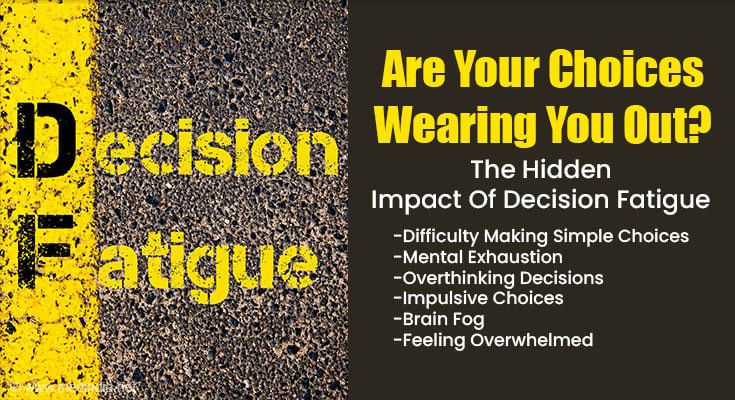
The signs of decision fatigue are easy to overlook but difficult to ignore once they begin affecting how we think, act, and respond to everyday choices. Recognizing these symptoms is the first step toward managing them effectively.
- One of the most common signs of decision fatigue isprocrastination. People may repeatedly postpone choices because evaluating options feels mentally exhausting. Even relatively simple decisions can become sources of frustration.
- Another hallmark symptom is impulsive behavior. Instead of carefully considering alternatives, individuals may choose the quickest or most convenient option available. This can lead to unnecessary spending, unhealthy eating habits, or poor time management.
- Decision fatigue can also trigger emotional symptoms such as irritability, impatience, and frustration. People may become less tolerant of everyday challenges and feel overwhelmed by situations that would normally seem manageable.
- Some individuals experience mental fog, forgetfulness, or reduced motivation. These symptoms can affect workplace productivity, personal relationships, and overall quality of life if they occur frequently.
One major contributor to decision fatigue is the sheer number of choices people encounter every day. Smartphones, social media platforms, online shopping websites, and digital communication tools constantly demand attention and decision-making.
The phenomenon of choice overload can make matters worse. While having options may seem beneficial, an excessive number of alternatives often increases stress and mental effort. Instead of feeling empowered, people may feel overwhelmed and dissatisfied.
Work-related responsibilities also play an important role. Employees often spend hours making decisions, solving problems, attending meetings, and responding to requests. By the end of the workday, their cognitive resources may be significantly depleted.
Lack of sleep, emotional stress, and personal challenges can further reduce mental resilience. When the brain is already under strain, decision fatigue may develop more quickly and have a greater impact on daily functioning.
Decision fatigue can have a surprisingly powerful effect on health-related behaviors. When mentally exhausted, people often choose options that provide immediate comfort rather than long-term benefits.
For example, someone may skip exercise after a demanding day because deciding on a workout routine feels burdensome. Similarly, individuals may reach for processed foods or sugary snacks because they require less effort than preparing a nutritious meal.
Research suggests that depleted mental resources can reduce self-control, making it harder to resist temptations or maintain healthy habits (3✔ ✔Trusted Source
The relationship between self-control and mental health problems among Chinese university students
Go to source). This may contribute to unhealthy eating patterns, reduced physical activity, and poor adherence to personal goals.
Decision fatigue can also affect healthcare decisions. People may delay scheduling medical appointments, postpone preventive screenings, or avoid researching treatment options because the process feels mentally overwhelming.
While people often assume that more options lead to better outcomes, psychological research suggests that excessive choice can sometimes produce the opposite effect. Evaluating numerous alternatives requires substantial mental effort and can increase stress levels.
When faced with too many possibilities, individuals may become paralyzed by indecision. They may spend excessive time comparing options, worry about making the wrong choice, or abandon the decision entirely.
This pattern is commonly observed in consumer behavior, where shoppers are confronted with endless product options and often experience greater dissatisfaction and regret after making a purchase. The same principle can apply to everyday personal and professional decisions.
Reducing unnecessary choices can help conserve mental energy and improve decision quality throughout the day.
One effective strategy is creating routines for recurring tasks. Establishing consistent habits for meals, clothing, exercise, or morning activities reduces the number of decisions that require active mental effort.
Many experts recommend making important decisions earlier in the day when cognitive resources are strongest. Scheduling critical meetings, financial decisions, or complex tasks during peak mental hours can improve judgment and focus.
Taking regular breaks can also help restore attention and reduce cognitive strain. Short periods of rest allow the brain to recover and improve its ability to process information effectively.
Getting adequate sleep remains one of the most important protective measures. Quality sleep supports memory, concentration, and decision-making abilities, making individuals more resilient to mental fatigue.
Limiting unnecessary choices, organizing daily tasks in advance, and simplifying routines can significantly reduce the burden of constant decision-making.
Decision fatigue is an often-overlooked consequence of modern living, yet it affects many aspects of daily life.
From workplace productivity and financial decisions to health behaviors and personal relationships, depleted mental resources can influence choices in surprising ways.
Recognizing the signs of decision fatigue allows people to take proactive steps to protect their mental energy. Simple strategies such as creating routines, reducing unnecessary choices, and prioritizing important decisions can make a meaningful difference.
By understanding how the brain responds to repeated decision-making, individuals can improve their judgment, reduce stress, and maintain greater control over the choices that shape their everyday lives.
