


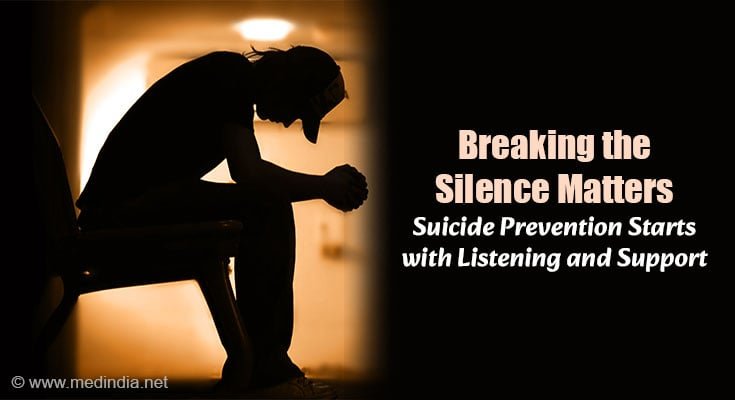
Learn why mental health awareness, early support, and open dialogue are important for suicide prevention in India.
Highlights:
- Suicide prevention in India involves reducing stigma and encouraging early help-seeking
- Mental health awareness can help people recognize emotional distress before it becomes a crisis
- Supportive conversations may help connect vulnerable individuals with professional care and community support
Many people ask whether talking openly about suicide can actually help save lives. Current evidence suggests that supportive conversations about emotional distress can help people seek assistance earlier, reduce feelings of isolation, and improve access to care. For this reason, open dialogue is increasingly recognized as an important component of suicide prevention in India (1✔ ✔Trusted Source
Suicide.
Go to source
)(2✔ ✔Trusted Source
Suicide in India: A systematic review.
Go to source
).
India continues to face a significant suicide burden. According to official National Crime Records Bureau data analyzed by mental health researchers, 170,924 suicide deaths were reported in 2022, highlighting the need for stronger awareness, early intervention, and support systems across communities (3✔ ✔Trusted Source
Suicide in India: A Review
Go to source
). While suicide is a complex issue with multiple contributing factors, experts agree that creating supportive environments where people feel safe discussing emotional distress may help more individuals receive timely assistance.
Advertisement
Why Suicide Prevention in India Remains a Public Health Priority
Suicide is recognized by the World Health Organization as a major public health concern. It affects people across age groups, occupations, and socioeconomic backgrounds. Research from India shows that suicide is influenced by a combination of psychological, social, economic, and health-related factors rather than a single cause (2✔ ✔Trusted Source
Suicide in India: A systematic review.
Go to source
).
Mental health experts note that emotional distress is not always visible. Individuals may continue attending school, going to work, or participating in family life while silently struggling with depression, anxiety, overwhelming stress, or feelings of hopelessness.
Advertisement
What Factors Can Increase Suicide Risk?
Research has identified several factors associated with increased suicide risk. These include –
- Depression,
- Substance misuse,
- Chronic illness,
- Financial hardship,
- Relationship difficulties,
- Social isolation,
- Traumatic experiences,
Major life stressors(1✔ ✔Trusted Source
Suicide.
Go to source
)(2✔ ✔Trusted Source
Suicide in India: A systematic review.
Go to source
)(3✔ ✔Trusted Source
Suicide in India: A Review
Go to source
)
It is important to distinguish risk factors from causes. Having one or more of these risk factors does not mean a person will attempt suicide. Many people facing such challenges never develop suicidal thoughts. Individual experiences vary, and protective factors such as family support, social connection, resilience, and access to mental healthcare can significantly reduce risk.
Advertisement
How Mental Health Stigma Can Delay Support
Mental health stigma remains one of the biggest barriers to suicide prevention. Fear of judgment, discrimination, or social consequences may discourage individuals from discussing emotional distress or seeking professional help.
As a result, opportunities for early intervention may be missed. Public health experts emphasize that mental health conditions should be treated with the same seriousness and compassion as physical illnesses. Encouraging people to seek help without fear of stigma is considered an important step toward improving mental well-being.
What Can You Do If Someone Seems Emotionally Distressed?
If you are concerned about a friend, family member, colleague, or student:
- Listen calmly and without judgment.
- Encourage them to speak openly about their feelings.
- Suggest seeking support from a qualified mental health professional.
- Take expressions of hopelessness, self-harm, or suicidal thoughts seriously.
Supportive conversations cannot replace professional treatment, but they can help individuals feel heard, understood, and connected during difficult times.
Building a Culture Where Seeking Help Feels Safe
Available evidence suggests that reducing stigma, improving mental health literacy, and expanding access to support services could strengthen suicide prevention efforts in India.(1✔ ✔Trusted Source
Suicide.
Go to source
)(2✔ ✔Trusted Source
Suicide in India: A systematic review.
Go to source
)(3✔ ✔Trusted Source
Suicide in India: A Review
Go to source
)
Suicide is a complex public health challenge with no single solution. However, creating a culture where people feel comfortable discussing emotional distress and seeking help may allow more individuals to receive support before reaching a crisis point. For readers, the key message is simple: paying attention, listening with empathy, and encouraging timely professional support can play an important role in promoting mental wellbeing and strengthening suicide prevention efforts.
Frequently Asked Questions
Q: Can talking about suicide help prevent suicide?
A: Evidence suggests that supportive and appropriate conversations may encourage help-seeking, reduce isolation, and help people access support earlier.
Q: What are the warning signs of emotional distress?
A: Persistent sadness, withdrawal from social activities, hopelessness, major behavioral changes, and talking about self-harm are warning signs that should be taken seriously.
Q: What are the most common risk factors for suicide?
A: Depression, substance misuse, chronic illness, financial stress, trauma, relationship difficulties, and social isolation are among the commonly recognized risk factors.
Q: Why do people avoid seeking mental health support?
A: Mental health stigma, fear of judgment, lack of awareness, and limited access to services can delay help-seeking.
Q: What should I do if someone I know appears emotionally distressed?
A: Listen without judgment, encourage professional support, stay connected, and take any mention of self-harm seriously. If there is immediate danger, seek emergency assistance right away.
References:
- Suicide – (https://www.who.int/india/health-topics/suicide)
- Suicide in India: A systematic review – (https://pmc.ncbi.nlm.nih.gov/articles/PMC3146189/)
- Suicide in India: A Review
– (https://acspublisher.com/journals/index.php/iijfmt/article/view/22959)
Source-Medindia
