


By Lizabeth Roemer, Ph.D., and Josh Bartok, M.S.
We move from contraction to expansion not by straining to change its nature, but by surrounding it with spaciousness. —Sharon Salzberg
Do you ever notice your mind focusing on specific, stressful situations, reviewing them over and over? Do you notice your mind is narrowing in on potential “threats” and little else? Does a narrowed perspective cause you to miss opportunities to engage with people and the world around you?
If so, the good news is that your threat detection system is functioning well, proactively identifying potential danger in an attempt to maximize your chances of survival. The bad news is that this habitual pattern of responding restricts your life and diminishes your well-being, because many or most of these threats never come to pass. We do, of course, live in threatening, stressful times, with a sociopolitical context that provides many triggers for fear and danger, particularly for people whose identities are targeted and marginalized. And we are bombarded by images, commentary, and news that highlight the worst of this. Naturally, many of us are finding our attention constricted and feel consumed by fear, anxiety, anger, or worry. The threats that capture our attention are important to notice—trying to push them from our minds or deny them entirely ultimately diminishes our ability to respond skillfully to real dangers that need our attention.
That said, we also benefit from paying attention to nonthreatening information so that we gain a fuller picture of our environment and can act from a place of spaciousness, flexibility, and choicefulness. As psychologist Barbara Fredrickson’s broaden-and-build theory of positive emotions highlights, broadened perspectives allow us to develop resources to more effectively meet life’s challenges and flourish in the face of adversity.
Adding instead of subtracting
Rather than pushing away or denying stressful thoughts or realities, a more effective strategy is to add new information, rather than trying to remove anything. One way to think about this is that when we notice our attention is narrowed, we can intentionally expand it by seeing what else we can notice, in addition to whatever we are currently preoccupied with. We can notice our worries and the sound of birds coming through our window, our fears and the feel of a breeze.
We can use the common self-soothing practice of noticing 5 things we can see, 4 things we can hear, 3 things we can feel, etc., with this intention. When you notice that your mind feels narrow, cramped, or preoccupied, take a breath and look around your environment seeking new information. What’s one thing you can see? Is there something else you see? How about one more thing? This practice strengthens the capacity to notice, even when you’re distressed and attentionally constricted. And, as with so many things, practicing this skill makes it increasingly accessible to you in stressful times.
Spacious external environments
Psychologist Dacher Keltner and others have extensively studied the psychological impact of experiences of awe (for example, Monroy & Keltner, 2022). This transformative emotion is elicited by being in nature, religious or spiritual experiences, music or dance performances, and other awe-inducing environments. Studies show that awe leads to a reduced focus solely on the self and an enhanced sense of being an interconnected part of a large whole.
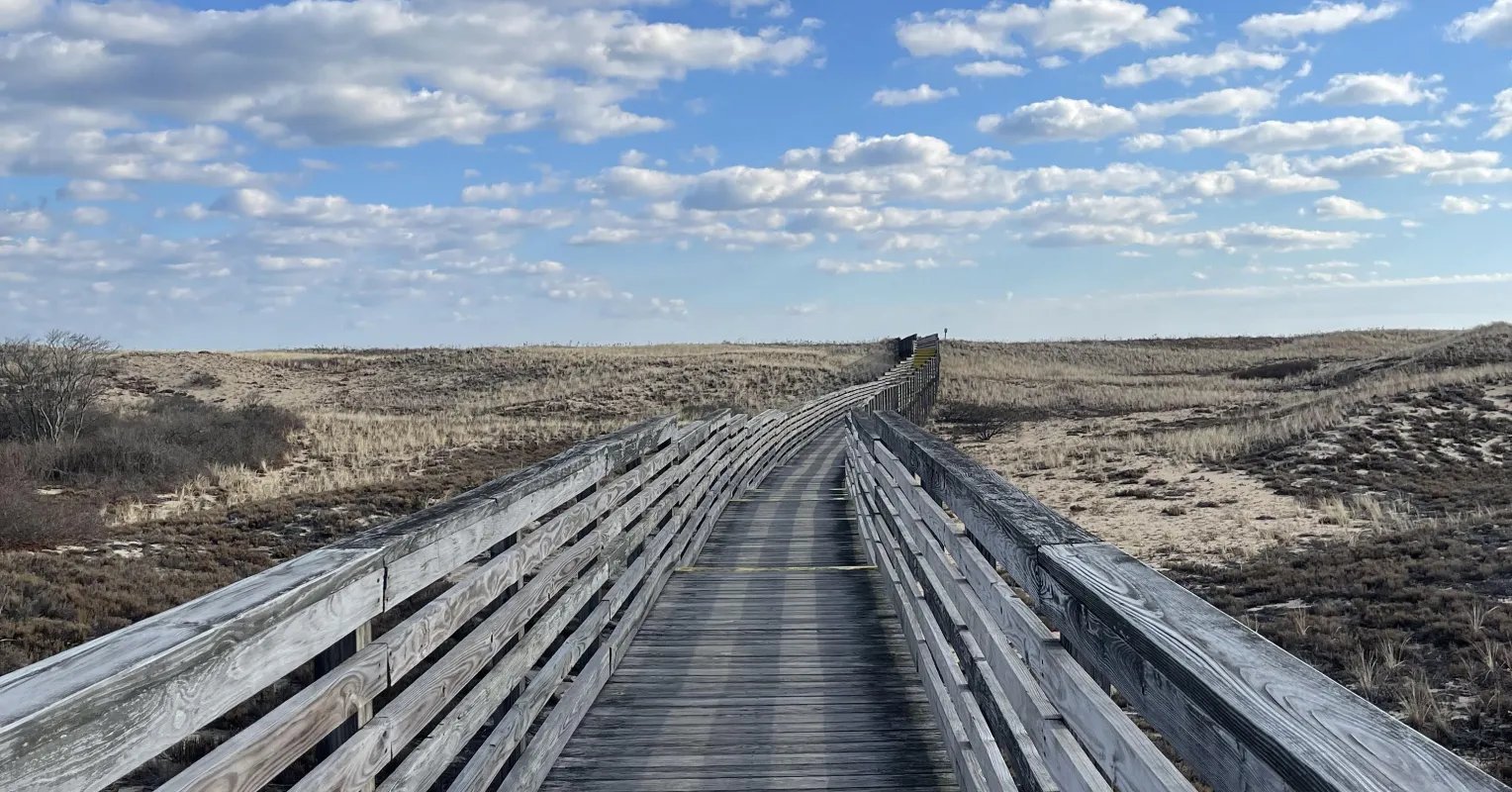
Intentionally choosing environments that cultivate awe and paying attention when we are in them can help us build more spacious awareness. When your awareness has narrowed to an upsetting situation, an aggravating email, or a persistent worry, consider spending 10 to 15 minutes outside and paying attention to your environment. Consider adding regular visits to nature to your life and intentionally expanding your awareness when you are in these contexts. As your worries arise, notice them too. Perhaps say to yourself something like, “Yes, this pain/worry/concern/sorrow is here, and also here is this sight/sound/smell/texture.”
Cultivating internal spaciousness
We can also practice spaciousness in our bodies. While feeling distress, we can take a few moments to notice the rise and fall of our breath. I find it helpful during the inhale to imagine I am physically expanding myself so that I can hold whatever difficulties are on my mind and also the things that matter to me and bring me joy. Again, this isn’t about removing anything. It’s about expanding our inward capacity to hold whatever is arising. The practice is to notice the thoughts, feelings, and sensations associated with your distress and other sensations, thoughts, or feelings as well. Breathe into the spaciousness of your experience, holding all of what arises. When you perceive a narrowing, simply note this and return to cultivating spaciousness through your breath.
Try out a few of these practices or others that help you to increase your sense of spaciousness. And then notice how that impacts your ability to flexibly choose actions, even when threats, worries, and pain arise.
Josh Bartok is a contemplative photographer and life coach, and the author of two children’s books.
