


On May 28, a massive traffic jam in Prince George, British Columbia had drivers craning their necks out of their car windows to see what the hold-up was.
A mother moose had tried to cross a four-lane highway with her two calves, and only one of them was able to clear the concrete barrier.
When the calf became distressed, three drivers stepped in to corral the baby moose away from traffic. Eventually, they were able to lift it over the barrier so that it could reunite with its mother.
When a video of the incident went viral across social media, many were quick to praise the drivers for stepping in to help.
One TikTok user wrote, “Good job to all the helpers,” before adding, “This is why all states need wildlife crossing bridges! A lot of them!”
According to the Pew Research Center, an estimated 1 million to 2 million wildlife crashes occur every year in the United States, causing approximately 200 human deaths, 26,000 injuries, and at least $8 billion in costs.
To reduce animal collisions, countries around the world have begun adding wildlife crossings across major roadways. In the U.S. alone, there are more than 1,000 dedicated wildlife crossings — including overpasses and underpasses.
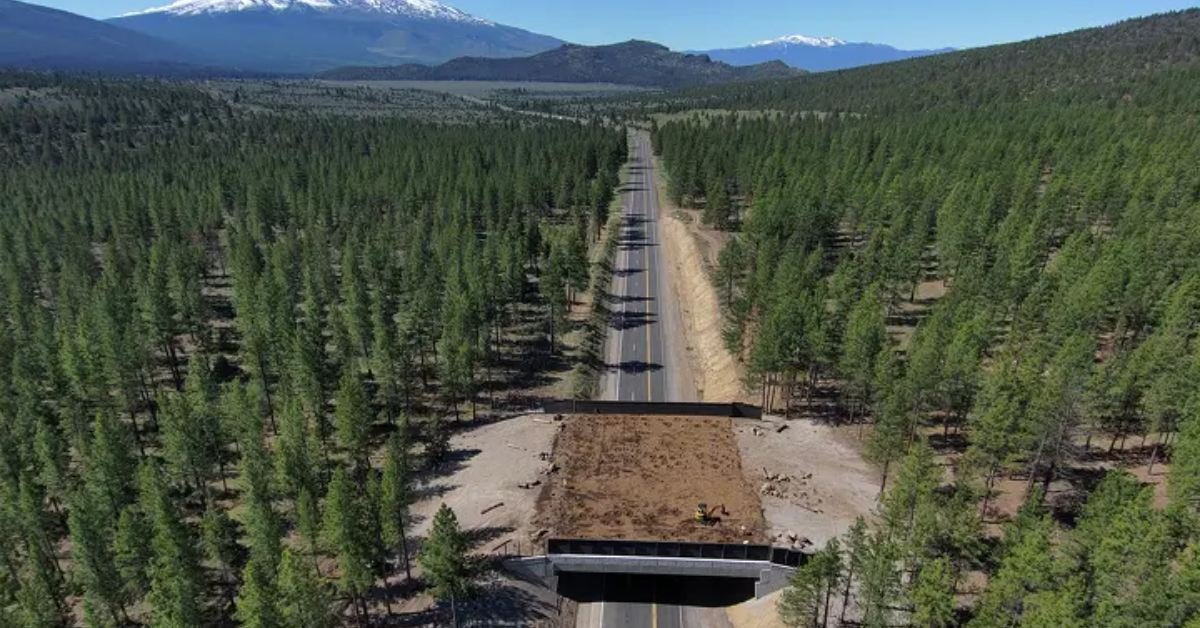
In California, a new wildlife crossing over Route 97 in Siskiyou County is nearing completion after a decade of planning.
“The primary problem on the highway was the mortality,” Fraser Shilling, a director at the UC Davis Road Ecology Center, told SFGATE. “There’s truck traffic that goes through there, and they don’t slow down. They hit whatever’s on the road, so a lot of deer and elk were getting killed.”
Image via Caltrans, UC Davis Road Ecology Center, CDFW, Ore-Cal RCD
But before the crossing has even been completed, it’s already been graced by animal visitors. On June 2, the UC Davis Road Ecology Center shared footage of three mule deer crossing the bridge, navigating around lumber and soil on the active construction site.
“These deer are the first ever to successfully cross a roadway in the state of California using a newly constructed wildlife overcrossing, located on U.S. 97 in Siskiyou County, just 15 hours after crews wrapped up work for the day,” Caltrans District 2 shared in a Facebook post.
In addition to the three mule deer, there were signs of a bobcat crossing the wildlife bridge in January, but camera footage wasn’t definitive.
“While the contractor is still completing final touches, it’s incredible to see wildlife already embracing the new structure, even with workers still in the area,” the post continued. “This wildlife overcrossing was designed to provide animals with a safer way to cross the highway while helping reduce wildlife-vehicle collisions for motorists traveling through the corridor.”
Image via Fraser Shilling/UC Davis Road Ecology Center
The wildlife overpass, which is approximately 100 feet long by 140 feet wide, is set to be completed this fall.
“Seeing animals use the structure this quickly is an exciting sign of the positive impact this project will have for both wildlife connectivity and public safety for years to come,” Caltrans District 2 said.
You may also like: A new wildlife overpass connects two of Australia’s national parks, saving beloved endangered species
Header image via Caltrans, UC Davis Road Ecology Center, CDFW, Ore-Cal RCD
