


Quick Read
Social Security’s Special Minimum Benefit, created in 1972, guarantees workers with 30 years of low-wage work at least $1,123.70 monthly as of January 2026, potentially adding $35,000+ over a 20-year retirement compared to the standard formula.
The benefit is nearly extinct for new retirees because it is not wage-indexed while the standard formula is, making it impossible to qualify for workers turning 62 in 2024 or later, though under 30,000 people still collect it from earlier eligibility windows.
A recent study identified one single habit that doubled Americans’ retirement savings and moved retirement from dream, to reality. Read more here.
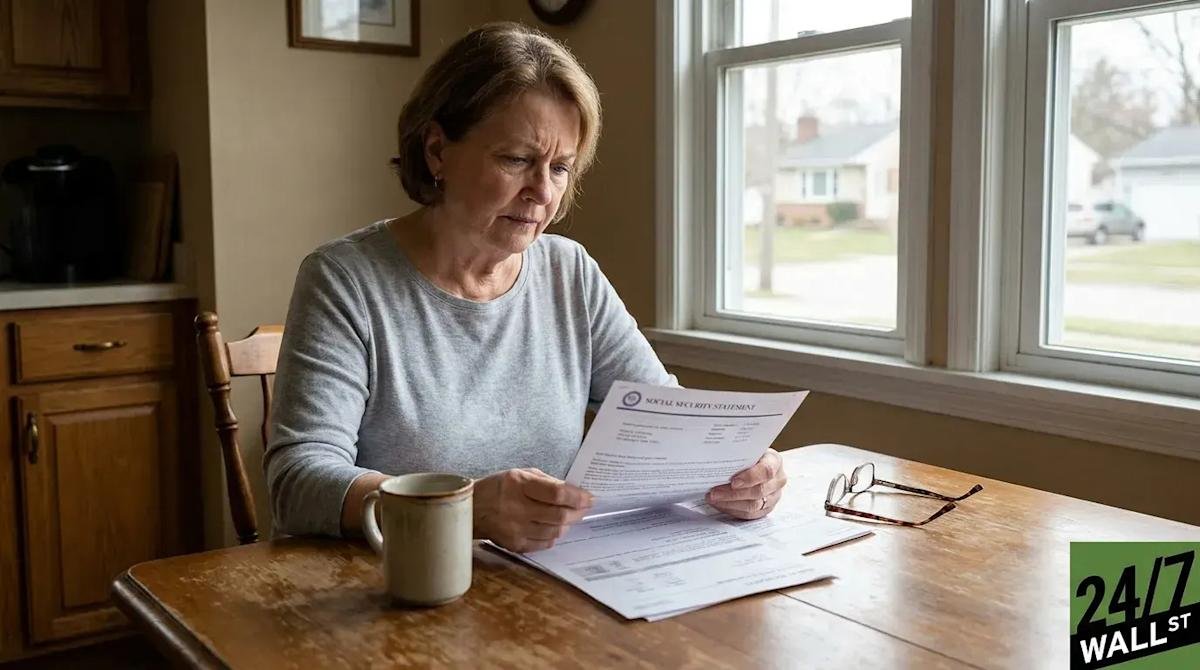
Picture a 67-year-old who cleaned hotel rooms in her 30s, ran a cash register through her 40s, and spent her 50s in a diner kitchen. Thirty years of steady work, almost none above $25,000 a year. Now she stares at her Social Security statement and wonders if that is really all the system has for her.
Plenty of workers fit this profile. On a popular retirement forum recently, a woman described almost exactly this profile: 28 years in food service and housekeeping. There is a provision in Social Security designed for earners like her, and almost nobody talks about it.
A 1972 Provision Hiding in Plain Sight
The Special Minimum Benefit was created to ensure workers with long careers at low wages would not retire on a sliver of a check. Instead of running lifetime earnings through the standard formula, it pays based on years of coverage, meaning stretches where a worker earned at least a set threshold amount. For 2026, that threshold is around $20,565, and it adjusts each year with average wages.
Read: Data Shows One Habit Doubles American’s Savings And Boosts Retirement
Most Americans drastically underestimate how much they need to retire and overestimate how prepared they are. But data shows that people with one habit have more than double the savings of those who don’t.
The payout scale is simple. As of January 2026, the Special Minimum Benefit pays $53.50 a month for 11 years of covered work and climbs to $1,123.70 a month at 30 years. What matters is how many years a retiree cleared the threshold, regardless of how much she earned within those years.
For our 67-year-old with 30 qualifying years, that is roughly $13,500 a year. If the standard formula on her low lifetime earnings would have produced $980 a month, Social Security pays the higher of the two. The difference: about $144 more a month. Over a 20-year retirement, that is closer to $35,000 in extra lifetime income.
Story Continues
Why Almost No One Qualifies Anymore
The catch that keeps this benefit obscure? The Special Minimum Benefit is not indexed to wages, while the standard formula is. So with every passing year, the regular Social Security calculation produces a bigger number, and the Special Minimum becomes relatively smaller. For workers who turn 62 in 2024 or later, the wage-indexed standard benefit now wins in essentially every case, making the Special Minimum effectively unreachable going forward.
That is why the number of people drawing on this provision dropped from around 200,000 in the early 1990s to under 30,000 by December 2020. If a retiree turned 62 before 2024 and the Special Minimum produced the higher benefit at that time, it was locked in. It cannot be recalculated later, and it only grows through the annual cost-of-living adjustment (COLA).
How It Fits With the Rest of the Picture
For someone in this scenario, Social Security is not a supplement, it is the retirement plan. A worker with 30 low-wage years and no 401(k) or pension arrives at 67 with a single guaranteed income stream. Getting every dollar of that stream right, including whether the Special Minimum or standard formula produces the higher number, matters more than almost any investment decision she could have made along the way.
Social Security transfer receipts nationally reached $1,631.2 billion in Q1 2026, according to the Bureau of Economic Analysis, a figure that reflects just how central the program is to millions of households like hers.
Two interactions matter. First, at this income level, benefits are usually not taxable at the federal level, so every extra dollar from the Special Minimum lands in the checking account intact. Second, the Special Minimum applies only to your own retirement benefit. It does not apply to spousal or survivor benefits, which still come off the standard formula. A surviving spouse may end up with a different monthly amount than the worker received in life.
What to Actually Do About It
If you turned 62 before 2024 and your work history fits this profile, two steps are worth taking:
Count your qualifying years. Pull your earnings record from your Social Security account and tally how many years you cleared the year-of-coverage threshold in effect at the time. Eleven is the entry point, 30 is the maximum.
Ask Social Security directly whether the Special Minimum produces a higher benefit than your standard calculation, and request that they apply whichever figure is larger. They are supposed to do this automatically, but earnings record errors are common and worth correcting before you file.
The hardest mistake to undo is filing without checking. Once your benefit is set, you live with it. A short phone call or office visit before that paperwork goes through can be worth thousands of dollars over the rest of your retirement, and for the small group still eligible, it is one of the few corners of Social Security where a forgotten 1970s rule still pays out.
Data Shows One Habit Doubles American’s Savings And Boosts Retirement
Most Americans drastically underestimate how much they need to retire and overestimate how prepared they are. But data shows that people with one habit have more than double the savings of those who don’t.
And no, it’s got nothing to do with increasing your income, savings, clipping coupons, or even cutting back on your lifestyle. It’s much more straightforward (and powerful) than any of that. Frankly, it’s shocking more people don’t adopt the habit given how easy it is.
