


Loneliness and emotional isolation may negatively affect mental health, sleep, and emotional well-being across all age and income groups.
Highlights:
- Loneliness has been associated with depression, anxiety, stress, and poor sleep (1✔ ✔Trusted Source
Social isolation and health. Annual Review of Psychology.Go to source
) - Young adults increasingly report emotional isolation despite digital connectivity (2✔ ✔Trusted Source
Loneliness in the modern age: An evolving mental health concern. Lancet Psychiatry.Go to source
) - Strong social connection may help improve emotional resilience and mental well-being (3✔ ✔Trusted Source
Our epidemic of loneliness and isolation: The U.S. Surgeon General’s advisory on social connection.Go to source
)
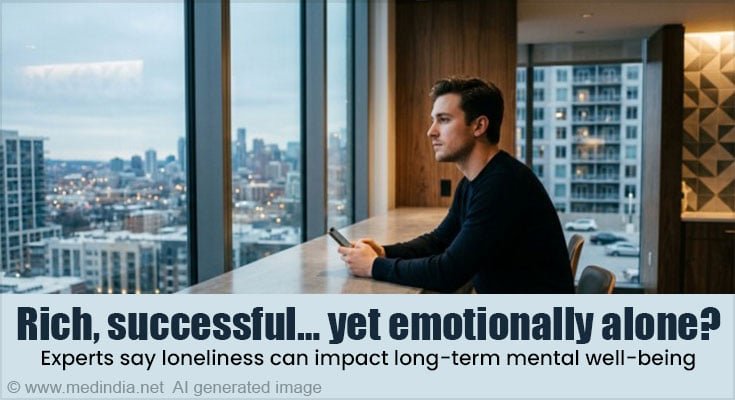
A viral story about a 27-year-old financially successful man reportedly paying for daily companionship has sparked discussions about an important public health issue: Can people feel lonely despite wealth and success?
Research suggests they can.(1✔ ✔Trusted Source
Social isolation and health. Annual Review of Psychology.
Go to source
, 2✔ ✔Trusted Source
Loneliness in the modern age: An evolving mental health concern. Lancet Psychiatry.
Go to source
) Studies indicate that chronic loneliness and emotional isolation may be associated with higher risks of depression, anxiety, stress, poor sleep, and reduced emotional well-being.(1✔ ✔Trusted Source
Social isolation and health. Annual Review of Psychology.
Go to source
, 3✔ ✔Trusted Source
Our epidemic of loneliness and isolation: The U.S. Surgeon General’s advisory on social connection.
Go to source
) Mental health experts say loneliness can affect people across all age groups, professions, and income levels, including individuals who appear socially active or professionally successful.
Advertisement
What Loneliness Really Means in Mental Health
Researchers distinguish between social isolation and loneliness.(1✔ ✔Trusted Source
Social isolation and health. Annual Review of Psychology.
Go to source
)
Social isolation refers to having limited social interaction or support. Loneliness is the emotional feeling of being disconnected, unsupported, or emotionally distant from others.
This means a person may live alone and still feel emotionally healthy, while another individual may feel deeply lonely despite constant social interaction or online activity.
According to researchers, emotional loneliness appears to be increasing among younger adults because of changing work patterns, urban lifestyles, remote work culture, and heavy digital communication.(2✔ ✔Trusted Source
Loneliness in the modern age: An evolving mental health concern. Lancet Psychiatry.
Go to source)
Advertisement
How Chronic Loneliness May Affect the Brain and Body
Studies suggest prolonged loneliness may activate the body’s stress-response system.(1✔ ✔Trusted Source
Social isolation and health. Annual Review of Psychology.
Go to source
, 3✔ ✔Trusted Source
Our epidemic of loneliness and isolation: The U.S. Surgeon General’s advisory on social connection.
Go to source
) Researchers believe chronic emotional stress can increase cortisol levels, disturb sleep patterns, and affect emotional regulation.
Research has associated loneliness with:
- Increased symptoms of anxiety and depression
- Poor sleep quality and daytime fatigue
- Higher emotional stress levels
- Reduced ability to cope with difficult situations
Some studies also suggest social isolation may contribute to inflammatory pathways linked to long-term health problems, although researchers emphasize that current evidence mainly shows associations rather than direct causation.(1✔ ✔Trusted Source
Social isolation and health. Annual Review of Psychology.
Go to source
)
Advertisement
Why Many Young Adults Feel Emotionally Isolated Today
Mental health experts say digital lifestyles may sometimes create the appearance of connection without providing meaningful emotional support.(2✔ ✔Trusted Source
Loneliness in the modern age: An evolving mental health concern. Lancet Psychiatry.
Go to source
)
Remote work, long working hours, social media comparison, and frequent relocation may reduce opportunities for deeper relationships. Many young adults also feel pressure to appear happy and successful online while privately struggling with emotional exhaustion or loneliness.
The recent “wealthy yet lonely” viral discussion gained widespread attention because many individuals identified with the emotional experience despite very different personal circumstances.
Factor
Possible Mental Health Effect
Chronic loneliness
Emotional stress and anxiety
Poor emotional support
Reduced emotional resilience
Disturbed sleep
Fatigue and mood changes
Excessive social comparison
Lower self-esteem and distress
How People Can Overcome Emotional Loneliness
Mental health experts say loneliness can improve when individuals gradually build meaningful emotional connections and healthier daily routines.(3✔ ✔Trusted Source
Our epidemic of loneliness and isolation: The U.S. Surgeon General’s advisory on social connection.
Go to source
, 4✔ ✔Trusted Source
Social isolation and loneliness.
Go to source
) While overcoming loneliness may take time, small consistent changes can support emotional well-being and resilience.
Experts commonly recommend:
- Spending quality time with trusted family members or close friends regularly
- Joining hobby groups, fitness classes, volunteer activities, or community events
- Limiting excessive passive social media scrolling that may worsen social comparison
- Seeking professional mental health support if loneliness becomes persistent or overwhelming
Psychologists also encourage people to focus on meaningful relationships rather than the number of social interactions. Even a few emotionally supportive connections may positively affect stress levels, mood, and overall well-being.
Maintaining healthy sleep, regular physical activity, balanced nutrition, and open emotional communication may also support mental health and emotional resilience over time.(1✔ ✔Trusted Source
Social isolation and health. Annual Review of Psychology.
Go to source, 3✔ ✔Trusted Source
Our epidemic of loneliness and isolation: The U.S. Surgeon General’s advisory on social connection.
Go to source)
Why Loneliness Is Becoming a Modern Public Health Concern
Current evidence suggests loneliness is not simply a personal emotional experience but also an emerging public health issue.(1✔ ✔Trusted Source
Social isolation and health. Annual Review of Psychology.
Go to source
, 4✔ ✔Trusted Source
Social isolation and loneliness.
Go to source
) Researchers increasingly believe that healthy social connection may play an important role in emotional resilience, stress management, sleep quality, and long-term mental well-being.
Although loneliness affects individuals differently, experts say recognizing emotional isolation early and building supportive relationships may help improve quality of life over time.
Mental health professionals further emphasize that loneliness is a common human experience and not a personal weakness. Early emotional support, meaningful conversations, and professional help when needed may reduce long-term emotional distress and improve overall well-being.
Frequently Asked Questions
Q: Can loneliness really affect mental health?
A: Yes. Research suggests chronic loneliness may be associated with depression, anxiety, stress, emotional exhaustion, and poor sleep.
Q: What are signs of emotional loneliness?
A: Common signs may include persistent sadness, emotional disconnection, low motivation, sleep problems, and feeling unsupported.
Q: Can rich or successful people feel lonely?
A: Yes. Emotional well-being and financial success are separate aspects of health, and loneliness can affect anyone.
Q: Is loneliness the same as depression?
A: No. Loneliness is an emotional state, while depression is a medical mental health disorder. However, prolonged loneliness may increase the risk of depressive symptoms.
Q: What can people do to reduce loneliness?
A: Building meaningful relationships, participating in social activities, maintaining healthy routines, limiting excessive social media comparison, and seeking professional mental health support may help reduce feelings of loneliness.
References:
- Social isolation and health. Annual Review of Psychology. – (https://pubmed.ncbi.nlm.nih.gov/34758287/)
- Loneliness in the modern age: An evolving mental health concern. Lancet Psychiatry. – (https://pubmed.ncbi.nlm.nih.gov/37910244/)
- Our epidemic of loneliness and isolation: The U.S. Surgeon General’s advisory on social connection. – (https://www.hhs.gov/sites/default/files/surgeon-general-social-connection-advisory.pdf)
- Social isolation and loneliness. – (https://www.who.int/teams/social-determinants-of-health/demographic-change-and-healthy-ageing/social-isolation-and-loneliness)
- Caring for your mental health. – (https://www.nimh.nih.gov/health/topics/caring-for-your-mental-health)
- Health effects of social isolation and loneliness. – (https://www.cdc.gov/social-connectedness/risk-factors/index.html)
Source-Medindia
