


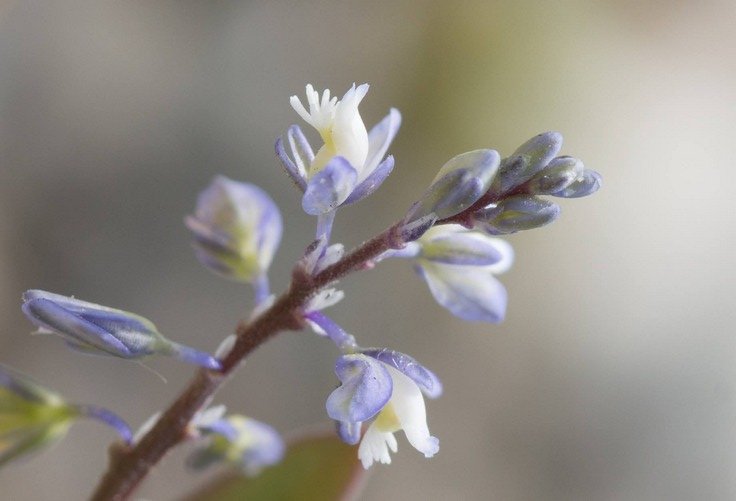
Kentish milkwort – credit, Stephen Weeks © released
Conservationists are celebrating the remarkable recovery of an important and unique British flower known as Kentish milkwort after recording a seven-fold population increase during the recent growing season.
1,245 self-sown plants were recorded this year at a crucial growing site, now the largest population of the species in the UK.
Teetering on the verge of extinction, Kentish milkwort (Polygala amarella) became the focus of urgent conservation action more than a decade ago. The recovery project began in 2013 when what was then known as dwarf milkwort existed as two separated populations in northern England and Kent. By 2010, the plant was only found at three Kent sites.
Subsequent taxonomic work recognized the Kent population as a distinct subspecies, increasing the urgency of conservation action. Experts carefully collected seeds from the strongest surviving individuals, which were then taken to be cultivated by the recovery program partners at the Royal Botanical Gardens Kew, thereby establishing a secure seed stock for future restoration without further pressure on wild plants.
Between 2018 and 2019, further seed collections enabled the production of plants for reintroduction. In 2021, trial introductions were carried out at Fackenden Down and Queendown Warren—both grasslands with chalk bedrock, where the species had been absent for over 50 years.
While Fackenden Down did not succeed, Queendown Warren has gone from strength to strength. Numbers rose from 17 plants in 2022, to 47 in 2023, 86 in 2024, and 177 in 2025.
BLOOMING AGAIN: Plant Believed Extinct For 60 Years Reappears Thanks to Curious Nature Lover and iNaturalist
Then came the sharp turnaround, with 1,245 self-sown plants recorded—seven-fold increase on last year—establishing the strongest population of Kentish milkwort in the UK.
Volunteers at Queendown Warren counting Kentish milkwort – credit, Kent Wildlife Trust, released
“The scale of this year’s increase has been incredible to see,” said Rob Pennington, an officer at Kent Wildlife Trust. “The plants are clearly thriving at the site and last year’s population must have produced a huge amount of seed that has now successfully germinated.”
“We hope the population will continue to spread in the coming years and eventually become a donor site, allowing us to collect seed for future restoration work at other suitable locations.”
MORE STORIES LIKE THIS: Scientist Discovers New Species of Wildflower That Only Grows in New Jersey
This recovery is the result of diligent work by the Kent Wildlife Trust in partnership with The Species Recovery Trust, Royal Botanic Gardens Kew, and local volunteers.
The work has also revealed key insights into the species’ ecology, showing it thrives in open, disturbed ground created by grazing and natural soil disturbance from animals such as rabbits and badgers.
There’s something about an endangered plant: rooted, exposed, and unable to run from what threatens it, that unnerves one even more than an endangered animal. Did any conservationists lose sleep picturing the less than 17 small plants shivering in the cold, liable to disappear on the chance placement of a deer’s hoof?
How must they be able rest easier now having seen the flower proliferate again; its niche in the chalky ecosystem maintained for the foreseeable future.
SHARE These Diligent Plant Conservationists Hard At Work Saving Species…
