


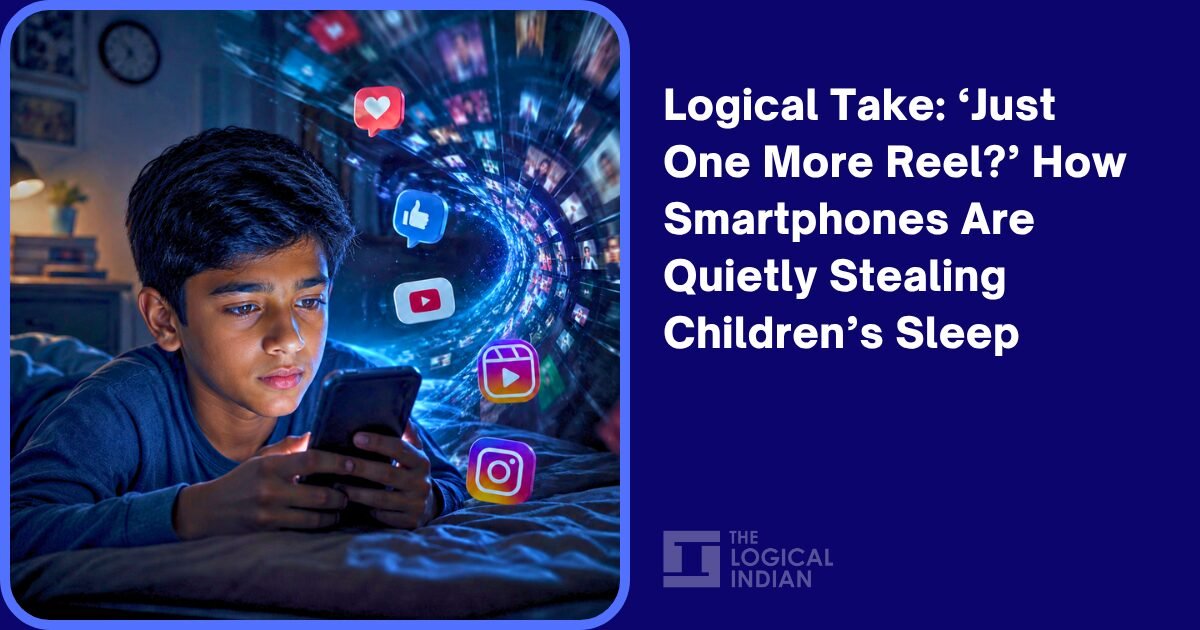
At 1:30 in the morning, the house is finally quiet. A child has fallen asleep with YouTube still playing softly beside their pillow.
In another room, a teenager turns over in bed, eyes half closed, but fingers still scrolling through Instagram reels and unread notifications.
For many families today, this has quietly become a normal bedtime scene. Smartphones have moved from study tables to dining tables and now into bedrooms, changing not only how children spend their days but also how they sleep at night.
Researchers and parents across the world are becoming increasingly concerned about what this constant connection is doing to children’s rest, concentration, and emotional well-being.
Midnight Scrolls, Sleepless Nights
A recent study published in JAMA Pediatrics has offered one of the clearest pictures yet of how deeply smartphones are cutting into teenagers’ sleep. Researchers tracked the phone usage patterns of 657 adolescents, with an average age of 15, through an app installed on their devices. Unlike earlier studies based on self-reporting, this research monitored actual screen activity during the night.
The findings were striking. Teenagers spent an average of over 50 minutes on smartphones between 10 p.m. and 6 a.m. on school nights. More than half of the participants used their phones between midnight and 4 a.m. at least once during the study period. Most of this late-night activity involved social media platforms such as YouTube, Instagram, and TikTok.
Dr. Jason Nagata, associate professor of pediatrics at the University of California, San Francisco and lead author of the study, said he was surprised that so many adolescents remained active on their phones during hours meant for deep sleep. Researchers also warned that the impact extends beyond screen time itself. Emotional stimulation from social media can make it harder for young minds to relax even after the phone is put away.
The concern comes at a time when children and teenagers worldwide are already sleeping less than recommended. Health experts have repeatedly linked sleep deprivation among young people to stress, poor concentration, anxiety, and declining academic performance.
India’s Growing Bedtime Battle
India is witnessing the same pattern, often at an even larger scale because of widespread smartphone access and cheap internet data. A recent survey by Child Online Protection, or COP, which covered 5,000 parents across major Indian cities, found that 62 percent of parents believe smartphones are keeping teenagers awake past 11 p.m.
The findings suggest that late-night scrolling has become a routine part of teenage life. One in three teenagers reportedly spends more than two hours on screens after dinner. Parents also said notifications, gaming, and social media use frequently interrupt sleep during the night.
The concern is especially visible in cities such as Delhi, Mumbai, and Bengaluru. In Delhi, nearly half the parents surveyed said their children wake up at night to check notifications. Bengaluru reported some of the highest levels of bedtime phone use among teenagers.
What stands out is that this issue is no longer limited to metro cities. Parents in Jaipur, Lucknow, and Ahmedabad are increasingly reporting similar worries. The shift suggests that digital sleep disruption is becoming a nationwide concern, affecting families across both large urban centres and smaller cities.
Why Children Need Sleep More Than Adults
Sleep is not simply rest. For children and teenagers, it is a critical period when the brain and body recover, grow, and process information from the day.
During sleep, the brain strengthens memory, supports learning, and regulates emotions. Children who sleep well are generally better able to focus in school, manage stress, and maintain emotional balance. Proper sleep also strengthens immunity and supports physical growth.
When sleep becomes irregular or insufficient, the effects often appear gradually. Children may become irritable, anxious, distracted, or emotionally withdrawn. Teachers and parents may notice declining concentration, mood swings, or falling academic performance without immediately connecting it to late-night screen use.
Experts also warn that blue light from screens can interfere with the body’s natural sleep cycle, making it harder to fall asleep and stay asleep.
Why Screens Are Winning the Night
Several factors are driving this shift. Social media platforms and video apps are intentionally designed to keep users engaged for as long as possible. Endless scrolling, autoplay videos, and constant notifications make it difficult for children to disconnect.
Academic pressure also plays a role. Many teenagers use phones late into the night for online classes, homework, or study-related searches. After the pandemic years, screens became deeply integrated into daily learning habits.
At the same time, outdoor play and unstructured leisure time have reduced significantly. For many children, smartphones have become the easiest form of entertainment and escape. Parents, often exhausted by work and long schedules themselves, may find it difficult to consistently monitor screen habits at night.
Affordable internet access and personal smartphones have only accelerated the trend.
Can Families Reclaim Bedtime?
Experts say the goal is not to remove technology completely but to create healthier boundaries around it. Many recommend keeping phones out of bedrooms at night and creating screen-free bedtime routines for the entire family.
Simple habits such as turning off notifications, avoiding social media before sleep, and charging devices outside sleeping areas can help children unwind more naturally. Encouraging reading, conversation, or quiet family time before bed may also reduce dependence on screens.
Importantly, experts say parents must model healthier digital habits themselves. Children often mirror what they see at home. A household where everyone remains glued to screens late into the night makes boundaries harder to enforce.
When Do Young Minds Truly Rest?
The larger question may not just be about smartphones, but about modern childhood itself. If children are connected all the time, when do their minds actually rest?
Editor’s Note: This article is part of The Logical Take, a commentary section of The Logical Indian. The views expressed are based on research, constitutional values, and the author’s analysis of publicly reported events. They are intended to encourage informed public discourse and do not seek to target or malign any community, institution, or individual.
Read More: India’s Beauty Industry Faces A Regulatory Reset As Injectable Cosmetic Procedures Come Under Scrutiny
