


May is children’s mental health awareness month and the conversation surrounding children’s mental health is both vast and ever-changing. Anxiety has become interwoven in what feels like nearly every aspect of childhood life. From where I sit week to week, younger children are discussing worries about their futures, alongside current social stressors.
MODERN PARENTING: Setting healthier screen-time limits
Cynthia Hernandez, a licensed clinical social worker-supervisor, is an outpatient clinician at Clarity Child Guidance Center in San Antonio.
Courtesy photo
Research from the Child and Adolescent Health Measurement Initiative (2022-2023) found that older children were diagnosed with anxiety more frequently than depression or behavioral disorders. Additional research published in 2022 identified anxiety disorders as the most common psychiatric condition among children, affecting nearly 1 in 12 children and 1 in 4 adolescents between the ages of 13 and 18.
Article continues below this ad
The DSM-5-TR defines anxiety disorders as mental health conditions characterized by excessive and persistent fear or worry that interferes with daily functioning. In many ways, anxiety is the brain signaling that there may be danger present. But what happens when school, bedtime, social situations or everyday routines are perceived as threats despite the child being safe? Children can become trapped in a constant state of alarm, experiencing an overwhelming sense of danger that leaves them dysregulated and unable to quiet their internal warning system.
Anxiety can present as a child becoming increasingly sensitive, suspicious, uncomfortable, negative and preoccupied with trying to protect themselves from perceived threats. For some children, this may appear as overthinking, reassurance-seeking, perfectionism, irritability, avoidance or constantly attempting to anticipate what could go wrong next.
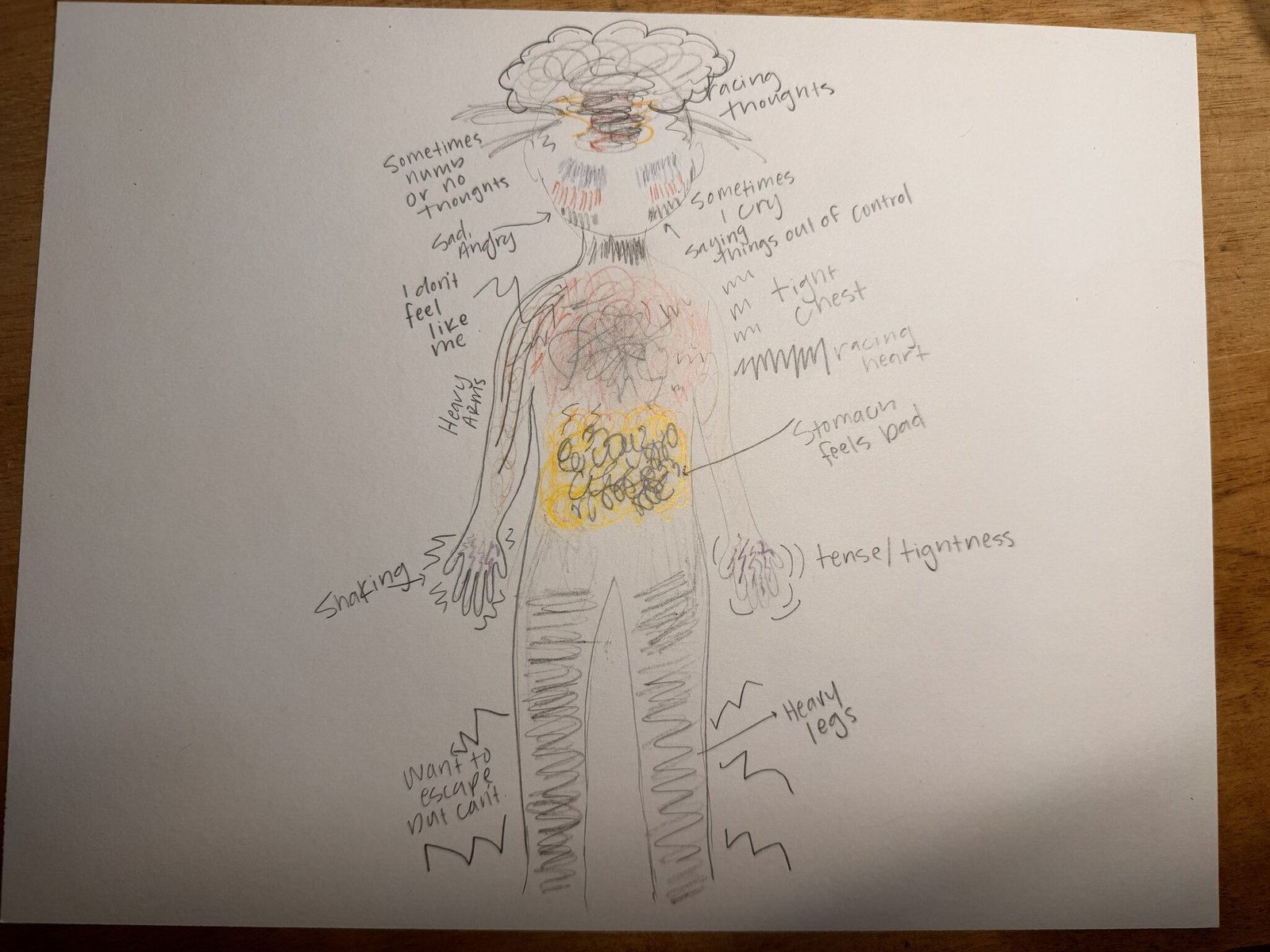
Parents may also notice anxiety manifesting in more somatic or physical ways. Research on somatic complaints in children suggests that girls report these symptoms more frequently, with the most common complaints including headaches, stomachaches, fatigue, difficulty breathing, sleeplessness and nightmares. When a child experiences chronic perceptions of threat and danger, their ability to function consistently at school, at home, and socially can begin to erode. Caregivers and other supportive adults may find themselves “walking on eggshells,” trying to avoid situations that could trigger distress or panic. Over time, children may lose their sense of confidence and capacity, becoming increasingly fearful, ashamed, frustrated or withdrawn.
Article continues below this ad
In a 2021 arts-based study, children and adolescents described anxiety through vivid metaphors that captured the intensity of what they were experiencing internally. One youth described anxiety as “like a monster inside of me,” while others described it as “a monster that just creeps up on you,” “black sludge,” “like drowning,” or “a box that just keeps getting smaller.”
In my own sessions, we often use art to help children express experiences that are difficult to express with words alone.
This is a composite sketch of what several children have shared (through art) over Cynthia Hernandez’s four years at Clarity Child Guidance Center about what anxiety feels like in their body.
Courtesy photo
As a caregiver, if you have concerns about your child’s current ability to manage emotional states and feel that their fear, worry or distress is out of proportion to the situation, seeking a professional therapeutic assessment and intervention can be important.
Article continues below this ad
For caregivers, the instinct to protect a child from danger is natural. However, when families begin over-accommodating perceived or unrealistic threats, children may become increasingly avoidant and less willing to participate in changes or accept help. For parents interested in further reading and support around childhood anxiety, I recommend the following two books: “Breaking free of childhood anxiety and OCD” (Eli R. Lebowitz, Phd, 2021) and “Treating childhood and adolescent anxiety: A guide for caregivers” (Eli R. Lebowitz and Hairm Omer). Another helpful resource for those who enjoy learning through audio or video is the work of Stuart Perry, who has presented on childhood stressors at ClarityCon over the last two years. Several of his parent-focused videos are accessible on his YouTube channel.
Anxiety itself is not abnormal. Successful parenting does not include the elimination of all fear or worry triggers from childhood, but to help children build the tools, confidence and support needed to move through those feelings in connected and successful ways. With the right support system — family, school intervention, community support and mental health professionals — clinical anxiety can become manageable, and children can continue to grow, connect and thrive.
Cynthia Hernandez, a licensed clinical social worker-supervisor, is an outpatient clinician at Clarity Child Guidance Center in San Antonio.
Article continues below this ad
