


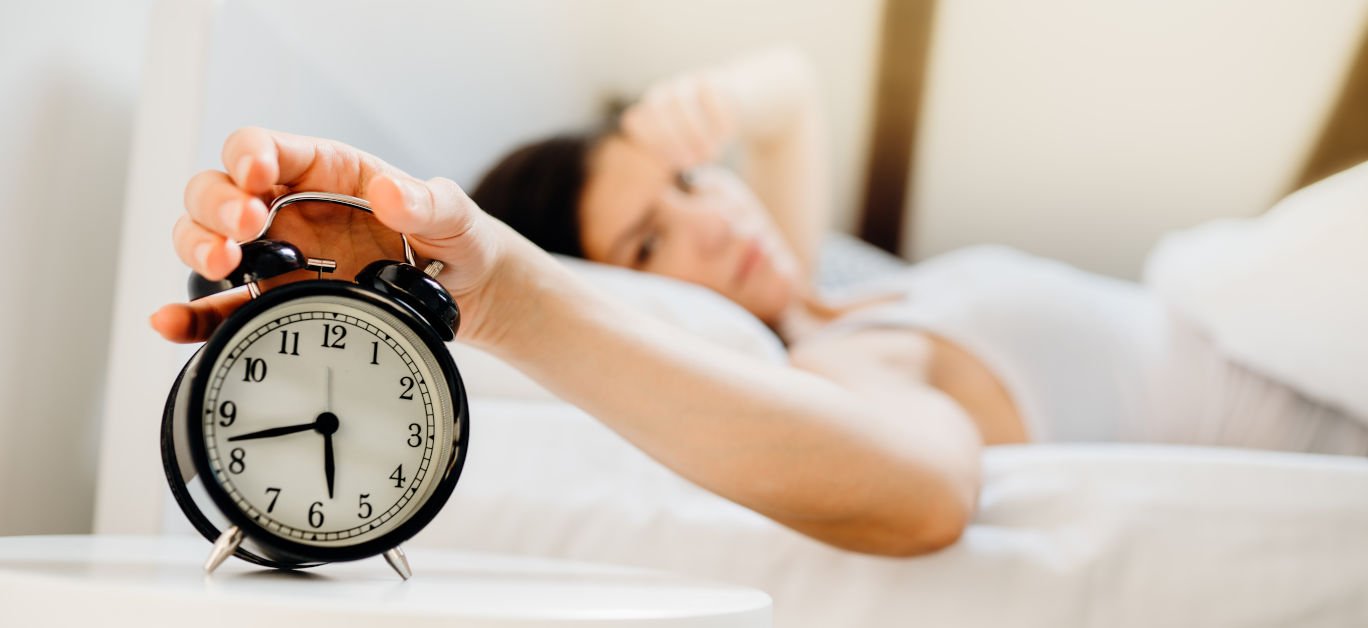
If you’re tired of being tired, then stress could be the culprit – and the reason you’re finding it so difficult to get a good night’s sleep. The connection between stress and poor sleep is well documented, and the fact that anxious people tend to sleep badly is nothing new. Difficult life events can lead to insomnia, and any research into the causes of disturbed sleep places stress somewhere near the top.
What gets discussed less often, however, is the specific physiological machinery that translates psychological stress into a fragmented, shallow and unsatisfying type of rest. The process isn’t as mysterious as it might seem, and understanding it helps explain why the usual advice to ‘just relax’ rarely works.
Here, we take a closer look at how stress can physically change your sleep patterns – as well as what you can do about it so that you can finally get back to waking up feeling recharged.
The hormonal cascade that keeps you awake
Stress activates the hypothalamic-pituitary-adrenal axis, which culminates in the release of cortisol – the body’s main stress hormone, which is designed to keep you alert, focused, and ready to respond to threats. Cortisol normally follows a daily rhythm: high in the morning, then gradually declining through the day, reaching its lowest during the first half of the night. This pattern matters for sleep because low cortisol in the evening is one of the main factors that allows the transition into deep sleep.
One of the most distinctive features of stress-related sleep disruption is the pattern of early morning waking
Chronic stress disrupts this pattern. Cortisol stays elevated into the evening, sometimes producing a secondary peak when it should be at its nadir, which means your body is still receiving the signal that you should be alert and ready – even as you’re trying to fall asleep. This produces the characteristic experience of chronic stress-related insomnia: physically tired, mentally wired, and unable to settle even when exhausted.
The sympathetic nervous system, which handles the body’s fight-or-flight response, also stays activated in stressed individuals when it should be quietening down for sleep. Heart rate variability decreases, blood pressure stays elevated, and muscle tension persists, with the body maintaining a state of readiness that is fundamentally incompatible with the parasympathetic dominance required for good sleep.
Why you wake at 3am
One of the most distinctive features of stress-related sleep disruption is the pattern of early morning waking: you fall asleep reasonably well, often from exhaustion, but wake between 2am and 4am with thoughts racing and heart rate elevated. This isn’t random; the body’s cortisol curve begins its rise toward morning levels around this time, and in a stressed individual, that rise begins earlier and more steeply than it should.
The evolutionary logic probably involves alertness to threat during vulnerable sleep hours, but the practical consequence today is that stressed people reliably wake in the pre-dawn hours, often unable to return to sleep, and spend the remaining hours alternating between light sleep and worried wakefulness. The sleep quality in this period is poor enough that many people describe the night as ruined once the 3am waking happens, which is a reasonably accurate assumption.
The REM sleep connection
Stress affects REM sleep in complex and somewhat paradoxical ways. Acute stress tends to suppress REM sleep, as the body prioritises lighter sleep states that allow for faster arousal, but chronic stress often produces the opposite pattern: more REM sleep, but more fragmented, more emotionally charged, and more associated with vivid and often unpleasant dreams.
Stress affects REM sleep in complex and somewhat paradoxical ways
This is a key reason why depressed and anxious people often report disturbed dreaming; the REM system is trying to process elevated emotional content, and the dreams reflect that processing. The net effect is that the sleep feels non-restorative even when the duration is adequate, because so much of it is being spent in active emotional processing rather than restorative rest.
The dream content itself can become a source of further stress, particularly for people experiencing trauma-related sleep problems. Recurrent nightmares are a feature of post-traumatic stress and of severe anxiety, and they create a feedback loop where fear of sleep itself becomes another barrier to good rest.
Muscle tension and body load
Stress holds physically in the body in ways that directly affect sleep, and chronically tense muscles in the shoulders, jaw, and back don’t relax fully when you lie down. The background muscle tone that would normally drop during sleep stays elevated, which contributes to morning aches, teeth grinding, and the sense of having woken up more tired than when you went to bed.
This has a reciprocal relationship with the mattress. A poorly supportive surface forces stressed muscles to do additional stabilising work through the night, compounding the tension problem – but a mattress that provides good pressure relief and spinal support lets chronically tense muscles genuinely rest rather than continuing to engage. For someone under chronic stress, the quality of their sleeping surface matters more than it does for a relaxed sleeper, because the mattress either helps the body unwind, or actively prevents it. Pairing balanced support with advanced support pillows for restful sleep tends to help here more than overly firm or overly soft alternatives, as neck and shoulder tension are often where stressed sleepers carry the most residual load.
Weeks of elevated stress produce a progressively worse sleep baseline that can persist
The rumination loop
Anxious thinking has a particular relationship with bedtime that most chronically stressed people recognise. The moment you lie down, with no distraction and no task to occupy the mind, the day’s worries and the next day’s plans surface with uncomfortable clarity. This isn’t a failure of willpower; it’s what happens when an anxious mind is given idle time.
The standard advice to ‘clear your mind before bed’ is almost useless for people in this state, because clearing the mind is exactly what the anxious brain refuses to do. More effective interventions tend to be ones that give the mind an acceptable task – such as writing worries down in a notebook earlier in the evening, completing a structured wind-down routine, or using a guided meditation that occupies attention without demanding concentration. The goal isn’t absence of thought, but redirection away from the rumination pattern.
Cognitive behavioural therapy for insomnia (CBT-I), which has better evidence behind it than any medication for chronic insomnia, includes specific techniques for handling this. Stimulus control, which involves getting out of bed if you’re not sleeping after 20 minutes, breaks the association between the bed and wakeful anxiety, while sleep restriction, which temporarily reduces time in bed to rebuild sleep pressure, addresses the fragmentation that rumination creates.
Why the night before matters
Stress and sleep have a cumulative relationship, and a single stressful day before a normal night will already produce some sleep disruption. Weeks of elevated stress produce a progressively worse sleep baseline that can persist even after the immediate stressor resolves. The body’s stress response systems become sensitised, meaning that smaller triggers now produce larger sleep-disrupting effects, and the sleep disruption itself becomes a stressor that perpetuates the cycle.
This is why stress-related insomnia can long outlast the original cause. People recovering from a difficult period often find their sleep takes weeks or months to normalise even after their circumstances improve, as the hormonal and neurological changes produced by chronic stress don’t reverse overnight, and the behaviours that developed around poor sleep (late bedtimes, daytime anxiety about sleep, compensatory alcohol use) often need to be unwound separately.
Slow-paced breathing practices – comprised of around six breaths per minute – activate the parasympathetic nervous system directly
Physical interventions that help
The interventions with the best evidence for stress-related sleep problems tend to be the ones that address the physiological state, rather than just the psychological one. Regular exercise, particularly aerobic activity earlier in the day, reduces baseline cortisol and improves sleep architecture, while cool bedroom temperatures support the drop in core body temperature that anxious bodies resist. Dark, quiet environments, meanwhile, reduce the sensory load that a vigilant nervous system continues to monitor.
Slow-paced breathing practices – comprised of around six breaths per minute – activate the parasympathetic nervous system directly. This isn’t mysticism; it’s a measurable physiological intervention that reduces heart rate and blood pressure through the baroreceptor reflex, and spending 10 minutes doing slow breathing before bed can meaningfully reduce sleep latency in stressed individuals. However, the effect is greater if it becomes a regular practice, rather than just an emergency tool.
When stress-related sleep becomes something else
There’s a point at which stress-related insomnia stops being a response to circumstances, and becomes a sleep disorder in its own right. Insomnia disorder, as clinically defined, persists beyond the stressor that originally triggered it and becomes a self-maintaining problem, at which point, the sleep difficulties are being perpetuated by conditioning, behaviour, and altered sleep biology rather than by the original stress.
If your sleep has been poor for more than a few months, and identifying and addressing specific stressors hasn’t helped, the problem has probably shifted into this territory, and CBT-I, rather than more stress management, is the evidence-based approach at this point. Many general practitioners in the UK can now refer patients for CBT-I either in person or through digital programmes, and the results are typically better than pharmaceutical options over the long term.
The most important thing to understand is that the sleep disruption you’re experiencing isn’t weakness or failure of discipline. It’s a physiological response to an overactivated stress system, with specific mechanisms and specific treatments – and the interventions that work address biology, not willpower.
