


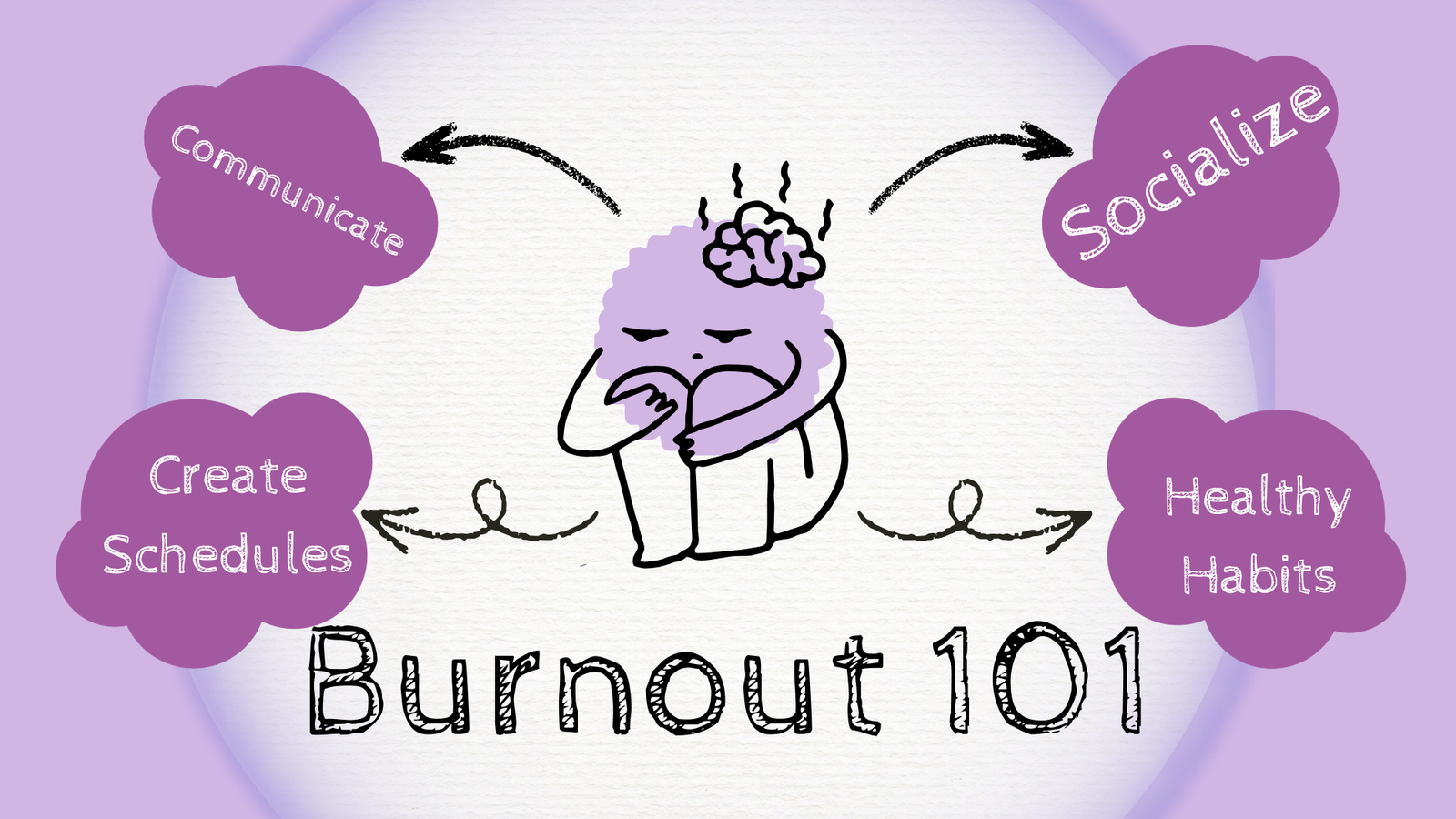
Many students experience burnout during their education, especially in college. Students must balance schoolwork with home, jobs and personal responsibilities. About 40% to 55% of college students report symptoms of burnout.
Burnout is difficult to avoid, but with organization, mindset and self-prioritization one finds effective ways to cope.
Burnout can stem from different mentally overloading factors, but there is a trend in exhaustion and burnout rates among different college majors.
Majors such as engineering, nursing and journalism provide typically rigorous and physically demanding workloads that extend out of class time, creating another layer of mental overload for students.
Sarah Brown Blake, a professor of Sacramento State’s school of nursing, says that burnout is a persistent and pervasive challenge in nursing for professional colleagues and students.
“Nursing students, particularly those enrolled at Sac State and in the CSU system, experience their own degree of burnout related to the pressure of managing an extraordinarily rigorous undergraduate professional program,” Blake said. “Our goal is to help them learn to manage stress during school, so they can apply burnout prevention strategies when they begin their careers.”
Blake said students enter the program in acknowledgement of the risk of burnout, with some instructors preparing them through implementing self-care habits in the curriculum and mindful practices in lecture and clinical courses.
Building community among students experiencing the same major hardships can provide support, Blake says the Sac State chapters of the California Student Nurses Association (CNSA) and the Association of Men in Nursing (AMIN) offer this outlet for nursing majors.
RELATED: 15th ‘Out of the Darkness Walk’ unites campus despite windy weather
“We have two active nursing clubs that offer students opportunities to decompress, engage with each other, and share their challenges,” Blake said. “Our students really motivate, support, and encourage each other to succeed in the classroom and in the clinical setting.”
Regardless of one’s major and personal stresses, using tips, outlets and practices personalized to oneself can be essential in managing and coping with overall burnout.
1. Creating schedules for schoolwork and personal life can help prevent burnout.
Breaking tasks into smaller steps can make workloads feel more manageable.
Asia Butts, a journalism major, regularly experiences burnout as a full-time student with a job and internship. She utilizes scheduling as a way to stay on track and prioritize her well-being.
“I try to avoid burnout by organizing and prioritizing my tasks with reminders and alarms,” Butts said. “I take it easy and give myself breaks or another reward for completing tasks.”
Scheduling time for leisure and rewards is just as important in scheduling one’s workload, as it fosters motivation.
Blake recognizes prioritizing leisure as a tactic to help students manage burnout and says she practices this herself in her “nonnegotiable” time with her family and dogs.
“I am consistently reminding students to take breaks and do things that bring them joy,” Blake said.
2. Setting strict boundaries goes hand in hand with the process of scheduling one’s daily workload.
This means sticking to study time, even when distractions arise. Avoiding procrastination and setting realistic limits can prevent overload.
The same applies to breaks, meaning making time for friends, family and other leisurely activities.
Thérèse Namwezi, a journalism major, uses small habits to cope with burnout as a full-time student.
“Allowing myself to breathe for a bit when things get tough,” Namwezi said. “I also like to stretch in the morning because I feel more productive throughout the day.”
Boundaries also include communicating stress with loved ones, employers and teachers. Stay true to dedicated work time while not taking on more tasks that aren’t manageable.
3. Unplugging during breaks can reduce mental strain.
Relaxation for many people is media based, but unplugging from screens can provide the brain with the mental reset needed to continue working. Simple activities like walking outside can help reset the mind.
Angela Vazquez, the University Union coordinator, said campus spaces offer ways to unplug and take a break. She said the Relaxation Station offers massage chairs and meditative loungers to help students reset in a meaningful way.
“These resources help combat burnout by giving students intentional time to pause, rest and recharge both mentally and physically,” Vazquez said. “These offerings support stress relief, improve mood and help students return to their day feeling more refreshed, centered and better equipped to manage their responsibilities.
She said the Union also offers recreation spaces, including a games room, The 20o2 and weekly events hosted by UNIQUE.
4. Prioritizing physical needs is often neglected first when dealing with burnout.
Stress can limit time for eating well, exercising and maintaining overall health.
Butts said her school schedule leaves her making the hard decision of prioritizing her school work or physical health during burnout periods.
“I usually prioritize school and work over important things like pertaining to my health, like sleep and exercise,” Butts said. “I think just taking care of my physical health more might soothe my burnout.”
Finding time to take breaks in between busy work schedules to have a good meal, workout or even a quick stretch break can improve one’s endurance.
Balanced meals support concentration, memory and energy, for long hours of study.
Proper sleep is essential to academic performance, but is often neglected in busy schedules with about 70% of college students report getting less than eight hours of sleep per night.
Even short exercise sessions can support mental health through improving mood, memory and stress regulation..
Olivia Smith, a health science major, is in her fifth and final year at Sac State. Taking 15 units and a full time job keeps her mind constantly occupied.
“Some things I’ve done to help mitigate burn out are going to the gym to allow me to shut my brain off for an hour or two,” Smith said. “I also do my best to dedicate one day a weekend to myself, no schoolwork if I can afford it.”
Even though it may feel stressful to take time away from other work, it’s essential for students to find manageable ways to implement these aspects.
5. Communicating and understanding realistic limits can be difficult during high stress.
Recognizing realistic limits can help manage burnout. Communicating with instructors and employers can prevent being overloaded and unable to effectively produce work.. Many teachers are more inclined to work with struggling students and deadlines when there is consistent communication rather than a last minute plea for help.
Blake attests to the importance of communication as a full-time faculty member of the School of Nursing, saying that sharing these concerns are “incredibly important” when dealing with educational burnout.
“We do our best to create an environment that invites students in and creates a safe space for sharing academic and personal concerns that may impact their ability to learn and succeed,” Blake said.
Realism with workload limits also applies to oneself, reinforcing the importance to recognize potential burnout before it becomes unmanageable.
Smith said that she often doesn’t recognize the burnout onset.She returns home around 10 p.m. from her busy schedule, making it hard to find the energy to cook, clean or even shower some days.
“Burnout feels the heaviest, when I’m by myself and life finally settles down,” Smith said. “As soon as I get somewhere I feel comfortable enough to take a breath it feels impossible to be productive and that weighs on my consciousness.”
Burnout often stems from being overworked, which is common in college and managing limits in different aspects can reduce burnout.
6. Making time for socialization and practicing self care through personalized habits.
This includes social time, rest days or a health routine. Stepping away from stress can make workloads feel more manageable.
Self-care supports a healthy lifestyle. About 64% of people report improved confidence, productivity and happiness.
Vazquez says on-campus spaces like the Union provide students with socialization outlets and encourages personal time to reset.
“These spaces also offer opportunities for connection, community, and self-care, helping students improve their mood and reduce feelings of burnout,” Vazquez said. “Even short breaks like these can help students return to their responsibilities feeling more recharged, focused, and ready to manage stress.”
Managing burnout requires practice. However, finding different ways to effectively balance the workload and attend to the personal aspects will ultimately lead to motivation and mental efficiency.
