


Neurodivergent design has rapidly become a focus in workplace interiors. Since the pandemic, their design has undergone a fundamental shift; not just in function, but in what people expect from them as companies increasingly revert to an in-office approach. Alongside broader societal awareness of neurodiversity, design thinking has evolved from serving the collective to recognising the individual.
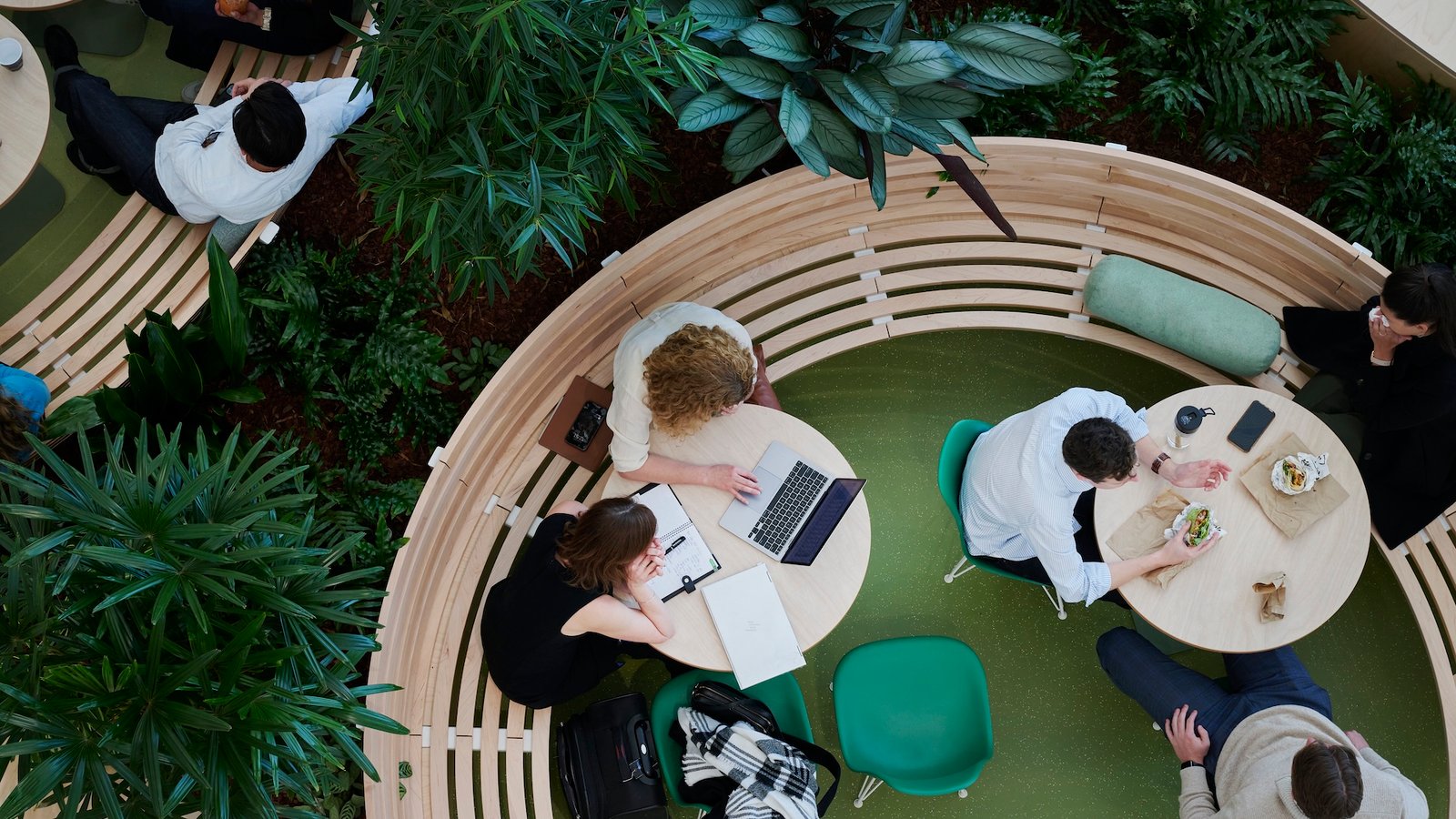
The provision of varied meeting, connecting and entertainment spaces supports different work preferences | Fora Blue Fin, London | Credit: ©Hufton+Crow
Hassell principal Matthew Blaine leads the practice’s UK operations and global commercial workplace design. As a RIBA chartered practice and a certified B Corporation, it collaborates with the best minds in research, industry and design worldwide and is committed to making a positive impact on communities and the environment. For over 20 years, Matthew has worked on workplace environments spanning tech, legal and finance. Increasingly, one of the defining aspects of this work is designing for neurodivergent users – an area they describe as no longer niche but essential. We spoke to Matthew about how Hassell’s approach to designing for neurodiversity and strategies for making workplaces that function better for everyone.
The BSI’s Design for the Mind: Neurodiversity and the Built Environment (PAS 6463:2022) provides guidance on design for a neurodiverse society, to make places more inclusive for everyone. RIBA was on the steering group for this standard, which lays out guidance for designers, planners, specifiers, facilities managers and decision-makers on design and management considerations.
Why was neurodiversity previously overlooked?
Workplace design had, for decades, been guided by the “average user” – a concept rooted in standardisation, uniformity and hierarchy. Open-plan office layouts, desk height, lighting levels and even chairs were all optimised for narrow ranges of comfort and productivity. While efficient and scalable, this approach was flawed.
“It was about understanding how people want to work … as a cohort, not just individuals,” says Matthew. “Understanding that people have different sensory inputs and that they process information in different ways.” The reality is simple: there is no average user.
Sensory processing is how people feel and react to information received from their senses. Bright lights, background noise, strong smells, or uncomfortable clothing might seem minor to some, but to others they can quickly overwhelm the nervous system and lead to exhaustion, anxiety or even burnout.
Designing with neurodiversity in mind
When thinking about how to design for neurodivergent users, it can be hard to know where to begin, but there are real workplace implications. When sensory needs go unmet, it can affect executive function, mental health, emotional regulation and overall performance. But when understood and supported, it’s possible to create an environment where neurodivergent individuals can work at their best for more of the time. The good news is that choice and variety benefit everyone. Different spaces for different needs can not only address neurodivergent needs but also create better environments for all users.
Allowing for personalisation and user control means that every individual feels seen and valued. Dimmable lights or options for warm and cold lighting not only help the user but can also improve video call quality and make your team look more professional. With more online meetings occurring in open-plan spaces, investing in effective acoustic dampening helps workers carry out their business while ensuring colleagues can share spaces with less friction. It’s not about advocating for silence, suggests Matthew, but acoustics are critical. “In simplistic terms, it’s about offering choice and variety in the workplace,” he says.
Open-plan offices were born from a simple managerial logic: remove walls to encourage collaboration, speed up communication, and fit more people into less space, resulting in lower property costs and higher productivity. But in practice, the opposite often proved true. Research on open-plan environments, not least a recent study on the effects of workplace type, has consistently found that it can reduce concentration and increase distraction among employees.
Clear wayfinding can help all users better understand the buildings and spaces they work in | Australia Post, Melbourne | Credit: ©Nicole England
Is neurodivergent design expensive?
A common misconception is that neuro-inclusive design is complex and costly, but in practice, many of its most effective strategies – better lighting, clearer layouts, improved acoustics – are not expensive additions, but shifts in priority. Rather than adding complexity, they remove friction, explains Matthew. “I think there’s an assumption that it’s all very hard to do. In actual fact, it’s about offering choice and variety … which we’ve been doing for a long time.”
Of course, design is not without compromise. Corporate decisions and aesthetic priorities will always play a role, and the challenge is balancing them with human-centred outcomes. In neurodiverse design, as with most projects, there will be choices that are important for architect-client relationships, and others where aesthetic choices will prevail.
One way to approach the issue is using co-design, and this, says Matthew, is Hassell’s preferred methodology. “We should be actively consulting and co-designing with neurodivergent staff and stakeholders to understand what they need to get out of the environment, as much as the CFO who’s worried about the budget.”
What’s next for neurodiversity design?
Change comes with challenges. Students are not taught psychological and human behaviour skillsets, and there can be an emphasis on form over function, creating potentially unempathetic designers. The technical skills being instilled can also be built upon to consider sensory needs.
Matthew thinks there’s a shift in public perception too. “People are expecting to be listened to and consulted and not simply designed for,” he says. “They want to be heard and to have input into the spaces that you’re creating.”
The biggest barrier is lack of awareness and understanding. The industry needs to learn to better access and engage diverse user groups despite time pressures and competing priorities.
Matthew wants to see a more people-centred approach to design. “We’ve got to consider the full spectrum of human diversity that occupies the spaces we create,” he says. “Whether that’s neurodiversity or how people identify themselves, through to life stage or lived experience. We’re encapsulating all of that while taking on board other things that people now expect out of environments, like sustainability, technology and community.”
Neurodivergent design is not a niche issue; it is key to creating workplaces that work for all. Dispensing with a one-size-fits-all approach creates environments with greater choice, flexibility and sensory awareness.
Simple strategies like adaptable lighting, acoustics, clear wayfinding and quiet spaces – combined with co-design and authentic engagement – ensure inclusivity without compromising aesthetics or sustainability. This improves everyone’s experience, promoting workplaces that are more adaptable, equitable and genuinely spaces people want to inhabit. As Matthew says: “We’re creating places that people love.”
Hassell prides itself on creating variable work spaces the users truly enjoy | Deloitte, Sydney | Credit: ©Earl Carter
Case study: Baker McKenzie, London
Law firm Baker McKenzie worked with Hassell on the design of its new London office, which was completed post-Covid, and with a strong focus on flexibility and future ways of working. Hassell surveyed more than 100 staff members, and insights from this process directly informed a final design. This prioritised integrated team spaces and flexible and innovative ways of working, as well as enhancing client experience.
Matthew outlines the design problem. “It wasn’t the typical lawyer cellular environment,” he recalls. “We needed to understand what the work styles of individuals would be for those in the practice now, and the next generation of lawyers.” The office design had to consider decades of historical legal workings alongside flexibility, diverse sensory needs, clear wayfinding, personalisation and even which tech to use to ensure spaces were inclusive but also functional.
The provision of varied meeting, connecting and entertainment spaces supports different work preferences, allowing individuals to choose environments that best suit their cognitive style, focus needs and energy levels. By moving away from a rigid, traditional fit-out, the workplace enables both collaborative and individual work styles- particularly important for neurodivergent employees who may require flexibility in how they engage with tasks and teams.
It was important to incorporate spaces that encouraged networking and collaboration and supported social engagement. A range of settings allows individuals to control the level of interaction they participate in. A warm, hospitality-inspired material palette helps reduce formality and potential stress often associated with traditional legal workplaces, responding to individuals who may be sensitive to overstimulating environments.
Another aim was to ensure an environment that made room for focus and confidentiality. A central interconnecting stair improves visibility, orientation and intuitive navigation, helping reduce cognitive load while making the office easier to understand and move through. Alongside this, the design acknowledges needs for privacy and controlled settings – beneficial for employees who require quieter, lower-stimulation environments for concentration.
A mixture of individual and cluster desks allows choice and variety of work space | Baker McKenzie, London | Credit: ©Hufton+Crow
All areas of an office should be considered when designing for the user, including communal spaces | Baker McKenzie, London | Credit: ©Hufton+Crow
