


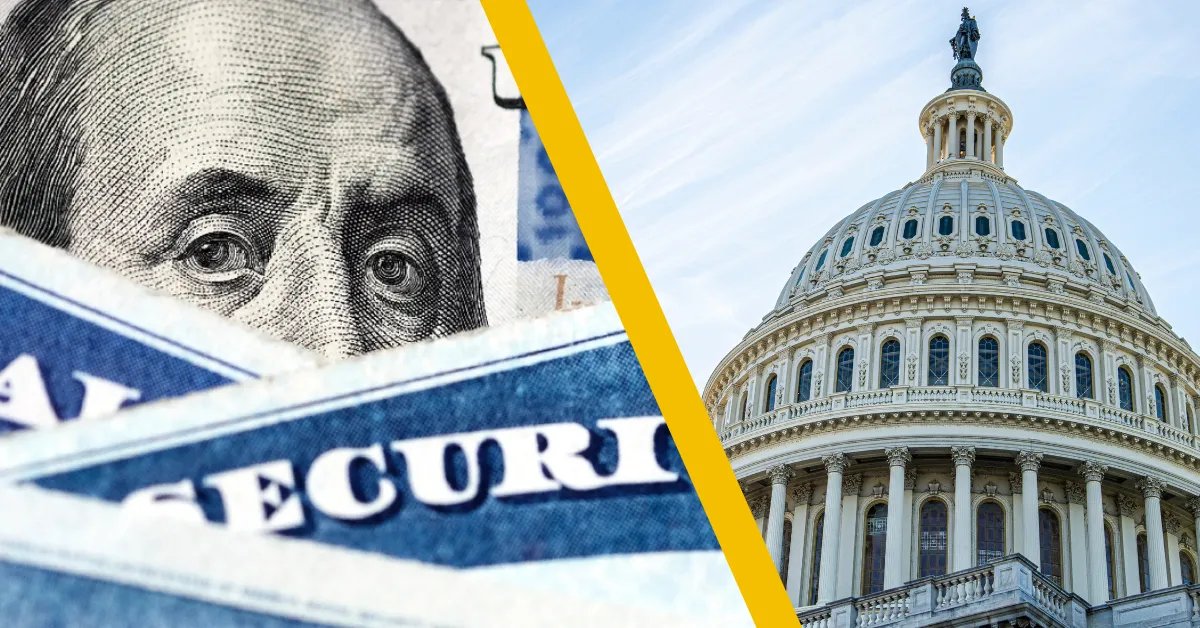
Many Americans nearing retirement wonder whether they’ll ever get a break on when they can start collecting Social Security benefits. After all, physically demanding jobs, health concerns, and the rising cost of living make working longer more difficult for some.
That has led to growing conversations about whether the retirement age could actually be lowered. It sounds like an appealing idea — but the reality is more complicated.
Here’s what to know about this discussion and what changes are realistic.
Why Social Security is already under pressure
Social Security is already facing a major financial challenge. Current projections show that the main trust fund supporting retirement benefits could be depleted around 2032 if no changes are made.
If that happens, the program would not disappear entirely, but incoming payroll taxes would only be enough to cover a portion of promised benefits. Estimates suggest that payments could be reduced by about 24% across the board.
This looming shortfall is a key reason policymakers are focused on strengthening the system — not expanding benefits. Any proposal to lower the retirement age would need to account for this already significant funding gap.
Who really has the cheapest auto insurance in your area? Check your zip code here.
What could happen if the retirement age is lowered
Lowering the retirement age would allow people to claim benefits earlier, increasing the total amount paid out over time. While that might help workers retire sooner, it would also make the system more expensive.
To offset those costs, reduce benefits elsewhere or perhaps increase government borrowing. Each of these options would come with trade-offs that can be politically difficult to pass.
In practical terms, lowering the retirement age would move Social Security further away from long-term stability. That’s why most proposals focus on preserving the system rather than expanding eligibility.
What experts are saying might happen next with Social Security
Most experts agree that lowering the retirement age is unlikely under current conditions. Instead, policymakers are more likely to consider changes that reduce strain on the system, such as raising the full retirement age (FRA), increasing payroll taxes or capping cost of living adjustments (COLAs).
Demographic trends are a big part of the issue. Americans are living longer, while fertility rates have declined, meaning fewer workers are supporting a growing number of retirees.
According to the Social Security Administration, this shift is putting increasing pressure on the program’s finances. As a result, future reforms are more likely to involve gradual adjustments rather than benefit expansions.
Why Social Security may not be enough on its own for retirement
Even without changes to the retirement age, Social Security was never designed to fully replace your income. For most retirees, it covers only a portion of monthly expenses, with the rest expected to come from personal savings, pensions, or other income sources.
That reality becomes even more important if benefits are reduced in the future. A potential 24% cut would significantly impact household budgets, especially for those who rely heavily on Social Security.
Planning for retirement means accounting for these uncertainties. Relying solely on Social Security can leave you vulnerable to future policy changes and economic shifts.
Steps to protect your retirement income now
While the future of Social Security remains uncertain, there are steps you can take to protect your financial security. Increasing contributions to retirement accounts like 401(k)s or IRAs can help build a stronger income foundation.
Reducing debt, especially high-interest balances, can also free up more cash flow for savings. Lower expenses in retirement can make a meaningful difference if benefits change.
You may also want to diversify your income sources, such as part-time work, investments, or rental income. Building flexibility into your plan can help you adapt to whatever changes come next.
Bottom line
Lowering Social Security’s retirement age may sound appealing, but the program’s current financial challenges make it highly unlikely. With the trust fund projected to run short within the next decade, policymakers are more focused on maintaining stability than expanding benefits.
The key takeaway is to plan for uncertainty. Strengthening your personal savings strategy and building multiple income streams can help protect your long-term security — no matter how your retirement plan evolves.
You May Also Like
Earn Up to 4.00% APY With The Best High-Yield Savings Accounts of April 2026
Grow your savings faster with the best high-yield savings accounts from our partners, offering up to 10x higher APY (annual percentage yield) than traditional savings accounts.1
The product and annual percentage yield (APY) data displayed on this website is gathered from various sources and may not reflect all of the offers available in your area. Although we strive to provide the most accurate data possible, we cannot guarantee its accuracy. Always verify account details and availability with the financial institution before opening an account.
Subscribe Today
Unlock the Best Banking Deals and Bonuses
From high-yield savings accounts to cashback checking and sign-up bonuses, we bring you the best banking offers to grow your money smarter.
Author Details
Adam Palasciano
With six years of experience covering personal finance, Adam Palasciano specializes in retirement planning. He helps readers make smarter investment decisions as retirement approaches and find ways to make their savings last longer once they get there. He also breaks down complex topics like Social Security benefits so readers can better understand how to maximize the income they’ll rely on later in life.
