


You check emails before you even get out of bed in the morning, and by 10 p.m., you’re still responding to messages. When Sunday evening rolls around, you find yourself back in your inbox again, trying to “get ahead” of Monday’s chaos. If this sounds familiar, you’re not alone. This always-on, round-the-clock pattern has a name: the “infinite workday.”
Layer on top of that the relentless 9-9-6 work schedule—working from nine in the morning to nine at night, six days a week—and for millions of workers, what was once a 72-hour workweek is no longer contained by time at all. It has become boundless, spilling into every corner of daily life. April, fittingly, is recognized as National Stress Awareness Month.
The Infinite Workday Is Eroding Work-Life Balance
According to Amy Leneker, Fortune 100 advisor, the infinite workday is eroding work-life balance in 2026. She cites a Metaintro study that concludes we’re not working nine-to-five anymore; we’re working always. The findings show after-hours meetings surged 43% in one year as AI tools and global teams push the workday past 8pm.
“It’s not one thing driving the infinite work day,” explains Leneker, author of Cheers to Monday: The Surprisingly Simple Method to Lead and Live with Less Stress and More Joy, it’s a perfect storm of factors. “Global teams mean someone is always online, technology makes it easy to stay connected (and hard to log off), and expectations for speed and responsiveness,” she points out. “On top of that, meetings have exploded, leaving people to do their real work after hours. Put it all together, and it’s no wonder the workday feels infinite.”
Seven Early Warning Burnout Signs Most Workers Miss
In a previous story for Forbes.com, I wrote about how to know whether you’re burned out or just plain tired. But these seven early warning signs of burnout are the ones most workers miss, backed by research and expert sources.
Many people only recognize burnout once it becomes severe, but these early signals often appear months before full burnout develops, and they buy you time to course correct before it’s too late.
1. Chronic Exhaustion That Sleep Doesn’t Fix
One of the earliest warning signs is persistent fatigue that rest doesn’t relieve. If you have burnout, you may sleep normally but still wake up mentally drained. Research shows burnout is characterized by emotional exhaustion, which can precede full burnout for months.
2. Growing Cynicism or Detachment From Work.
Employees may begin to feel detached, sarcastic or emotionally distant from their job, coworkers or clients. Psychologists call this de-personalization, the second major burnout dimension.
3. Small Tasks Suddenly Feel Overwhelming
Tasks that once felt routine begin to feel disproportionately difficult or draining. Research links burnout with cognitive overload and reduced executive functioning, which can impair concentration and decision-making.
4. Irritability and Emotional Volatility
Workers on the path to burnout often become more easily irritated, impatient or emotionally reactive. Chronic stress elevates cortisol levels and reduces emotional regulation capacity. It can even lead to brain damage.
5. Loss of Motivation or Professional Pride
Burnout often begins when people feel their work no longer matters or lacks meaning. This loss of engagement is known as reduced personal accomplishment, the third core burnout dimension.
6. Physical Symptoms With No Clear Medical Cause
Early burnout frequently appears as headaches, digestive problems, muscle tension or sleep disruption. Studies show chronic workplace stress can manifest as physical illness.
7. Withdrawal From Colleagues or Work Activities
Workers experiencing early burnout often pull back socially, avoiding meetings, collaboration or casual conversations. This withdrawal is a psychological defense mechanism linked to emotional exhaustion.
Recognizing The Early Stages Of Burnout
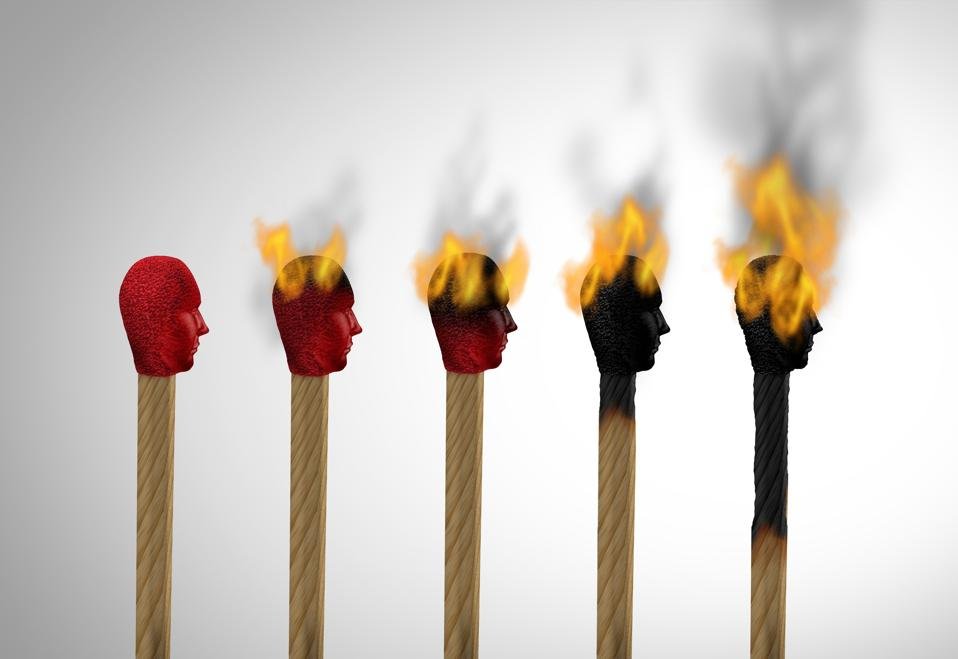
Burnout rarely arrives suddenly. It usually builds gradually through three stages: exhaustion, cynicism and reduced effectiveness. Recognizing these early signals allows workers to intervene before burnout becomes severe. Are you burned out, stressed or just plain tired?
1. Tired: The Body Needs Rest
Being tired is temporary physical fatigue, usually caused by sleep loss, travel, illness or an unusually demanding week. Typical signs include: sleepiness, slower thinking and low energy.
You may be just tired if sleep restores your energy, you still care about your work and motivation returns after rest
Rest fixes it. A good night’s sleep, a weekend off or a short break usually restores energy. Research shows that sleep deprivation primarily affects attention and reaction time, but these effects typically reverse once adequate sleep returns.
2. Stress: Too Much Pressure
Stress occurs when demands exceed your perceived ability to cope, but motivation and engagement remain high. People under stress often feel overloaded, anxious or urgent or pressured.
You may be stressed if you feel overloaded but still engaged, you worry about meeting expectations or pressure rises during busy periods but fades later.
Unlike burnout, stress is characterized by over-engagement rather than disengagement. Stress can even improve performance temporarily, but chronic stress can eventually evolve into burnout if it continues without recovery. Time off can help.
3. Burnout: Emotional Exhaustion And Disengagement
Burnout occurs when chronic job stress remains unresolved for long periods. The World Health Organization defines burnout as an occupational syndrome marked by three dimensions: emotional exhaustion, cynicism or mental distance from work and reduced professional efficacy.
You may be burned out if rest doesn’t help, you feel detached or cynical about work, motivation and meaning disappear, or performance declines despite effort.Unlike stress or fatigue, burnout does not disappear after sleep or a short break.
5 Quick Questions You Can Ask To Spot Burnout Early
Mental health providers often use self-checks because burnout tends to develop gradually and quietly, long before you realize something is wrong.
1. Do I feel emotionally drained most days—even after rest?
The hallmark of burnout is persistent emotional exhaustion. Unlike ordinary fatigue, the feeling doesn’t disappear after a weekend off or a good night’s sleep.
2. Have I started feeling cynical or detached from my work?
Early burnout often appears as increasing cynicism toward work, coworkers or clients. This called de-personalization—creating emotional distance as a coping strategy.
3. Do tasks that used to feel easy now feel unusually difficult?
Burnout can impair concentration, memory and decision-making, turning routine tasks suddenly into overwhelming obstacles.
4. Am I withdrawing from coworkers or avoiding work interactions?
People experiencing burnout often pull back socially, skipping meetings, avoiding collaboration or disengaging from conversations. Social withdrawal is a common behavioral signal of emotional exhaustion.
5. Do I feel like my work no longer matters or that I’m ineffective?
A loss of professional confidence or purpose is a core component of burnout, known as reduced personal accomplishment.
How to interpret the results
1–2 yes answers: likely normal stress or fatigue
3 yes answers: possible early burnout warning
4–5 yes answers: strong indication of burnout risk
Leneker suggests one way to avoid burnout is to set clear boundaries when work begins and when it ends and stick to it. Another, she adds, is to default to async instead of automatically scheduling meetings and being more thoughtful about what actually requires real-time attention.
This article was originally published on Forbes.com
