

Close Menu

    Subscribe to Updates

    Get the latest creative news from FooBar about art, design and business.

    What's Hot

    7 Essential “Notes to Self” We Should All Memorize Before Life Gets Any Harder

    July 27, 2026

    Social Security Administration Challenges Drive MoneySimpler to Launch AI Automated Trading Retirement Income Solution

    July 27, 2026

    Vanished Hornbill Species Breeding Again After 60 Years Among Old Trees

    July 27, 2026
    Facebook X (Twitter) Instagram
    Trending
    • 7 Essential “Notes to Self” We Should All Memorize Before Life Gets Any Harder
    • Social Security Administration Challenges Drive MoneySimpler to Launch AI Automated Trading Retirement Income Solution
    • Vanished Hornbill Species Breeding Again After 60 Years Among Old Trees
    • The Ultimate Cosy Night In: The Beauty Rituals Worth Indulging In This Winter
    • New research identifies barriers to good housing for people with disability
    • SSDI Payment Schedule for August 2026: When will you get your benefits next month?
    • Don’t Bank on a Huge 2027 Social Security COLA to Cover Your Expenses. Try These 3 Moves Instead.
    • 27 Romantic Things to Do with Your Partner
    Moving MountainsMoving Mountains
    Facebook X (Twitter) Instagram
    Monday, July 27
    • Home
    • Mental Health
    • Life Skills
    • Self-Care
    • Well-Being
    • Awareness
    • Inspiration
    • Workers Comp
    • Social Security
      • Injuries
      • Disability Support
      • Community
    Moving MountainsMoving Mountains
    Home » Small bowel obstruction patient education series: understanding trauma and emergency surgery conditions
    Injuries

    Small bowel obstruction patient education series: understanding trauma and emergency surgery conditions

    TECHBy TECHMarch 31, 2026No Comments4 Mins Read
    Facebook Twitter Pinterest LinkedIn Tumblr Reddit WhatsApp Email
    Small bowel obstruction patient education series: understanding trauma and emergency surgery conditions
    Share
    Facebook Twitter LinkedIn Pinterest WhatsApp Email

    What happens in the hospital?

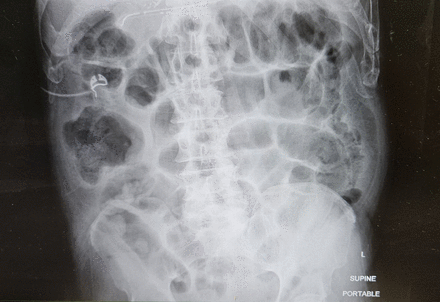
    The medical team will ask about symptoms, how long it has been happening for, and prior operations and conduct a physical examination, focusing on the abdomen. They will also get blood tests to check for signs of infection and dehydration. The medical team will also likely get some images, including X-rays or a computerized set of X-rays known as a CT scan to help diagnose the presence and location of the blockage (figure 1).

    Radiographic image of a small bowel obstruction showing dilated (bloated) intestines filled with air (darker areas represent air within the intestines).

    Medical (non-surgical) options

    In most cases, SBO is treated without surgery, where the blockage clears within days with ‘bowel rest’. Resting the bowels involves not letting the patient eat anything and giving fluids intravenously to prevent and treat dehydration. A nasogastric (NG) tube may be placed through the nose and goes down the esophagus or food tube into the stomach. This NG tube is connected to a machine that sucks up the backed-up fluids in the stomach, with a goal of relieving nausea and abdominal pressure.

    The medical team may also put liquid dye (called ‘contrast’) into the tube to help visualize the blockage on X-rays or CT scans. In some cases, the contrast may even help fix the blockage.

    Surgical options

    Surgery for SBO may be needed if the non-surgical treatment has not worked within a few days or if there is worry that the bowel is dying from lack of blood flow based on physical examination changes, blood tests or imaging.

    Abdominal surgery is either ‘open’, with a larger cut down the middle of the abdomen, called a laparotomy, or with a ‘minimally invasive approach’ (laparoscopic or robotic). The minimally invasive approach is done by making a few smaller cuts on the abdomen and placing a camera and small tools through the cuts to fix the problem. The method of surgery will depend on many patient factors and surgeon preference, but surgery for SBO is more commonly an open operation.

    During SBO surgery, the surgeon will examine the intestines and find the blockage. Sometimes, only untwisting the intestines or removing scar tissue is needed to fix the blockage (figure 2). Other times, especially if part of the intestine is not healthy, the surgeon may need to remove a part of the intestine and then put the intestines back together, called a small bowel resection and anastomosis. Patients with prior health issues, such as diabetes or tobacco use, are more likely to become sicker with surgery. This can lead to the surgeon deciding to leave the abdomen open with plans to go back to the operating room in 1 day to2 days.

    Illustration of a small bowel obstruction caused by scar tissue (illustration by Charlotte Smith).

    Care after treatment

    Most patients need care on a surgical floor of the hospital after surgery, but some may need to go to the intensive care unit. Whether the obstruction was fixed with surgery or not, patients stay in the hospital until the intestines are working normally again, which usually takes between 1 day and a week. This is decided by seeing if the patient can pass gas or has a bowel movement, how bad their abdominal pain is, and if they can eat food without having nausea or vomiting. Some patients start on a liquid-only diet and then progress to a solid diet over time. Most patients are sent home within a day of being able to eat food. Patients are asked to walk a lot to help stop blood clots from being made in their legs.

    Possible complications

    Dehydration and malnutrition may occur after having an SBO, as sometimes it can take a while for a normal appetite to return. Patients may get an ileus, which is when the intestines are slow to come back to normal function after surgery. All surgical patients are at risk of developing an infection at the surgical wounds on their skin or within their abdomen. Complications such as pneumonia, urine infection and blood clots may also occur for any patient hospitalized for a surgical problem, but they are more common in sicker patients.

    bowel conditions Education emergency obstruction patient Series Small Surgery Trauma Understanding
    TECH
    • Website

    Related Posts

    Smart Ways to Grow Your Career in Education

    July 25, 2026

    Free health screenings can detect hidden conditions

    July 25, 2026

    Using geographic information systems to identify Stop the Bleed training locations

    July 23, 2026
    Leave A Reply Cancel Reply

    Don't Miss
    Life Skills

    7 Essential “Notes to Self” We Should All Memorize Before Life Gets Any Harder

    By TECHJuly 27, 20260

    This morning, I was sitting on a neighborhood park bench eating a breakfast sandwich when…

    Social Security Administration Challenges Drive MoneySimpler to Launch AI Automated Trading Retirement Income Solution

    July 27, 2026

    Vanished Hornbill Species Breeding Again After 60 Years Among Old Trees

    July 27, 2026

    The Ultimate Cosy Night In: The Beauty Rituals Worth Indulging In This Winter

    July 27, 2026
    Stay In Touch
    • Facebook
    • Twitter
    • Pinterest
    • Instagram
    • YouTube
    • Vimeo
    Our Picks

    7 Essential “Notes to Self” We Should All Memorize Before Life Gets Any Harder

    July 27, 2026

    Social Security Administration Challenges Drive MoneySimpler to Launch AI Automated Trading Retirement Income Solution

    July 27, 2026

    Vanished Hornbill Species Breeding Again After 60 Years Among Old Trees

    July 27, 2026

    The Ultimate Cosy Night In: The Beauty Rituals Worth Indulging In This Winter

    July 27, 2026

    Subscribe to Updates

    Get the latest creative news from SmartMag about art & design.

    About Us

    At Moving Mountains, we believe that every individual has strength, value, and purpose—regardless of mental health challenges or physical disabilities. This platform was created to inspire hope, promote understanding, and empower people to live meaningful and confident lives beyond limitations.

    Latest Post

    7 Essential “Notes to Self” We Should All Memorize Before Life Gets Any Harder

    July 27, 2026

    Social Security Administration Challenges Drive MoneySimpler to Launch AI Automated Trading Retirement Income Solution

    July 27, 2026

    Vanished Hornbill Species Breeding Again After 60 Years Among Old Trees

    July 27, 2026
    Recent Posts
    • 7 Essential “Notes to Self” We Should All Memorize Before Life Gets Any Harder
    • Social Security Administration Challenges Drive MoneySimpler to Launch AI Automated Trading Retirement Income Solution
    • Vanished Hornbill Species Breeding Again After 60 Years Among Old Trees
    • The Ultimate Cosy Night In: The Beauty Rituals Worth Indulging In This Winter
    • New research identifies barriers to good housing for people with disability
    Facebook X (Twitter) Instagram Pinterest
    • About Us
    • Contact Us
    • Privacy Policy
    • Terms & Conditions
    • Disclaimer
    © 2026 movingmountains. Designed by Pro.

    Type above and press Enter to search. Press Esc to cancel.