


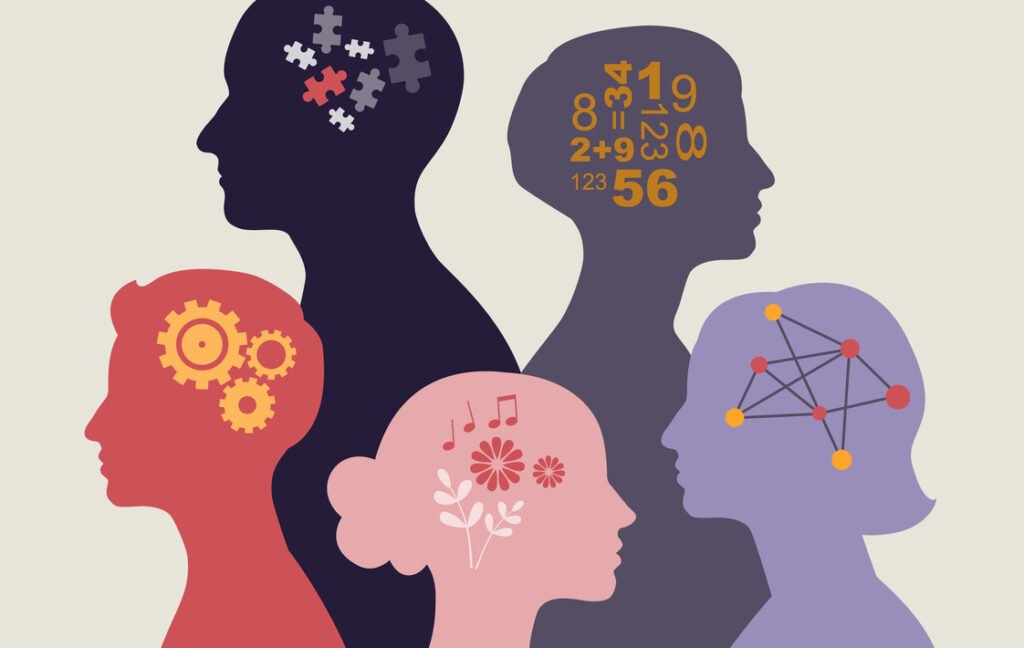
When I took on a role five years ago dedicated to helping employers support diverse cognitive needs and build effective teams, I knew I was stepping into work that aligned closely with my lived experience. My early years, shaped by selective mutism and moments of feeling misunderstood or underestimated, taught me what it feels like to move through school and work without enough support. Those experiences also gave me a clear view into how deeply thinking styles shape workplace performance, and why designing for cognitive differences is no longer a personal preference; it’s a business imperative.
Nearly one in five Americans is estimated to be neurodivergent. Research shows that companies embracing neurodiversity outperform their peers, generating an average of 28% higher revenue and stronger returns for shareholders. Yet many organizations still treat neuroinclusion as a workplace accommodation rather than a business advantage. The most forward-looking employers are applying principles of universal design that embed flexibility, clarity and choice into how work gets done to empower every employee to thrive.
See also: How Roblox’s talent acquisition leaders win with cognitive assessment games
Today, there is a growing recognition that supporting neurodiversity can function not just as a feel-good policy but as a performance driver. Employers that champion neuroinclusive practices in the flow of everyday work will be best positioned to strengthen workforce resilience and control costs. Yet, addressing these challenges requires more than new benefits; it demands a new way of designing work.
Macro forces converge in 2026 to underscore neurdivergence’s importance
There are four macro trends I have watched unfold: awareness, workforce expectations, technology and visibility. Each of these underscores the importance of neurodiversity as a business imperative that organizations cannot afford to ignore.
Research shows that adults, particularly women in their 30s and 40s, are receiving ADHD and autism diagnoses at record rates. Additionally, workplace discussions about neurodiversity are broadening to include dyslexia, Tourette syndrome and, in some contexts, anxiety, trauma and other cognitive, sensory or emotional experiences.
As visibility expands, employers face new demands for clarity and compassion in management practices. Research on psychological safety and engagement indicates that when teams do not prioritize flexibility or psychological safety, they are more likely to experience lower productivity due to employee disengagement.
At the same time, Gen Z and millennials now make up more than half the U.S. labor force. The labor market may be slowing and artificial intelligence may be reshaping roles, but employers still see investment in early-career talent as critical to sustaining a strong workforce. In order to retain and build their talent base, employers are adapting the workplace environment to support the career growth of the latest generation of workers. This includes embracing a variety of communication styles, as well as predictable workflows and environments that support both career advancement and mental health.
Technology is also pushing workplace accessibility forward. Assistive tools, from real-time transcription to adaptive writing aids, are reducing participation barriers often faster than formal policy changes can keep up. They also bring new responsibilities for data privacy and algorithmic fairness.
Now, five trends are taking center stage, showing how organizations are turning awareness into action and redesigning work to meet the needs of every mind.
1. AI-powered accessibility is the new table stakes
AI has become the great leveler. Real-time captioning, predictive text and adaptive interfaces help neurodivergent employees communicate and self-organize. But the benefits extend to every worker. Clearer documentation, asynchronous collaboration and simpler language improve comprehension and engagement across teams.
A recent EY survey of neurodivergent employees found that 88% reported higher productivity when using AI assistants and 85% said these tools make the workplace more inclusive. As these capabilities become standard, employers have an opportunity to harness AI for empowerment as well as efficiency. Still, careful oversight is needed. Without it, hiring algorithms may filter out qualified candidates, sentiment tools may misread certain communication styles and analytics may reinforce long-standing disparities. The winning formula in 2026 is responsible AI: technology guided by empathy, ethics and trust. Organizations that get this right will see gains in engagement and operational efficiency.
2. ERGs evolve from community groups to business drivers
Employee resource groups for disability, caregiving and neurodiversity are maturing. Rather than being simply affinity networks, they’ve evolved into strategic business drivers. According to Verbate’s 2025 survey, 84% of organizations maintained or increased ERG budgets, despite cost pressures, because they recognize the measurable value of these groups.
Research shows employees who participate in ERGs have 1.4 times higher odds of feeling a sense of belonging. As a result, 75% of companies with ERGs said they benefited from improved retention.
As leaders face pressure to prove impact, ERGs will thrive only if they show measurable value to culture, retention and performance. Sustained investment only happens when ERGs show measurable value to culture, retention and performance. Leadership sponsorship is the lever that will make that possible.
3. Entering the era of preventive behavioral health
The era of reactive employee assistance programs is ending. In 2026, employers are investing in preventive-based programs that build resilience and help strengthen skills like planning, focus and stress management. These programs can support everyone, not just those who struggle, and can address factors that could potentially lead to burnout.
Modern behavioral health platforms combine self-guided learning, coaching and manager training. A McKinsey study found organizations emphasizing proactive mental health programs saw 32% fewer disability claims and higher productivity. Embedding these supports into daily work helps all employees manage attention, communication and stress more effectively, while improving both inclusion and performance.
4. Creating cultures of trust around disclosure
Despite progress, stigma still runs deep. A 2025 Understood.org survey found that 70% of adults believe there is stigma around asking for a workplace accommodation, up from 60% in 2024. In the same survey, 77% said neurodivergent employees feel pressure to “mask” or conform to neurotypical behaviors at work. That pressure takes a toll: Employees who conceal their needs are more than twice as likely to feel disengaged and consider leaving their jobs.
Building a disclosure-friendly culture starts with trust, empathy and confidentiality. Leadership openness and peer networks can normalize these conversations, but the ultimate goal is universal design where support is available to everyone without requiring disclosure. When support is built into everyday systems, employees don’t have to raise their hand to get what they need.
5. Expanding family and dependent support
Support for neurodiversity now extends beyond employees to their families. With early diagnoses of autism and ADHD rising, caregiving demands are intensifying. Nearly one in five employees now care for children or dependents with developmental, learning or behavioral differences, according to the Business Group on Health.
A growing number of employers are responding with developmental navigation benefits, specialized coaching and community-based resources. The ROI is clear: Reducing caregiver stress improves focus and retention. A Harvard Business Review study found that employer-provided caregiving benefits reduced employee turnover by as much as 7% and absenteeism by between 10% to 50%. In some cases, this translated into ROIs that reached as high as 72%.
Designing work that works for everyone
Proactive, forward-looking organizations, including many of the leading companies we work with, are moving from isolated accommodations to enterprise-wide frameworks that treat cognitive and behavioral wellbeing as part of the operating model, not an HR initiative. Organizations that have adopted these practices are already reporting meaningful gains, including improved engagement, stronger team cohesion and lower turnover among employees, including many talented individuals, who had previously felt unseen or unsupported.
Support for neurodiversity isn’t about good intentions. Today, companies that embrace cognitive differences are seeing measurable gains in productivity, creativity and engagement in their teams and gaining a significant competitive advantage.
The next era of workforce health will not be won through new benefits alone. AI, awareness and prevention are converging to redefine how organizations think about workforce performance. Employers must redesign the systems that shape how people communicate, focus and thrive to attract the next generation of talent and unlock the full potential of every mind in the room.
