


By Tashi McQueen
AFRO Staff Writer
tmcqueen@afro.com
A new study from North Carolina State University (NC State) highlights the importance of recognizing that racism extends into online spaces, where it can significantly affect mental health for Black youth.
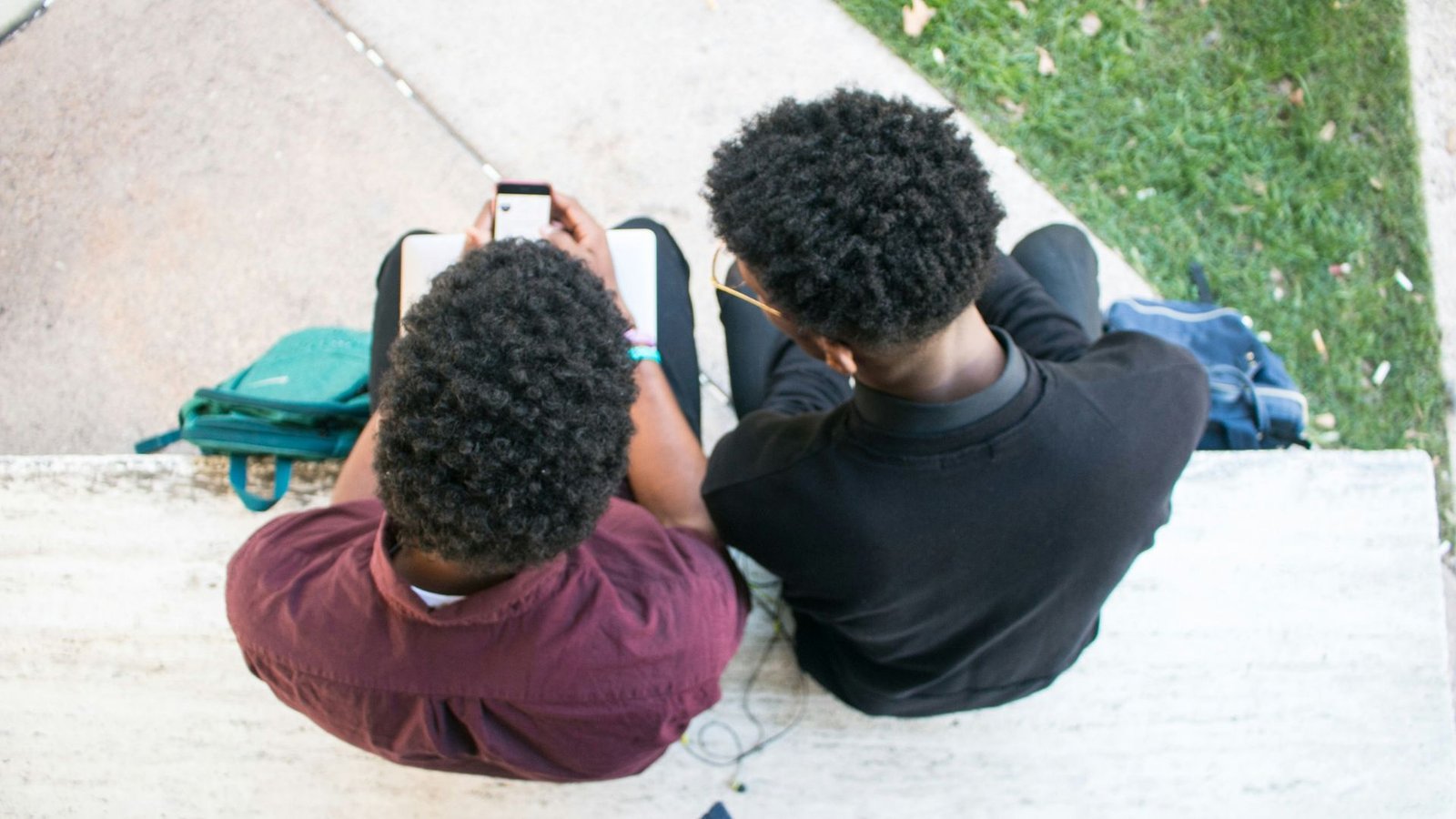
According to a recent North Carolina State University study, Black young adults who use the internet almost constantly face significant levels of online racism leading them to turn to digital mental health tools to cope. Photo Credit: Unsplash Photo/The Jopwell Collection
The peer-reviewed study, authored by Vanessa Volpe, an associate professor of psychology at NC State, and colleagues, surveyed 1,005 young adults ages 18 to 29. Online surveys were conducted from July to September 2024, and the study was published Jan. 20, 2026, with an earlier version originally released July 14, 2025.
Findings show that Black young adults experiencing higher levels of online racism are more likely to use digital mental health tools and seek online support. Around 60 percent reported using the internet almost constantly, and more than 51 percent said they use one or more digital mental health tools. Volpe noted that 88 percent had experienced online racism in the previous six months.
Online racism takes many forms, including direct attacks, racist comments or threats, and exposure to harmful content, such as posts degrading or hypersexualizing dark-skinned Black women.
Dr. Jasmonae Joyriel, a licensed clinical psychologist, asserts that the anonymity of online spaces amplifies racism, shaping how Black youth use mental health tools to cope. Photo Credit: Courtesy photo
Dr. Jasmonae Joyriel, a licensed clinical psychologist, pointed out that online racism can uniquely amplify the impacts of racism due to the option of anonymity, making attacks more aggressive and overt.
“Online, because of the anonymity, people feel emboldened to lay it all out,” she said.
Keisha Saunders-Waldron, a licensed clinical mental health counselor, emphasized how online and in-person racism compound, a reality that mental health experts need to recognize.
“This study confirms what many of my colleagues and I constantly discuss in practice…Black youth and young adults deal with racism in real life and then go online only to get hit with more of it,” said Saunders-Waldron. “There is no break.”
She noted the findings also reveal shortcomings in how clinicians monitor mental health.
“They experience mental health impacts even when they don’t meet criteria for clinical depression or anxiety, which tells me we’re measuring the wrong things,” said Saunders-Waldron. “We are waiting for people to appear mentally concerning enough to diagnose instead of acknowledging the toll racism takes before it becomes a disorder.”
Mental health experts say young adults often turn to apps and online communities because they are accessible and comfortable ways to get help.
“Traditional therapy is perceived as expensive, hard to find for some, and many therapists don’t understand what it’s like to be Black,” said Saunders-Waldron. “So, they are self-managing, but most digital tools weren’t designed for racial trauma, and that’s a problem.”
Joyriel also noted that comfort with digital tools is generational.
“Younger generations feel much more comfortable and confident online and are much more tech savvy,” she said. “They can quickly type something in and know they are going to find an answer. Also, it is not just text—you can watch videos, it is in short bites, and you can scroll through a lot of information and choose what you feel fits.”
Keisha Saunders-Waldron, a licensed clinical mental health counselor, believes clinicians must recognize that online and in-person racism compounds, shaping Black young adults’ mental health needs. Photo Credit: Courtesy photo
But Joyriel cautioned that what initially seems helpful may not be accurate and can sometimes lead people further into harm. Mental health experts emphasize that digital tools are supplements, not substitutes.
“Apps can’t replace being seen by another person who gets what you’re going through,” said Saunders-Waldron.
Saunders-Waldron recommends that clinicians integrate awareness of online racial stress into assessment and treatment planning.
“Ask about it directly, because if you don’t, they often won’t bring it up,” she said.
She advises exploring how young adults are coping and making online racial stress part of treatment.
“If a Black young adult has anxiety, we are not just teaching breathing exercises, we are helping them process racial trauma, including what’s happening online,” said Saunders-Waldron. “We teach them when to log off, how to protect their peace, which spaces are safe and which are toxic.”
Joyriel also suggests using intake forms and open-ended questionnaires to assess where an individual may be experiencing racism.
“We would not want to push potential clients or patients into saying that online racism is what is bringing them in, but if it is, making sure that we are curious and asking about it and inquiring is important,” she said.
Overall, Saunders-Waldron stresses that mental health practices must reflect the reality that Black young adults face significant levels of online racism, compounding the in-person racism they experience on the daily, which drives their need for mental health tools.
“We need to ask the right questions, validate their experiences, integrate their digital reality into treatment, and guide them toward resources that actually address racial trauma,” she said. “They deserve support that sees the fullness of what they are navigating.”
