


When Kate Brian was planning out where to set up a private practice for mental health, one of her colleagues who worked at USC told her about one of the biggest issues they faced: the number of students they had to refer to the community, but how few options off-campus there were.
Brian heard that and decided USC was where she had to go, and CENTERED Individual and Family Counseling was made. Brian, the CEO and founder of the counseling center, said it has been “growing steadily” ever since.
According to the 2024 United Healthcare College Student and Graduate Behavioral Health Report, around 60% of college students reported at least one mental or behavioral health concern in 2024 — including anxiety, depression and others.
Daily headlines, sent straight to your inbox.
Subscribe to our newsletter to keep up with the latest at and around USC.
While campus counseling services provide mental health support, some students may need immediate help or care beyond what USC Counseling and Mental Health provides.
What if I need immediate support?
Students in crisis can call or text multiple 24/7 services.
USC Student Health operates a 24/7 hotline for students with immediate issues, which can be reached at 213-740-9355.
Crisis Text Line is a nonprofit organization dedicated to providing free, 24/7, text-based mental health support. Individuals can text “HOME” to 741741 to connect with a trained volunteer counselor.
The organization offers additional keywords for topics like anxiety, grief, financial stress, gun violence, relationships and more, according to its website. Individuals can text “CONNECT” to 741741 for assistance, or “Trojan” to connect with a live volunteer familiar with USC resources.
Volunteers undergo weeks of training to learn how to support people experiencing different crises and when to involve emergency services if someone’s safety is at risk. There are supervisors who monitor each conversation and will contact emergency services if necessary, according to Isaiah Sangkay, a volunteer for the service.
Only Spanish and English services are provided, and individuals in need of a Spanish speaker can text “AYUDA” to the hotline to get started.
I want weekly therapy. Where should I go?
USC offers weekly therapy group sessions organized by licensed clinicians from Student Health. There is a range of themed-group therapy topics to choose from, including mindfulness for students navigating post-traumatic stress disorder, navigating life skills, building social confidence and a first-generation student support group, according to the Counseling and Mental Health website.
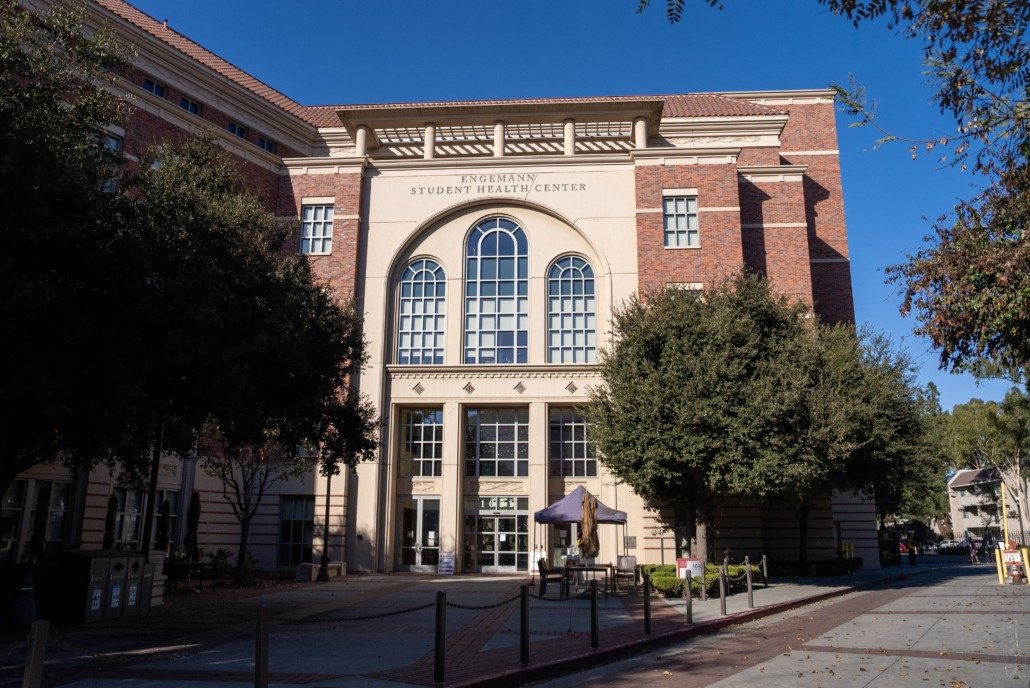
Short-term individual therapy sessions are also offered. For more specialized concerns, students can go to the Psychiatry and Behavioral Health Services clinic, which is located on the fifth floor of the Engemann Student Health Center on UPC. Interested students are recommended to complete an initial intake through CMH.
USC Counseling and Mental Health Services also offers referral consultations, where students can receive assistance in connecting with providers for a specific concern. Additionally, UWill, a service program provided by Counseling and Mental Health Services, provides students who are not currently CMH clients a fast track, within 48 hours, to external therapy services.
Students looking for off-campus weekly therapy can consider several clinics near USC.
One option is CENTERED, located at 2716 S. Vermont Ave., which is about a half-mile walk from USC and provides outpatient counseling services.
The clinic provides therapy for anxiety, depression, PTSD and other concerns through five types of therapy — individual, family, art, relationship and group therapy. Brian said the clinic accepts most major insurances, including USC’s Student Health Insurance Plan, and offers sliding-scale fees for uninsured individuals, with prices ranging between $40 to $80 per therapy session, compared to the full fee of around $180.
To get started with CENTERED, individuals can complete the “Contact Us” form on the clinic’s website with their name, email, phone number and health insurance carrier. Afterward, individuals will receive a link to create their client profiles.
After completing a client profile, clients undergo a thorough assessment interview to evaluate their needs. Outpatient therapy is typically once a week unless someone needs to schedule another session, Brian said.
All therapy sessions are confidential and held in-person, via Zoom or in a hybrid format. The office remains open during school breaks and operates by appointment only, according to its website.
What if I need more intensive treatment?
Nack Behavioral Health, located a few blocks away from USC Village near the intersection of South Figueroa Street and West Adams Boulevard, offers an intensive outpatient program designed specifically for undergraduate and graduate students.
Students can be referred to Nack by USC Counseling and Mental Health, but referrals are not required. Eligible clients include undergraduate and graduate students, those on a leave of absence and individuals planning to return to school.
To schedule an appointment without a referral, students can submit a form through the clinic’s website or contact the office via email or phone.
Within 48 hours from initial contact, a staff member follows up via phone or email to request information, such as insurance details. Students are then asked to participate in a free, non-binding assessment.
Adams said Nack accepts most commercial insurance plans, including USC’s Student Health Insurance Plan. For those who need to pay out of pocket, sessions cost anywhere from $25 to $50 per day.
