


When we speak about women’s progress in India, we often speak in the language of milestones. Education. Leadership. Financial independence. Representation.
Much less often do we speak about emotional well-being. And yet, if there is one quiet reality that cuts across geography, income, and age, it is this: many women carry an invisible psychological load that remains largely unacknowledged.
Globally, the scale of mental health challenges is sobering. According to the World Health Organisation, more than one billion people worldwide live with a mental health condition. Depression and anxiety are among the most common disorders, and women are disproportionately affected. Research consistently shows that depression is nearly twice as prevalent among women as men, and anxiety disorders affect hundreds of millions globally, again with higher representation among women.
Numbers like these are important. But numbers alone do not explain why so many women continue to struggle in silence.
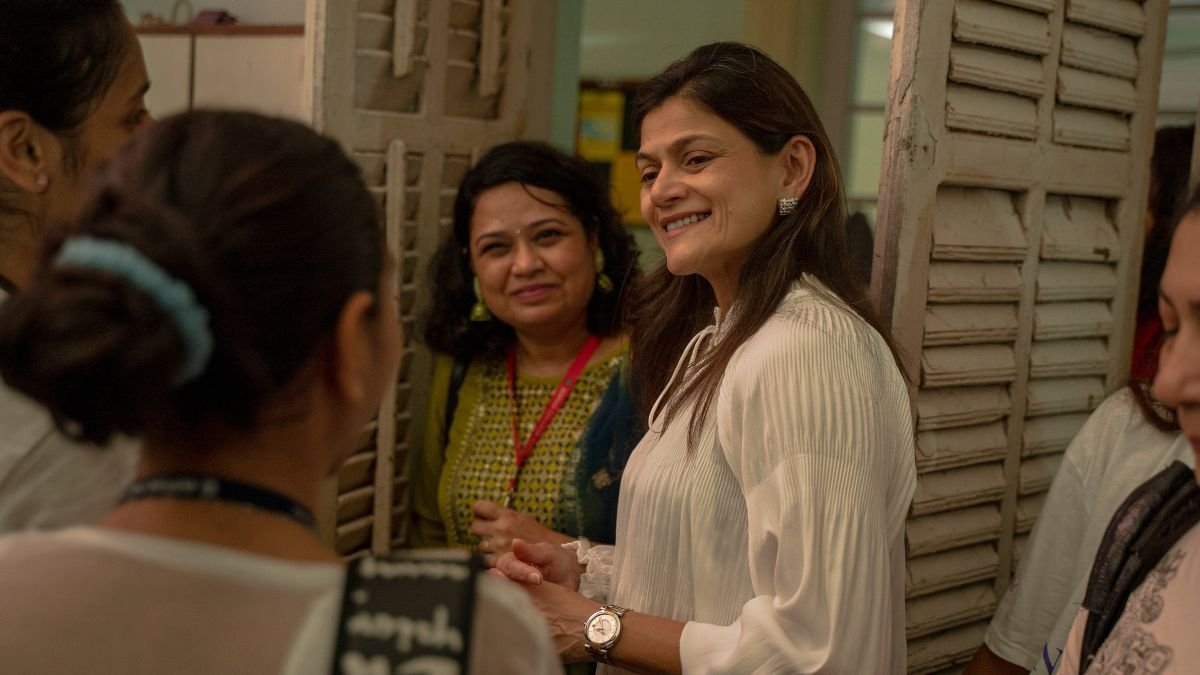
Through our work at Mpower, I have met young girls overwhelmed by academic pressure, professionals navigating ambition alongside expectation and women across life stages who describe a persistent but unnamed emotional fatigue. Their contexts differ. What connects them is hesitation. A reluctance to articulate what they are feeling. A quiet uncertainty about whether their distress is valid enough to deserve attention.
In India, mental health exists within a powerful social framework. Women are often raised to adapt, to endure, to prioritise others. Emotional strain is reframed as responsibility. Stress becomes synonymous with strength. When discomfort is normalised, it rarely gets examined. When silence is equated with resilience, seeking support can feel like failure.
Stigma today is rarely dramatic. It is subtle. It shows up in passing comments such as “it is just a phase” or “everyone goes through this.” It appears in workplaces where productivity is measurable but emotional strain is not. It appears in families where care is abundant, but conversations about mental health remain limited.
At Mpower, one recurring observation stands out. Many women are not unaware of mental health. They are unsure of psychological safety. They worry about being perceived differently, about being reduced to a label, or about altering the way they are seen within their homes and professional spaces. In that uncertainty, silence often feels safer than vulnerability.
The mental health treatment gap in countries like India remains significant. But the gap is not solely about infrastructure. It is also about accessibility, affordability, language, trust and cultural comfort. If you see, even in urban settings, where awareness has grown meaningfully in recent years, hesitation persists. While in rural areas, misconceptions and limited services compound the challenge.
The pandemic further intensified this landscape. Globally, there was a sharp rise in anxiety and depressive disorders during that period, with women and young people particularly affected. The experience made one reality clearer than ever: emotional well-being is not peripheral to our lives. It is foundational.
Encouragingly, conversations are evolving. Workplaces are beginning to recognise mental health as part of employee wellbeing. Schools are integrating counselling services. Communities are speaking more openly than before. Women are shifting to self-care for emotional well-being. These shifts matter. They reflect a gradual cultural recalibration.
And yet, awareness is only the beginning. The deeper shift lies in how we define strength. For generations, women have been admired for their ability to endure. But endurance alone cannot remain the measure of resilience. We need to realise that self-awareness, boundary setting, and help seeking are equally powerful expressions of strength.
Women’s mental health is not a niche concern. It shapes participation in the workforce, decision-making within families, and leadership across sectors, be it urban or rural. When women feel emotionally supported, the ripple effects extend far beyond the individual. Emotional well-being influences how societies function and how economies grow.
This is why the conversation around women’s mental health is not merely clinical. It is cultural. It asks families to listen differently. It asks institutions to create spaces where vulnerability does not carry consequences. It asks all of us to move from quiet acknowledgement to collective responsibility.
As we prepare to convene leaders, clinicians, educators, and policymakers at the Mpowering Minds Summit 2026 focused on women’s mental health, the intent is not to amplify alarm. It is to deepen understanding. Sustainable change rarely emerges from urgency alone. It emerges when empathy, evidence, and systems thinking align.
The question before us is not whether women are resilient. They have demonstrated that repeatedly. The more important question is whether resilience must always come at the cost of silence.
If we can create a society where speaking about mental health feels as ordinary as speaking about physical health, we will not only reduce stigma. We will strengthen the emotional foundation of our communities in ways that are steady, dignified, and transformative. And that is a measure of development we can no longer afford to overlook.
The author is Founder & Chairperson, Mpower, an initiative of the Aditya Birla Education Trust.
The opinions expressed in this article are those of the author and do not purport to reflect the opinions or views of THE WEEK.
