


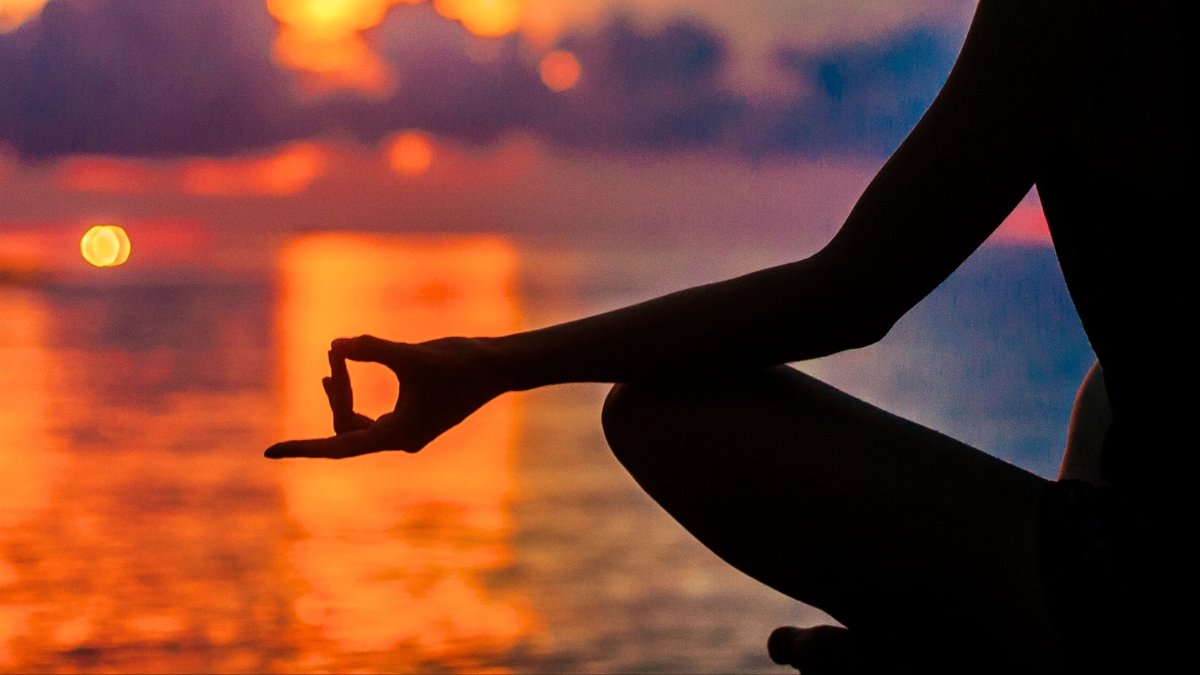
Since mindfulness is something you can practice at home for free, it often sounds like the perfect tonic for stress and mental health issues.
Mindfulness is a type of Buddhist-based meditation in which you focus on being aware of what you’re sensing, thinking, and feeling in the present moment.
The first recorded evidence for this, found in India, is over 1,500 years old. The Dharmatrāta Meditation Scripture, written by a community of Buddhists, describes various practices and includes reports of symptoms of depression and anxiety that can occur after meditation.
It also details cognitive anomalies associated with episodes of psychosis, dissociation, and depersonalisation (when people feel the world is “unreal”).
In the past eight years, there has been a surge of scientific research in this area. These studies show that adverse effects are not rare.
A 2022 study, using a sample of 953 people in the US who meditated regularly, showed that over 10 percent of participants experienced adverse effects that had a significant negative impact on their everyday life and lasted for at least one month.
(Egoitz Bengoetxea Iguaran/Canva Pro)
According to a review of over 40 years of research that was published in 2020, the most common adverse effects are anxiety and depression. These are followed by psychotic or delusional symptoms, dissociation or depersonalisation, and fear or terror.
Research also found that adverse effects can happen to people without previous mental health problems, to those who have only had a moderate exposure to meditation and they can lead to long-lasting symptoms.
The western world has also had evidence about these adverse effects for a long time.
In 1976, Arnold Lazarus, a key figure in the cognitive-behavioural science movement, said that meditation, when used indiscriminately, could induce “serious psychiatric problems such as depression, agitation, and even schizophrenic decompensation”.
There is evidence that mindfulness can benefit people’s well-being. The problem is that mindfulness coaches, videos, apps, and books rarely warn people about the potential adverse effects.
Professor of management and ordained Buddhist teacher Ronald Purser wrote in his 2023 book McMindfulness that mindfulness has become a kind of “capitalist spirituality”.
In the US alone, meditation is worth US$2.2 billion (£1.7 billion). And the senior figures in the mindfulness industry should be aware of the problems with meditation.
Jon Kabat-Zinn, a key figure behind the mindfulness movement, admitted in a 2017 interview with the Guardian that “90 percent of the research [into the positive impacts] is subpar”.
In his foreword to the 2015 UK Mindfulness All-Party Parliamentary Report, Jon Kabat-Zinn suggests that mindfulness meditation can eventually transform “who we are as human beings and individual citizens, as communities and societies, as nations, and as a species”.
This religious-like enthusiasm for the power of mindfulness to change not only individual people but the course of humanity is common among advocates. Even many atheists and agnostics who practice mindfulness believe that this practice has the power to increase peace and compassion in the world.
(dmitrynaumov/Canva Pro)
Media discussion of mindfulness has also been somewhat imbalanced.
In 2015, my book with clinical psychologist Catherine Wikholm, Buddha Pill, included a chapter summarising the research on meditation’s adverse effects. It was widely disseminated by the media, including a New Scientist article, and a BBC Radio 4 documentary.
But there was little media coverage in 2022 of the most expensive study in the history of meditation science (over US$8 million funded by research charity the Wellcome Trust).
The study tested more than 8,000 children (aged 11-14) across 84 schools in the UK from 2016 to 2018. Its results showed that mindfulness failed to improve the mental well-being of children compared to a control group, and may even have had detrimental effects on those who were at risk of mental health problems.
Mindfulness failed to improve the mental well-being of children compared to a control group. (Monkey Business Images/Canva Pro)
Ethical implications
Is it ethical to sell mindfulness apps, teach people meditation classes, or even use mindfulness in clinical practice without mentioning its adverse effects? Given the evidence of how varied and common these effects are, the answer should be no.
However, many meditation and mindfulness instructors believe that these practices can only do good and don’t know about the potential for adverse effects.
The most common account I hear from people who have suffered adverse meditation effects is that the teachers don’t believe them. They’re usually told to just keep meditating and it will go away.
Research about how to safely practice meditation has only recently begun, which means there isn’t yet clear advice to give people. There is a wider problem in that meditation deals with unusual states of consciousness, and we don’t have psychological theories of the mind to help us understand these states.
But there are resources people can use to learn about these adverse effects. These include websites produced by meditators who experienced serious adverse effects and academic handbooks with dedicated sections to this topic.
Related: Meditation Can Reshape Your Brain Activity, Study Reveals
In the US, there is a clinical service dedicated to people who have experienced acute and long-term problems, led by a mindfulness researcher.
For now, if meditation is to be used as a wellbeing or therapeutic tool, the public needs to be informed about its potential for harm.
Miguel Farias, Associate Professor in Experimental Psychology, Coventry University
This article is republished from The Conversation under a Creative Commons license. Read the original article.
An earlier version of this article was published in July 2024.
