


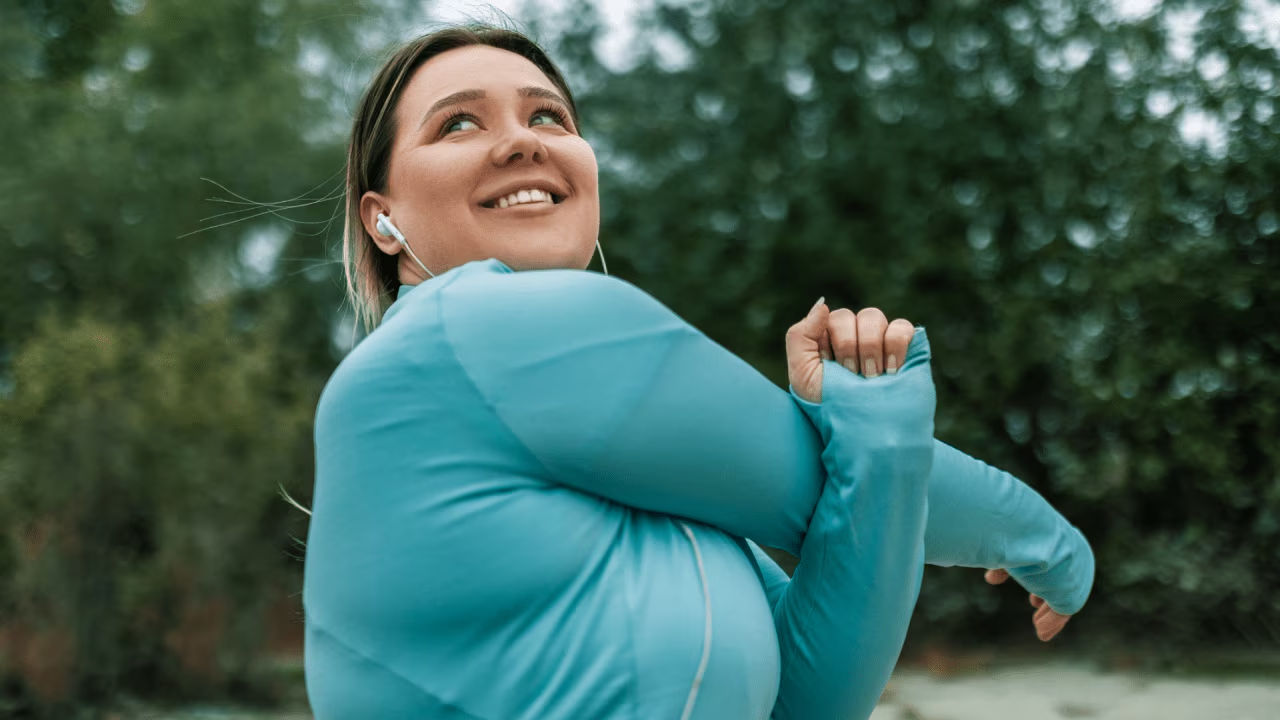
While not a treatment for depression, new research has found just how beneficial exercise can be for new mums and young adults struggling with their mental health.
Many an elderly woman has blamed the country’s mental health crisis on a lack of physical activity. While certainly not a cause of depression, new research suggests exercise could still be incredibly helpful for people living with depression, particularly new mums and young adults.
While getting started after a period of exercising infrequently can feel less than ideal, activities such as running, swimming or dancing could deliver a multitude of mental health benefits, researchers found.
Aerobic exercise for mental health
Published in the British Journal of Sports Medicine, over 60 reviews involving close to 80,000 volunteers were analysed, each looking at the link between exercise, anxiety and depression. Aerobic exercises, resistance training and mind-body-focused workouts like yoga and tai chi were compared.
The latter come with their own respective benefits, but heart-boosting aerobic exercise had the greatest effect on those with depression, while a lesser impact was also seen in those with anxiety.
Rates of mental health issues in Australia
Body+Soul’s 2026 Health of the Nation report found that reducing stress and managing mental health is already the fifth most common fitness motivation of Aussies, so the country is already making tracks to try to feel even a little bit better.
New mums are at a higher risk of both anxiety and depression, with approximately one in seven women experiencing postnatal depression in their first year after giving birth.
And over three-quarters of mental health issues occur before the age of 25 too, according to Beyond Blue.
Social over solo workouts
Prefer a solo workout over a group class or run club?
You may want to give social workouts another chance, because the research also found that working out with other people delivered the most mental health benefits.
James Cook University Psychologist, Neil Munro co-authored the study. As per The Guardian, he said the social aspect of a group workout plays “a crucial role in the antidepressant effects of exercise”.
A few months of low-intensity exercise, like tai-chi, yoga, resistance training, swimming or walking, was seen to be the best form of movement for people with anxiety.
Not everyone can just start working out
In severe cases of depression or anxiety, people can struggle to engage in even short bursts of exercise or brief socialising, so everyone isn’t able to just start exercising immediately.
But Munro said, “Getting moving, in whatever shape or form works best for each person, can help mitigate depression and anxiety symptoms.”
Exercise, no matter how beneficial, cannot replace medical treatment or psychological support for mental health concerns, so follow the advice of your GP or mental health professional.
If you can move and find that the rush of happy hormones, sense of confidence, purpose and socialisation involved make you feel good, then that can only be a positive.
