


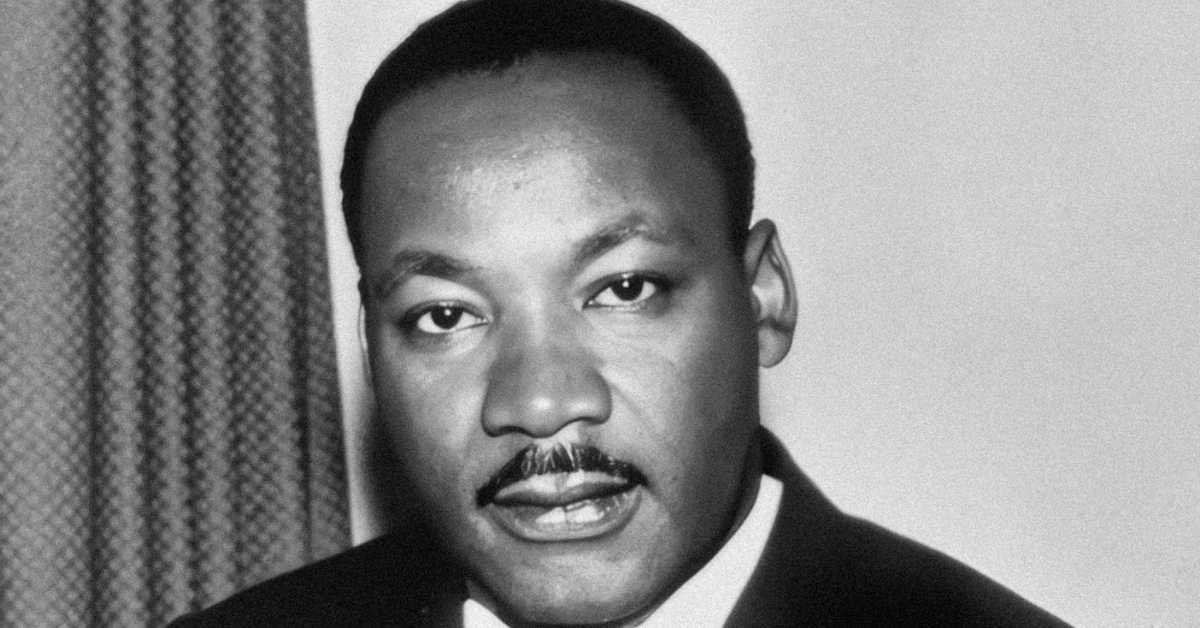
The life and legacy of the Rev. Dr. Martin Luther King Jr. have been the subject of ongoing debate ever since his assassination on April 4, 1968.
Today, those invoking King’s memory range from Black Lives Matter organizers and former President Joe Biden to Ukrainian President Volodymyr Zelenskyy. Educators trying to teach Black history call on his principles, even as their opponents claim that lessons about systemic racism go against King’s desire not to judge people “by the color of their skin.”
In an age of polarization, it is worth remembering that one of the pillars of King’s philosophy was pluralism: the idea of multiple communities engaging one another, acknowledging their differences and shared bonds, and striving to create what King called a “Beloved Community.”
As an African American philosopher who studies comparative religion, I am especially interested in what role religious pluralism played in King’s fight for civil rights in the United States of America and human liberation around the world.
A chorus of faiths
King’s worldview was deeply nurtured by his experiences in the Black Church, where the Bible’s stories of freedom and oppression are central. The Book of Exodus, for example, tells the story of Hebrew slaves seeking deliverance, and the message has been a frequent theme in Black hymns and preaching for centuries. In the Book of Amos, the prophet cries out, “Let justice roll down like waters” — which is a line King famously quoted in his “I Have a Dream” speech.
Building off the work of other pioneering Black Christians, King embraced interfaith leadership.
His mentor, Howard Thurman, who founded the Church for the Fellowship of All Peoples, traveled to India to meet with activist Mahatma Gandhi, who was Hindu.
Gandhi’s approach to nonviolent protest was also influential for Mordecai Johnson, president of Howard University, whose sermon on the subject after a trip to India in 1949 profoundly shaped King’s religious philosophy.
The religious diversity of King’s coalitions was evident in events like the 1965 March on Selma, where some participants were severely beaten by police on “Bloody Sunday.”
Marchers came from a chorus of faiths that included priests and nuns, Episcopal seminarians, high-profile Unitarian Universalists like James Reeb, who was murdered days later, as well as Jewish leaders like Rabbi Abraham Joshua Heschel.
Complementing his Black Church upbringing, King was inspired by wisdom across continents and cultures, from the Greek classics and Gandhi, to Buddhist leaders like Thich Nhat Hanh.
Despite their differing dogmas, he hoped leaders from across the religious spectrum and those of no particular faith would join efforts to promote economic and racial justice and stand against imperialism.
‘The great world house’
When King used the word “pluralism,” he assumed that its ideal of belonging had both religious and racial connotations.
For example, King praised the Supreme Court’s decision in Engel v. Vitale, which concluded that public schools could not sponsor prayers, and which segregationist Alabama Governor George Wallace opposed.
“In a pluralistic society such as ours, who is to determine what prayer shall be spoken, and by whom?” King said in a 1965 interview.
More than a decade earlier, during his time at seminary, King had written a paper exhibiting a keen awareness of Christianity’s connections with other faiths: “To discuss Christianity without mentioning other religions would be like discussing the greatness of the Atlantic Ocean without the slightest mention of the many tributaries that keep it flowing.”
Other vivid imagery like “the great world house” underscored how King interpreted all persons and all faiths as living in an interconnected web. Identifying common themes in the discrimination against Indian Dalits, the castes formerly known as “untouchable,” and the plight of African Americans in the U.S., King surmised, “I am an untouchable.”
He also saw parallels between the African American struggle for freedom and the work of labor unions such as the National Farm Workers Association.
“Injustice anywhere is a threat to justice everywhere,” King insisted.
King then, today, tomorrow
King wanted people to embody the highest forms of their own religion and morality. Religion at its best, he thought, promoted peace, understanding, love, and goodwill. This is true of “all of the great religions of the world,” he wrote in a statement for Redbook magazine.
Those were the kinds of ethics King hoped to fulfill in his own Christian ministry, as is clear in his wishes for what might be said at his own funeral.
“I’d like somebody to mention that day that Martin Luther King Jr. tried to give his life serving others,” he said. “I’d like for somebody to say that day that Martin Luther King Jr. tried to love somebody. … I want you to say that I tried to love and serve humanity.”
Yet King’s goal of a world without hunger, war, and racism remains unrealized. Poverty persists. War continues. Black people’s safety is still imperiled.
Resolving current social and political crises in America may require the real integration and power-sharing that King’s radical vision demanded.
However, the debate about King’s pluralist legacy is not only about him, but also about us. How do we want to be remembered? What world are we leaving future generations?
This article was written by Roy Whitaker from San Diego State University, and was originally published on The Conversation.
Header Image by Florida Memory on Unsplash
