

Close Menu

    Subscribe to Updates

    Get the latest creative news from FooBar about art, design and business.

    What's Hot

    The Ultimate Cosy Night In: The Beauty Rituals Worth Indulging In This Winter

    July 27, 2026

    New research identifies barriers to good housing for people with disability

    July 27, 2026

    SSDI Payment Schedule for August 2026: When will you get your benefits next month?

    July 27, 2026
    Facebook X (Twitter) Instagram
    Trending
    • The Ultimate Cosy Night In: The Beauty Rituals Worth Indulging In This Winter
    • New research identifies barriers to good housing for people with disability
    • SSDI Payment Schedule for August 2026: When will you get your benefits next month?
    • Don’t Bank on a Huge 2027 Social Security COLA to Cover Your Expenses. Try These 3 Moves Instead.
    • 27 Romantic Things to Do with Your Partner
    • Social Security Update: Here’s Who Gets Paid This Week (And Who Doesn’t)
    • These Social Security errors could cost you in retirement
    • Good News in History, July 27
    Moving MountainsMoving Mountains
    Facebook X (Twitter) Instagram
    Monday, July 27
    • Home
    • Mental Health
    • Life Skills
    • Self-Care
    • Well-Being
    • Awareness
    • Inspiration
    • Workers Comp
    • Social Security
      • Injuries
      • Disability Support
      • Community
    Moving MountainsMoving Mountains
    Home » Wildlife-sniffing dogs detect hidden trafficked animals
    Community

    Wildlife-sniffing dogs detect hidden trafficked animals

    TECHBy TECHMarch 10, 2026No Comments4 Mins Read
    Facebook Twitter Pinterest LinkedIn Tumblr Reddit WhatsApp Email
    Search
    Share
    Facebook Twitter LinkedIn Pinterest WhatsApp Email

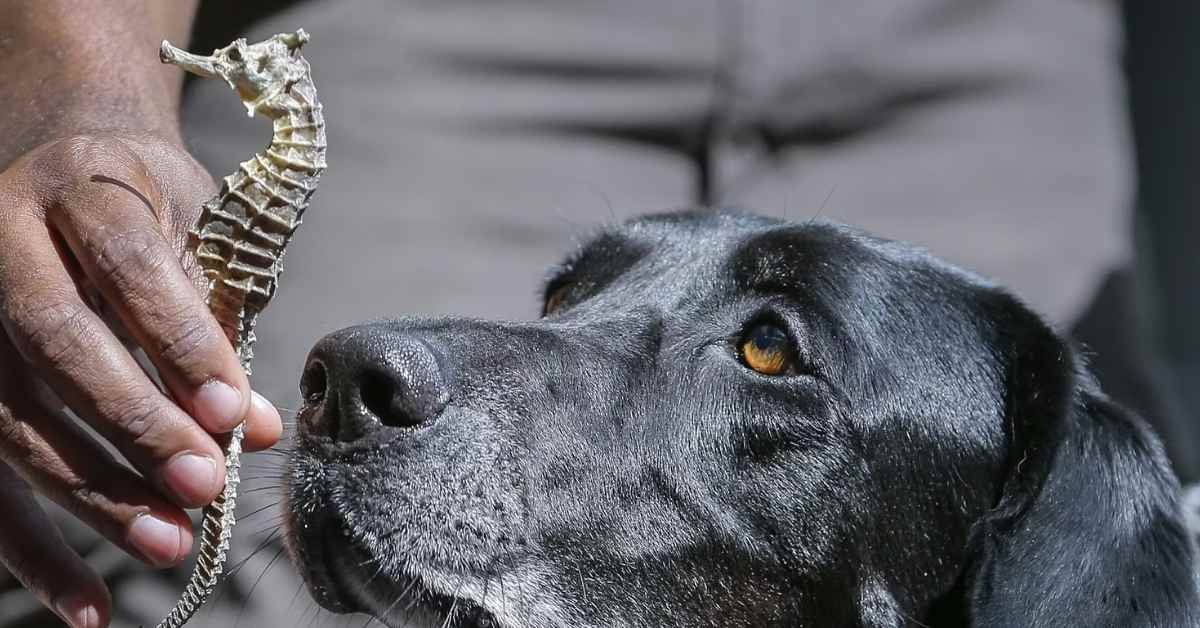
    Wildlife trafficking is a global crisis impacting at least 4,000 species of plants and animals, including mammals, reptiles, birds, corals and rare plants.

    A shocking case from 2025 involved the seizure of 3.7 tonnes of pangolin scales in Nigeria. These scales were believed to be sourced from more than 1,900 individual pangolins.

    While this case was uncovered, many more remain undetected. These crimes aren’t just pushing species toward extinction; they’re also putting people at risk. Hunting, trafficking, and handling wild animals create opportunities for diseases to jump from animals to humans.

    Wildlife trafficking is therefore not just a conservation crisis, but a serious threat to public health.

    In our recent paper published in Conservation Biology, we present a new method for tackling this global crime. It uses a tiny sample of air extracted from a shipping container – and the incredible power of a dog’s nose.

    ‍

    Traffickers exploit shipping routes

    People buy and sell a wide range of wild animals and their parts for many reasons, such as pangolin scales for traditional medicines, monkeys for exotic pets, or even porcupines for bushmeat.

    Traffickers exploit global transport routes to move their products, with shipping containers in particular being ideal targets.

    Containers carry up to 90% of the world’s cargo, meaning products can be easily concealed and blend into the high volume of container traffic moving through ports.

    Despite this, on average, only about 2% of containers are physically inspected due to resource limitations.

    There are few wildlife specific detection tools, and wildlife crime is often considered a low priority. Combined, this means most trafficking slips through undetected.

    ‍

    Bringing the scent to the dog

    To bridge this gap, we investigated air sampling as a way to screen containers for wildlife without opening them, damaging cargo, or disrupting port operations.

    This work was part of a four-year project, undertaken in collaboration with the world’s third-largest shipping company, CMA CGM.

    We designed a portable air extraction device that fits onto a standard container vent and draws air through a filter to collect a sample. The sample is then presented to a trained detection dog, which can indicate whether the scent of specific wildlife products is present.

    In our study, we concealed pelts from five big cat species — lion, tiger, leopard, snow leopard, and cheetah — inside standard-sized shipping containers. The pelts were arranged to simulate smuggling scenarios, including being hidden inside cardboard boxes to increase concealment.

    Our detection dog successfully detected the pelts with almost 98% accuracy when air was extracted from the shipping container. They did so even when the pelts were concealed, demonstrating that the scent can escape into the container airspace and be reliably captured.

    Detection dogs are already widely used by customs and border agencies around the world, but their ability to screen sealed containers at scale is limited. Containers are often inaccessible, stacked high, or in environments that are unsafe for dogs.

    Our approach brings the scent to the dog, allowing many more containers to be screened efficiently and safely.

    While the study was conducted under controlled conditions, these early results are encouraging. Pairing detection dogs with air-sampling could dramatically improve the detection of illegally trafficked wildlife hidden inside shipping containers.

    The air extraction device is low-cost, portable, and scalable, making it well-suited for use in high-risk ports and border crossings worldwide. The method could also be readily adapted for detecting other forms of trafficking, such as drugs, increasing its appeal to border agencies.

    ‍

    Disrupting criminal networks

    Further trials are planned to validate the effectiveness of this approach in operational port environments across a broader range of wildlife products.

    We are also exploring machine-based detectors to analyze samples and support the future development of this project.

    However, initial findings show the dogs still outperform these technologies, which currently remain our most effective approach.

    Our goal is to give frontline agencies practical tools to fight wildlife trafficking.

    Through applying science-based research in the field, we can bridge enforcement gaps and detect trafficked wildlife faster, allowing us to better protect threatened species and disrupt the criminal networks behind this devastating trade.

    ‍

    This article was written by Georgia Moloney and Anne-Lise Chaber from Adelaide University, and was originally published on The Conversation.

    Header Image by Erik S. Lesser/EPA

    animals Detect Dogs hidden trafficked Wildlifesniffing
    TECH
    • Website

    Related Posts

    Good News in History, July 27

    July 27, 2026

    EU bans destruction of unsold clothing to cut fashion waste – The Good News Movement

    July 27, 2026

    Hyundai Partners with Healthy Seas to Turn Scourge ‘GhostNets’ into Floor Mats for Cars

    July 26, 2026
    Leave A Reply Cancel Reply

    Don't Miss
    Self-Care

    The Ultimate Cosy Night In: The Beauty Rituals Worth Indulging In This Winter

    By TECHJuly 27, 20260

    As we continue to trudge through the icy grip of winter (just kidding, it’s only…

    New research identifies barriers to good housing for people with disability

    July 27, 2026

    SSDI Payment Schedule for August 2026: When will you get your benefits next month?

    July 27, 2026

    Don’t Bank on a Huge 2027 Social Security COLA to Cover Your Expenses. Try These 3 Moves Instead.

    July 27, 2026
    Stay In Touch
    • Facebook
    • Twitter
    • Pinterest
    • Instagram
    • YouTube
    • Vimeo
    Our Picks

    The Ultimate Cosy Night In: The Beauty Rituals Worth Indulging In This Winter

    July 27, 2026

    New research identifies barriers to good housing for people with disability

    July 27, 2026

    SSDI Payment Schedule for August 2026: When will you get your benefits next month?

    July 27, 2026

    Don’t Bank on a Huge 2027 Social Security COLA to Cover Your Expenses. Try These 3 Moves Instead.

    July 27, 2026

    Subscribe to Updates

    Get the latest creative news from SmartMag about art & design.

    About Us

    At Moving Mountains, we believe that every individual has strength, value, and purpose—regardless of mental health challenges or physical disabilities. This platform was created to inspire hope, promote understanding, and empower people to live meaningful and confident lives beyond limitations.

    Latest Post

    The Ultimate Cosy Night In: The Beauty Rituals Worth Indulging In This Winter

    July 27, 2026

    New research identifies barriers to good housing for people with disability

    July 27, 2026

    SSDI Payment Schedule for August 2026: When will you get your benefits next month?

    July 27, 2026
    Recent Posts
    • The Ultimate Cosy Night In: The Beauty Rituals Worth Indulging In This Winter
    • New research identifies barriers to good housing for people with disability
    • SSDI Payment Schedule for August 2026: When will you get your benefits next month?
    • Don’t Bank on a Huge 2027 Social Security COLA to Cover Your Expenses. Try These 3 Moves Instead.
    • 27 Romantic Things to Do with Your Partner
    Facebook X (Twitter) Instagram Pinterest
    • About Us
    • Contact Us
    • Privacy Policy
    • Terms & Conditions
    • Disclaimer
    © 2026 movingmountains. Designed by Pro.

    Type above and press Enter to search. Press Esc to cancel.