


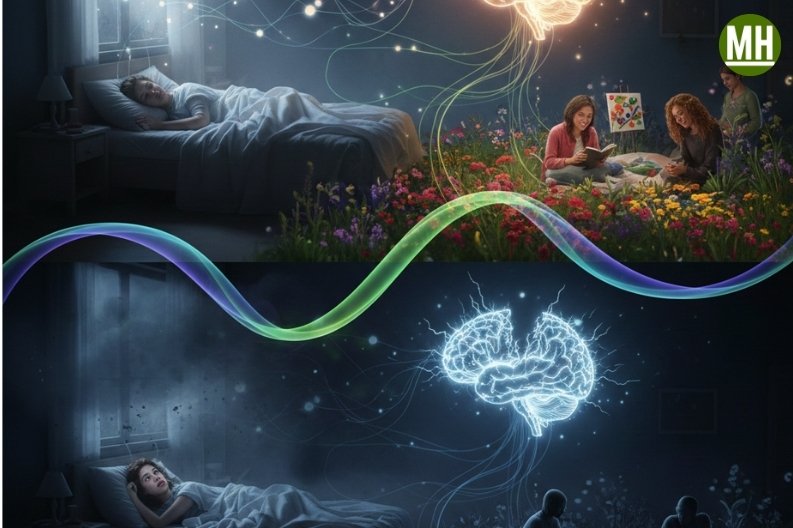
Understanding how sleep affects mental health has become essential in today’s fast-paced world. Moreover, millions of people struggle with both sleep problems and mental health challenges. In fact, research shows these two issues share a deep, two-way connection that impacts our daily lives.
Many Americans faced sleep difficulties even before the pandemic. However, COVID-19 made things worse. Studies found that one in three adults now experiences insomnia symptoms, and nearly 20% meet the criteria for insomnia disorder. Furthermore, these numbers are twice as high as pre-pandemic levels.
Why Sleep Matters for Your Brain?
Sleep works like a charger for your brain. Additionally, just as your phone needs charging, your brain needs sleep to function properly. During sleep, your brain processes daily events and prepares for tomorrow.
When you get enough quality sleep, your brain can:
- Learn and remember information better.
- Make decisions more easily.
- Control emotions effectively.
- Stay focused and alert.
- Solve problems creatively.
The Two-Way Street Between Sleep and Mood
Scientists have discovered that sleep and mental health influence each other. Therefore, poor sleep can trigger mental health problems, and mental health conditions can disrupt sleep. Consequently, this creates a difficult cycle that is hard to break.
Research shows alarming statistics. For instance, people with insomnia are 10 times more likely to develop depression. Similarly, they are 17 times more likely to experience anxiety. Meanwhile, sleep apnea raises these risks about three times higher.
Warning Signs of Sleep Problems
You might have sleep issues if you feel sleepy during these everyday activities:
Daytime ActivityWarning LevelReading or watching TVHighSitting in meetings or classHighRiding in a carVery HighSitting in trafficCritical
Sleep Timing Matters Too
Recent studies reveal something surprising. Therefore, going to bed early and waking early helps mental health, even if you are a night owl. Notably, people who stay up late face higher risks of depression and anxiety, regardless of their natural sleep preferences.
Scientists call this the “mind after midnight” theory. Essentially, your brain makes poor choices after midnight that it would not make at noon. Additionally, after being awake for 16 hours, daily stress affects your decision-making. Furthermore, fewer social connections exist late at night because everyone else sleeps.
Special Challenges for Different People
Teenagers: Puberty shifts their sleep patterns by about two hours. Nevertheless, they need as much sleep as adults. Sadly, up to 80% of teens do not get enough sleep. As a result, teen mental health has worsened significantly since the pandemic.
Shift Workers: About 16% of American workers have irregular schedules. Consequently, they face higher risks of depression and anxiety. For these workers, limiting light exposure after night shifts helps maintain better sleep patterns.
Simple Steps to Improve Your Sleep
Experts recommend these proven strategies:
- Avoid caffeine after early afternoon.
- Skip alcohol before bedtime (it disrupts sleep quality).
- Keep your bedroom comfortable and relaxing.
- Maintain the same sleep schedule every day, even weekends.
- Turn off screens before bed.
- Read a book if you cannot sleep instead of worrying.
When to Seek Professional Help?
If sleep problems last for weeks or months, consider seeing a sleep specialist. Indeed, you might have conditions like sleep apnea, chronic insomnia, or other sleep disorders.
Cognitive Behavioral Therapy (CBT) works as the gold-standard treatment for insomnia. Specifically, it teaches you to:
- Build healthy sleep habits
- Reduce anxiety about sleeping
- Make your bedroom a calm space
- Break the connection between bed and worry
Research proves that better sleep leads to better mental health. Importantly, studies show that bigger improvements in sleep create bigger improvements in mood and anxiety levels.
How Much Sleep Do You Really Need?
Age GroupRecommended HoursTeenagers (13-18 years)8-10 hoursAdults (18-64 years)7-9 hoursOlder Adults (65+ years)7-8 hours
Take Control of Your Sleep Today
Understanding how sleep affects mental health empowers you to make positive changes. Therefore, start with small steps. Meanwhile, be patient with yourself. Additionally, remember that improving your sleep improves your entire life. Furthermore, if problems continue, do not hesitate to seek professional help. Ultimately, you deserve both good sleep and good mental health.
Quality sleep is not a luxury; it is a necessity for mental wellness. Consequently, prioritize your rest, follow proven strategies, and watch your mood and mental clarity improve. Remember, better sleep tonight means a better you tomorrow.
