


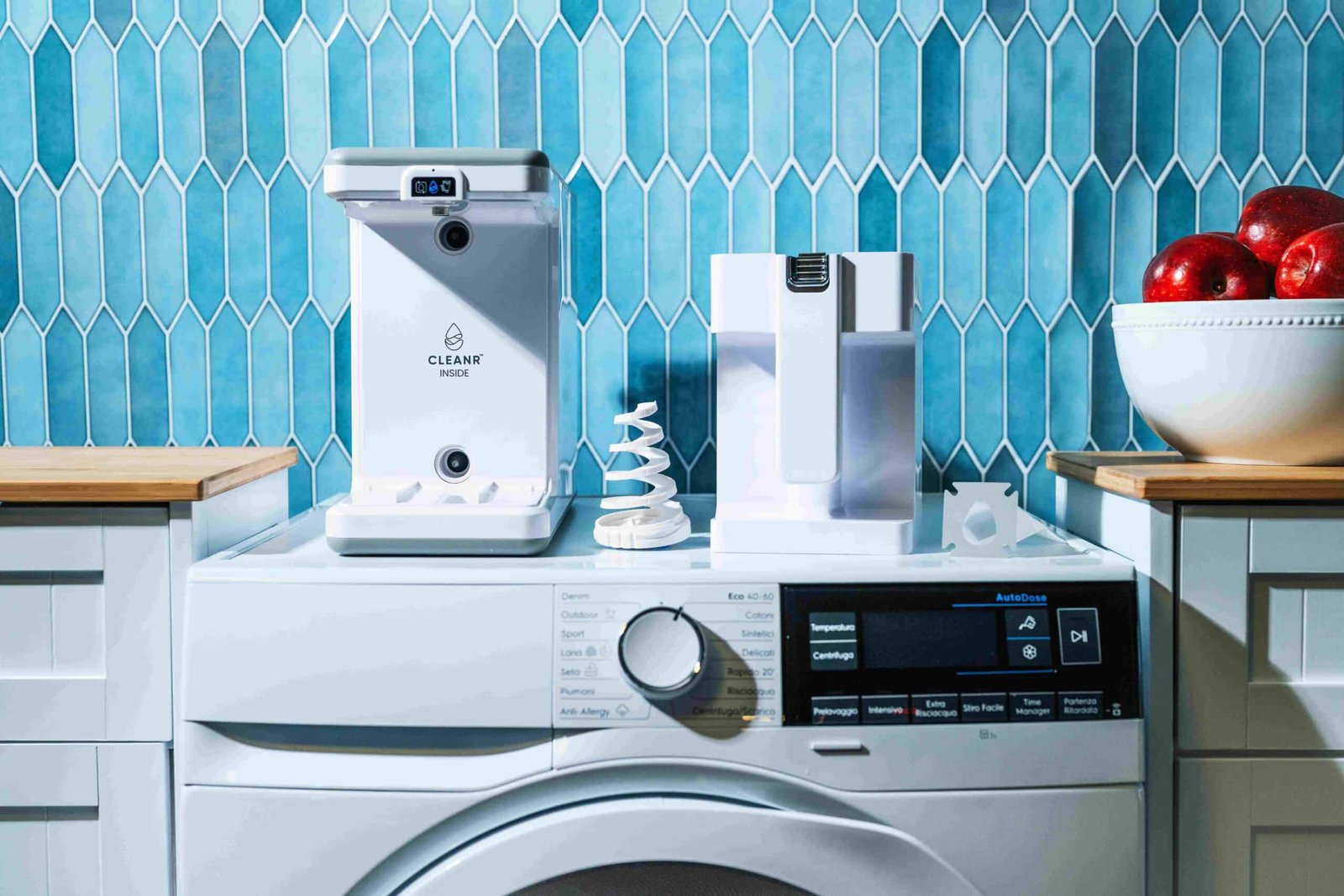
Innovators have taken a cue from nature to help solve one of washday’s dirty little secrets: microplastics leaching into waterways via household laundry.
A single synthetic garment can release up to 1.5m fibres during a standard wash cycle, and studies point to household laundry as the number one source of microplastics in our oceans.
Yet ironically, it was marine life which inspired the solution dreamt up by a trio of young inventors at the Case Western Reserve University in Ohio, US. Dismayed at existing laundry filters’ tendency to clog, they designed an alternative based on the cone-like mouths of manta rays, which capture plankton in swirling eddies. Their patented Vortx filter traps microplastics in tiny vortices and funnels them into a disposable pod – a method they say is 300% more effective than traditional filters.
CEO Max Pennington, alongside co-founders Chip Miller and David Dillman, have since gone onto launch a startup, Cleanr. Their device sits on top of a standard washing machine and sells in the US for $359 (£269).
Although this specific device is expensive for the average household and has its own challenges when it comes to disposal, Pennington’s hope now is that microfibre filters will become mandatory in new washing machines. Six US states, including Pennsylvania, Oregon and California, are already discussing laws.
“Legislators are starting to realise that we really need to cut this off at the source,” Pennington said.
Main image: Cleanr
Be part of the solution
At Positive News, we’re not chasing clicks or profits for media moguls – we’re here to serve you and have a positive social impact. We can’t do this unless enough people like you choose to support our journalism.
Give once from just £1, or join 1,800+ others who contribute an average of £3 or more per month. Together, we can build a healthier form of media – one that focuses on solutions, progress and possibilities, and empowers people to create positive change.
Support Positive News
