

Close Menu

    Subscribe to Updates

    Get the latest creative news from FooBar about art, design and business.

    What's Hot

    Positive psychology can ignite everyday wellbeing: Researchers

    June 10, 2026

    Corporate courage: how cross-sector talent is powering renewables innovation

    June 10, 2026

    Here’s what you need to know

    June 10, 2026
    Facebook X (Twitter) Instagram
    Trending
    • Positive psychology can ignite everyday wellbeing: Researchers
    • Corporate courage: how cross-sector talent is powering renewables innovation
    • Here’s what you need to know
    • Wide range of Mayo events taking place for Infant Mental Health Awareness Week 2026
    • Good News in History, June 10
    • Alarming Trends: California Teen Mental Health Crisis Exposed in New Report
    • Ms. Rachel sings with children of immigrants at Delaney Hall
    • 21 Juneteenth Holiday Coloring Pages [New for 2026]
    Moving MountainsMoving Mountains
    Facebook X (Twitter) Instagram
    Wednesday, June 10
    • Home
    • Mental Health
    • Life Skills
    • Self-Care
    • Well-Being
    • Awareness
    • Inspiration
    • Workers Comp
    • Social Security
      • Injuries
      • Disability Support
      • Community
    Moving MountainsMoving Mountains
    Home » Chico State hosts annual Neurodiversity and Disability Symposium – The Orion
    Awareness

    Chico State hosts annual Neurodiversity and Disability Symposium – The Orion

    TECHBy TECHFebruary 10, 2026No Comments6 Mins Read
    Facebook Twitter Pinterest LinkedIn Tumblr Reddit WhatsApp Email
    Chico State hosts annual Neurodiversity and Disability Symposium – The Orion
    Share
    Facebook Twitter LinkedIn Pinterest WhatsApp Email

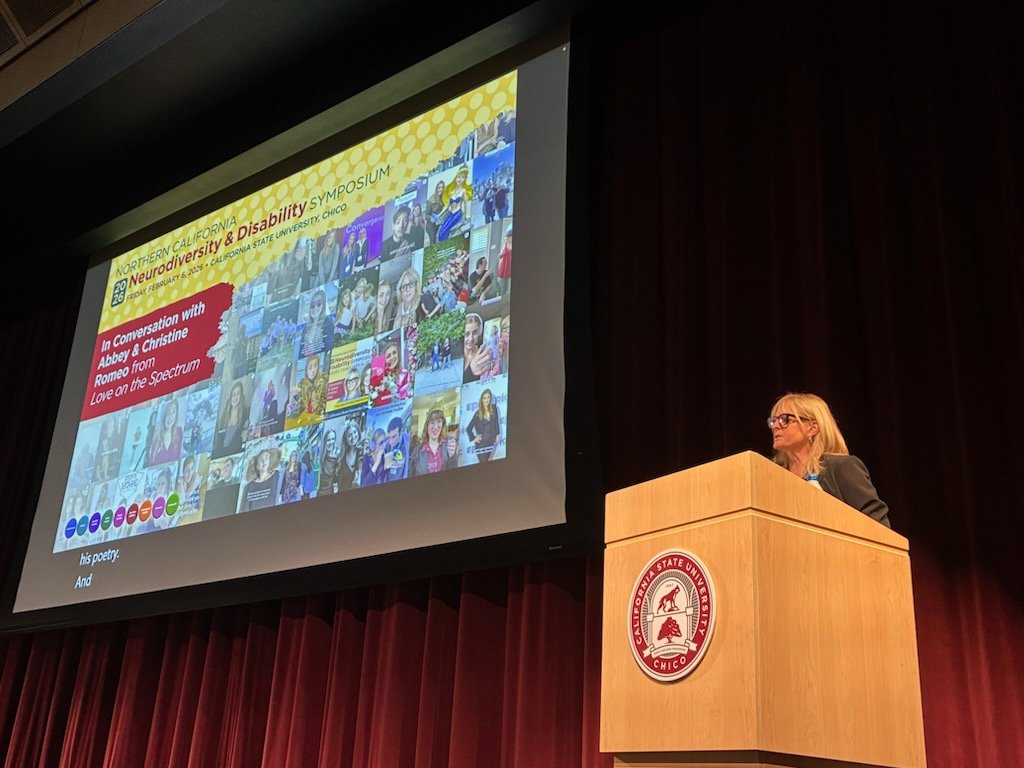
    The Neurodiversity & Disability Symposium at Chico State, a gathering to promote research, education, and resources, was hosted on Thursday in the Bell Memorial Union auditorium. Individuals from various backgrounds spoke to nearly 600 audience members, including family members, individuals on the autism spectrum and other forms of neurodivergence, teachers, counselors, advocates, neuroscientists, students and more. 

    Kaelynn Partlow, a registered behavior technician and participant of Netflix’s “Love on the Spectrum,” discussed how to balance common characteristics of the autism spectrum, such as honesty, directness and preference for routine, with the unspoken “rules” of general neurotypical social interactions, such as small talk, hidden meanings and subtlety. Partlow also presented strategies for neurodivergent self-advocacy, such as requesting advanced notice of changes in routine, breaks, clarification, using headphones, and “not asking, but telling” while being considerate to others. She addressed neurotypicals as well, emphasizing how using clear communication with neurodivergent individuals is crucial to avoid any confusion and conflict. 

    Following Partlow, Emily Raclaw presented a talk titled “From Capable to Thriving: Preparing Neurodivergent Students for College, Career and Life,” directed towards supporting executive functioning skills of neurodivergent students during their first year of college. 

    Dr. Virginia Spielmann presented “Take Your Vitamin D&D: Building Belonging, Bravery, and Therapeutic Role Playing Games.” Her presentation focused on how the role-playing game can help develop neurodivergents’ social skills and emotional intelligence.  

    Christine Romeo spoke about her experience parenting her daughter on the high support needs autism spectrum while relying on herself and other parents in areas where the public education system failed. Growing up, Romeo’s daughter, Abbey, was not succeeding in the general education system and was falling behind in both life and communication skills because her brain operated in a way the system could not help. 

    Romeo argued that instead of letting neurodivergent and autistic children academically “fall through the cracks” by high school, school districts should be equipped to identify their needs starting in elementary school so each student can receive the unique, personalized support they need. She also emphasized the harm of lumping every autism case together, as it can force children into unnecessary support programs or hold them back from what they do need. She briefly touched on applied behavior analysis therapy, a controversial topic in the neurodivergent community due to the many individuals’ negative experiences.

    As Romeo spoke in the auditorium, Dr. Nicole Sparapani gave a concurrent presentation titled “Teacher-Student Interactions as a Targeted Intervention for Neurodivergent Learners in Classrooms.” 

    The symposium also presented Sound & Color, a beautiful, vibrant documentary about synesthesia, a phenomenon in which an individual can see sounds as real colors.

    Following the documentary, Dr. Blake Warner overviewed PEERS, an international Program for the Education and Enrichment of Relational Skills available to assist neurodivergent young adults in social settings, careers, and relationships. Through a mini lesson in handling romantic rejection respectfully and compassionately, audience members received a taste of the resources PEERS offers to young adults navigating the complexities of modern dating. 

    Concurrently, Alycia Anderson from the Student Disability Panel presented a speech titled, “Redefining the College Experience: Student Voices on Disability, Balance, and Belonging.”

    Dr. Hari Srinivasan, in a following virtual presentation titled “Breaking the Either-Or Trap: Why Autism Needs Nuance, Not Extremes,” discussed the dangers of looking at autism through a strict, narrow lens and why it should be viewed more broadly. One of his examples, the medical versus social binary, showed how the medical model can help support health needs but ignore the social challenges accompanying autism, while the social model ignores the biological aspect. 

    While Srinivasan presented, Dr. Dena Gassner from the A.J. Drexel Autism Institute gave a concurrent talk titled, “Navigating and Expediting Access to Social Security for Transition and Late Diagnosed Adults and Transition-aged Youth.”

    Joey Travolta concluded the symposium by speaking about how, through his company, Inclusion Films, and hosting film camps called “Lights, Camera, Friendship on the Spectrum,” he has personally led many eager neurodivergent creatives to opportunities in film production, acting, sets, writing and spreading awareness. 

    He presented the trailer of one of his films, “Carol of the Bells,” which tells the story of a man reuniting with his mother diagnosed with Down syndrome. The film is available on Amazon Prime. After his presentation, he answered questions from aspiring actors and animators in the audience and gave them advice on how to get involved in Inclusion Films and the film industry.

    In addition to autism, ADHD, OCD, ADD and learning disabilities, “neurodivergence is a big umbrella term, right, that includes things like depression, anxiety, PTSD, traumatic brain injuries, epilepsy, MS, [and] Alzheimer’s,” said Shannon Slemrod, a counselor at the WellCat Counseling Center. 

    As diagnosis rates skyrocket, understanding neurodivergence and implementing supportive measures for young adults entering college and the workplace is more imperative than ever. According to Steve Perez’s symposium welcome video, only 38% of neurodiverse students and students with disabilities complete their college degree. 

    The symposium has been coordinated by the Professional and Continuing Education department since 2017. Beginning March 9, it will be offering an asynchronous online Certificate in Neurodiversity, where “participants will explore the history of neurodiversity, common neurotypes (e.g., autism, ADHD, dyslexia, dyspraxia), and the impact of strengths-based versus deficit-based approaches.” 

    According to Heather Quilici, Manager of Professional and Programs and Events, the applicant demographics range from east coasters with doctorates to locals in the community, all with the goal of better accommodating neurodivergent students.

    On campus, students are welcome at the Neurodiversity & Disability Club to build community in a sensory-conscious, judgment-free environment with peers. All students can visit the WellCat Counseling Center to speak with professional state-licensed counselors. 

    Students can also request academic accommodations through the Accessibility Resource Center so they can succeed in their studies no matter the circumstance, whether it is neurodivergence, health problems or personal challenges. The Autism Clinic is another opportunity for students to work with special needs children in gross motor skills. 

    “I think that there’s often the assumption that if you’re neurodivergent, you are lesser than. I think if you explore history or just even look around the world, most of the time, the important things are done by people who are thinking outside the box. That is almost always going to be a neurodivergent brain in some way, shape, or form,” said Dr. Josie Blagrave, Director of the Autism Clinic.

    Elena Mendonsa can be reached at [email protected]

    Annual Chico Disability hosts Neurodiversity Orion state Symposium
    TECH
    • Website

    Related Posts

    Wide range of Mayo events taking place for Infant Mental Health Awareness Week 2026

    June 10, 2026

    Alarming Trends: California Teen Mental Health Crisis Exposed in New Report

    June 10, 2026

    Experts and stakeholders aim to improve mental health awareness

    June 9, 2026
    Leave A Reply Cancel Reply

    Don't Miss
    Well-Being

    Positive psychology can ignite everyday wellbeing: Researchers

    By TECHJune 10, 20260

    Small little things in everyday life promote human wellbeing. A couple of researchers from Weill Cornell Medicine (WCM-Q) have highlighted the importance of positive psychology in nurturing people’s wellbeing and how small little things in everyday life can help promote it.They suggest that it is important to promote positive psychology to navigate various challenges, including busy schedules, constant change, and global uncertainty in the current times. According to Dr Amit Abraham and Dr Sohaila Cheema, researchers from WCM-Q, positive psychology is often described as the science of understanding what enables individuals and communities to flourish. “Rather than focusing on what drains us, positive psychology invites us to focus on what sustains and strengthens us: our capacity for connection, meaning, joy, and growth. It offers a hopeful lens through which we can support our mental health and overall quality of life, even during challenging times,” said the researchers in a recent article. They have highlighted that the benefits of positive psychology extend well beyond simply feeling happier in the moment, and positive emotions and strong social relationships are closely linked to creativity, problem-solving, and innovation. When people feel optimistic and supported, they are more likely to stay motivated, build trust with others, and experience greater satisfaction and engagement in their work and daily lives. “Positive psychology is not about being happy all the time. It is about developing the skills and habits that support emotional and mental wellbeing through life’s ups and downs. By cultivating positive emotions, nurturing meaningful relationships, and strengthening a sense of purpose, positive psychology enhances not only how we feel, but how we function, helping individuals and communities thrive in sustainable, lasting ways,” they explain. Human flourishing refers to a state of wellbeing that emphasises positive emotions, supportive relationships, resilience, a sense of purpose, and personal accomplishment. “From this perspective, wellbeing is not the absence of difficulty, but the presence of inner resources that help us navigate life with greater balance and confidence. At its core, positive psychology encourages us to notice strengths, cultivate gratitude, and recognise moments of meaning, no matter how small,” pointed out the professors. They also note that the benefits of positive psychology extend well beyond simply feeling happier in the moment, and positive emotions and strong social relationships are closely linked to creativity, problem-solving, and innovation. When people feel optimistic and supported, they are more likely to stay motivated, build trust with others, and experience greater satisfaction and engagement in their work and daily lives. “Adopting the principles of positive psychology can also influence our physical wellbeing. Individuals who cultivate positivity, purpose, and self-awareness are more inclined to engage in healthy behaviours such as nourishing nutrition, regular physical activity, and restorative sleep. Over time, these habits reinforce both mental and physical resilience,” highlighted the officials. The researchers have also shared tips for incorporating positive psychology into daily routines. They include: writing down thoughts and feelings; engaging in activities or hobbies that balance challenge and enjoyment; practising kindness; counting blessings, sharing a laugh, celebrating others, and nurturing relationships with others. 

    Corporate courage: how cross-sector talent is powering renewables innovation

    June 10, 2026

    Here’s what you need to know

    June 10, 2026

    Wide range of Mayo events taking place for Infant Mental Health Awareness Week 2026

    June 10, 2026
    Stay In Touch
    • Facebook
    • Twitter
    • Pinterest
    • Instagram
    • YouTube
    • Vimeo
    Our Picks

    Positive psychology can ignite everyday wellbeing: Researchers

    June 10, 2026

    Corporate courage: how cross-sector talent is powering renewables innovation

    June 10, 2026

    Here’s what you need to know

    June 10, 2026

    Wide range of Mayo events taking place for Infant Mental Health Awareness Week 2026

    June 10, 2026

    Subscribe to Updates

    Get the latest creative news from SmartMag about art & design.

    About Us

    At Moving Mountains, we believe that every individual has strength, value, and purpose—regardless of mental health challenges or physical disabilities. This platform was created to inspire hope, promote understanding, and empower people to live meaningful and confident lives beyond limitations.

    Latest Post

    Positive psychology can ignite everyday wellbeing: Researchers

    June 10, 2026

    Corporate courage: how cross-sector talent is powering renewables innovation

    June 10, 2026

    Here’s what you need to know

    June 10, 2026
    Recent Posts
    • Positive psychology can ignite everyday wellbeing: Researchers
    • Corporate courage: how cross-sector talent is powering renewables innovation
    • Here’s what you need to know
    • Wide range of Mayo events taking place for Infant Mental Health Awareness Week 2026
    • Good News in History, June 10
    Facebook X (Twitter) Instagram Pinterest
    • About Us
    • Contact Us
    • Privacy Policy
    • Terms & Conditions
    • Disclaimer
    © 2026 movingmountains. Designed by Pro.

    Type above and press Enter to search. Press Esc to cancel.