


The kitchen cleaning routine actually starts outside the kitchen: the first step is to do a sweep of the living room, dining room and other spaces in the home where people bring – and leave – dishes, utensils and glassware. (Water glasses in bedrooms seem to proliferate in the night!) Do a quick pass through the house to “bus” any dirty dishes that have strayed into rooms where they do not belong, and bring them into the kitchen. A bussing tub or something similar can make the job a cinch, especially for those who live in a large home or a household with many people. Place all dishes in the sink.
2. Put away food (2-5 minutes)
Wrap leftovers or transfer them to food storage containers, then put snacks, pantry supplies, spices, etc. back in their places. Add any resulting dirty dishes to your dish pile.
3. Do a cursory fridge and pantry check (less than one minute)
As you put food away, turn an eye toward any trouble spots that may be brewing in the refrigerator; wipe up spills, and check for old food that needs to be thrown out. This is also the time to note anything you’re out of, in both the fridge and the pantry, and add it to your running grocery list, if you keep one.
4. Load the dishwasher (2-5 minutes)
Make a triumphant return to the sink, and load the dishwasher if you have one.
5. Handwash dishes (2-5 minutes)
Handwash items – like knives and wooden cutting boards – that cannot go in the dishwasher and/or wash the dishes if you live a dishwasher-free existence. Dry and put the dishes away; this is an optional but small extra step that will make a big difference in how the kitchen looks come morning.
6. Wipe counters, cabinets and fridge handle (1 minute)
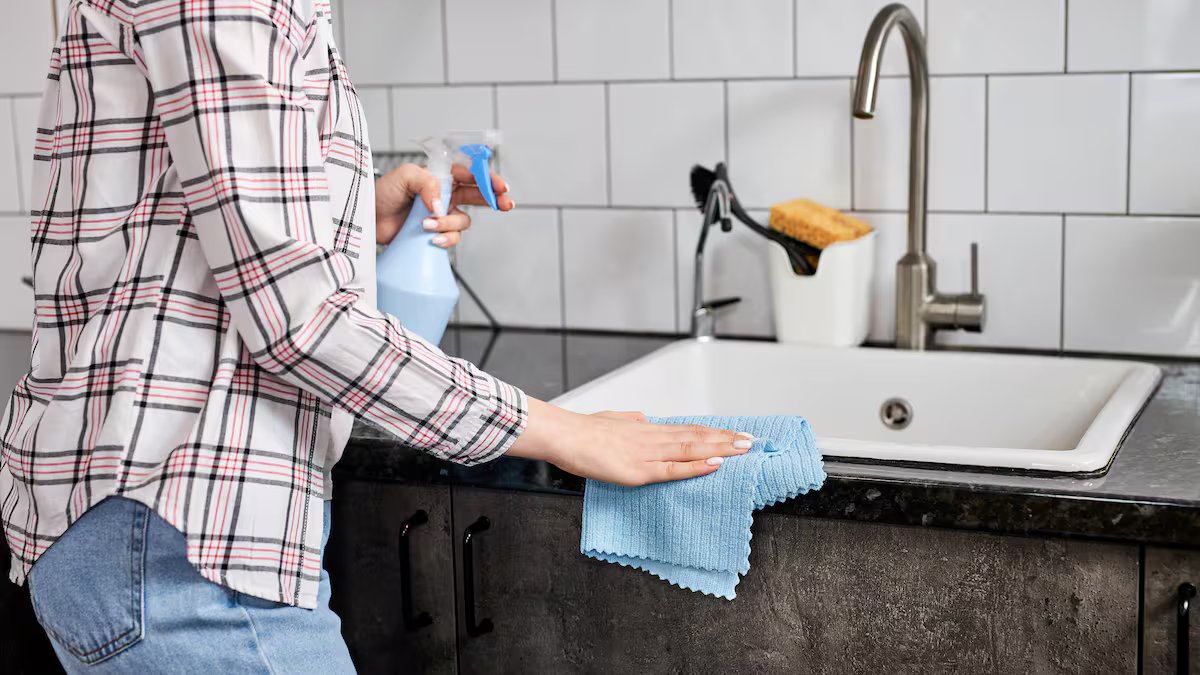
Use an all-purpose cleaner suited to the materials in your kitchen – nothing fancy, just apply a small amount of cleaner to a microfibre cloth or paper towel and give those surfaces a quick pass. Doing so will keep build-up from forming and turning into a stubborn, sticky mess and will help keep high-touch surfaces and those used for food preparation free of germs and bacteria that can lead to foodborne illness.
7. Wipe stovetop, backsplash and vent hood (1 minute)
If you cooked a meal using the stove today, or you are performing this routine as part of weekly cleaning, perform the same wipe down on the stovetop, backsplash and vent hood. Even a cursory wipe will lift the layer of oil that settles on kitchen surfaces during cooking, as well as any spills and splatters, so they don’t become baked-on over time.
8. Quick clean the floor (optional, ~five minutes)
Kitchen floors are considered a “high-traffic” area in the home, requiring routine cleaning. This may look like sweeping up crumbs at night or running the robot vacuum at the end of the day. A flat microfibre mop (I use this little friend for everything) that can be used for dry or damp mopping, as needed, is another excellent tool for keeping kitchen floors clean.
9. Run disposal and dishwasher (1 minute)
Turn on the hot water, and wipe out the sink using a small amount of dish soap or all-purpose cleaner, if needed. Then, turn the water to cold and run the garbage disposal. This small act of preventive maintenance will go a long way in forestalling a plumbing disaster. Finally, turn the water back to hot before starting the dishwasher; dishwashers rely on hot water and steam to work efficiently, so running the hot water gives the machine a head start.
10. Put out fresh dish cloths (<1 minute)
The last step ends where the flow began – outside the kitchen. Round up any dirty dish towels, aprons, oven mitts and/or cleaning cloths that need to be laundered. Put out a fresh dish towel for tomorrow. Then bring the dirties to your laundry hamper or bag, and toss ‘em in.
