


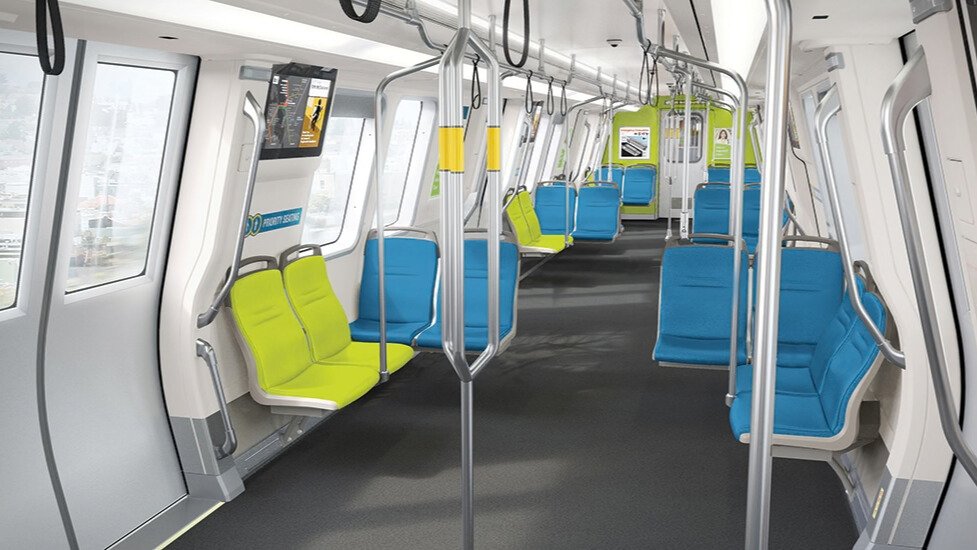
Commuting on BART to J.’s office, I cling to the dirty railing, praying I don’t faint, my heart pounding painfully hard as if I’m running a marathon instead of standing still. I always hope I’ll get a seat, but I can’t count on it. Other passengers who look at me don’t see how I’m struggling to stay upright. When I get off the train, it’s always a relief. A 25-minute ride between the East Bay and San Francisco is something most 30-year-olds take for granted. I do not.
You might notice a person in a wheelchair or with a cane, but you’d never notice someone like me with a so-called “invisible” disability. That’s not your fault. It’s a product of a world that doesn’t value disability awareness and inclusion.
Coping with invisible illnesses brings a unique set of challenges. Looking at J.’s archive, I was struck by the story of Eric Burnstein, a young man who suffered from a mysterious, invisible illness and tragically passed away in 2021. “Eric used to say, ‘I wish I had cancer instead, because then at least I would be getting the understanding, the empathy, the attention and maybe the kindness’” from doctors, Eric’s father, Marc Burnstein, told J. in 2023.
February marks Jewish Disability Awareness and Inclusion Month, or JDAIM. It’s an opportunity to consider how we welcome disabled Jews into Jewish spaces. For those of us living with disability, it’s always on our minds.
I’m lucky here at J., where my colleagues work with my disability instead of telling me to “tough it out,” like I’ve heard at previous jobs. My mind is sharp even though my body is sick. When I faint, it’s no big deal to stay home from the office. That’s a far cry from my time as a teacher, when I was told to “push through” no matter what.
Eric Burnstein’s mother recounted how her son experienced that invisibility, too. “He would say … ‘Tell how I was treated as somebody with a chronic, mysterious illness,’” she told J. in 2023. “He was young, and he did have a hard time advocating for himself.”
Some people don’t give an ounce of understanding or kindness. I find they may not even believe me. If they can’t see my sickly heart like they can see someone else’s wheelchair, my disability doesn’t exist to them.
That’s why JDAIM is so important. No one should suffer in silence. We deserve to be included, accepted and even celebrated, no matter our disability status.
JDAIM isn’t the only effort to bring Judaism and disability advocacy together. Jewish organizations around the Bay Area are doing the hard work to tear down barriers to true inclusion. Eric’s family created the Eric Burnstein Foundation Fund in his memory, which provides grants to nonprofits that support people with chronic illnesses and invisible disabilities. Jewish Silicon Valley found in 2024 that human services, including disability and mental health support, are a significant area of need. Jewish Family and Children’s Services operates independent residential communities in San Francisco, including the Gary Shupin Independent Living Community, an “urban kibbutz” for adults with developmental disabilities.
These initiatives by local Jewish organizations to support disabled Jews in the Bay Area give me hope as we start JDAIM. It can’t just be the responsibility of those with disabilities to do all the work, after all. It has to be a team effort: disabled Jews like me celebrating our own unique strengths, and non-disabled folks shedding their own biases, ready to welcome us into the community.
Do you know of other resources available to people with disabilities in Northern California Jewish spaces? Please share them with us at editors@jweekly.com.
Related
J. covers our community better than any other source and provides news you can’t find elsewhere. Support local Jewish journalism and give to J. today. Your donation will help J. survive and thrive!
