


The Brief
• Proper nutrition fuels children’s development, learning ability and physical growth, contributing to overall family happiness
• Start meal planning with foods your family already enjoys, then add colorful fruits and vegetables to make plates more appealing
• Getting kids involved in cooking and eating together as a family at least once per week creates stronger connections and healthier eating habits
MADISON, Wis. — When it comes to keeping children healthy, the foundation often begins at the dinner table, where the foods families choose become the fuel needed for growth, learning and overall well-being.
This week’s tip: Healthy meals fuel happy families!
Megan Timm, SSM Health director of Community Health, emphasizes that healthy eating extends far beyond basic nutrition into every aspect of child development and family dynamics.
“When we are giving the proper nutrition and healthy food to our kids, it’s not just for general happiness, of course. It’s for development. It’s for proper learning. It’s for those growing bodies that are maybe starting sports,” Timm said. “And it really ties into our sleep, our healthy eating, our exercise.”
Building balanced meals simply
For busy parents, creating nutritious meals doesn’t need to be overwhelming. Timm recommends starting with familiar foods rather than dramatic overhauls.
“Start with what your family likes,” she advised. “Starting your building blocks off with that” creates a foundation for success.
Color plays a crucial role in making healthy foods appealing to children. Timm suggests incorporating vibrant fruits like pineapple, strawberries and watermelon alongside less exciting vegetables.
“Kids love color,” she said. “The color really does help make it more appealing to bring them to the table, at least.”
Getting kids involved
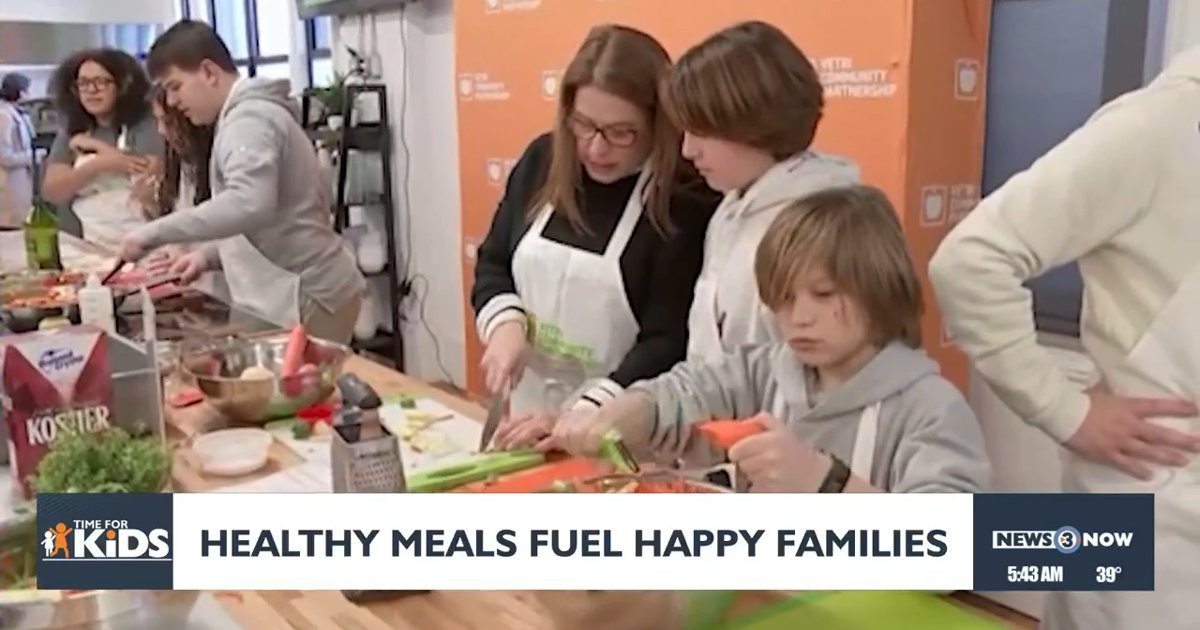
For families looking to improve mealtime habits, Timm recommends getting children into the kitchen to create investment in the final product.
“Having them help prep some things, helps them want to eat those things as well,” she said.
The collaborative approach works best when families select, prepare and enjoy meals together each week away from screens to focus on connection and conversation.
“Pick one meal that your family has all decided on, cook it together, eat it together, talk about it, see what you liked, what you didn’t like, how might you change it next time,” Timm suggested.
Experimenting with seasonings like garlic instead of just salt can transform routine meals into exciting culinary adventures.
Creating family connections
Timm’s own family demonstrates these principles through taco nights, where homemade tortillas become a hands-on activity. Children press out tortillas while parents prepare proteins, including beans for added nutrition.
“My kiddos press them out, we cook them. We have different proteins with it. I can sneak beans into some things there for extra protein. And then of course, the kids get to assemble it themselves,” she said. “So it’s a pretty hands-on for our family, and it’s a crowd favorite.”
The emphasis on family meals creates lasting benefits, establishing patterns children carry into adulthood while supporting both physical health and emotional well-being. When families prioritize nutrition and togetherness, they create environments where children learn to appreciate healthy foods and understand the value of shared meals.
COPYRIGHT 2025 BY CHANNEL 3000. ALL RIGHTS RESERVED. THIS MATERIAL MAY NOT BE PUBLISHED, BROADCAST, REWRITTEN OR REDISTRIBUTED.
