


University of New England’s Arthur P. Girard Marine Science Center
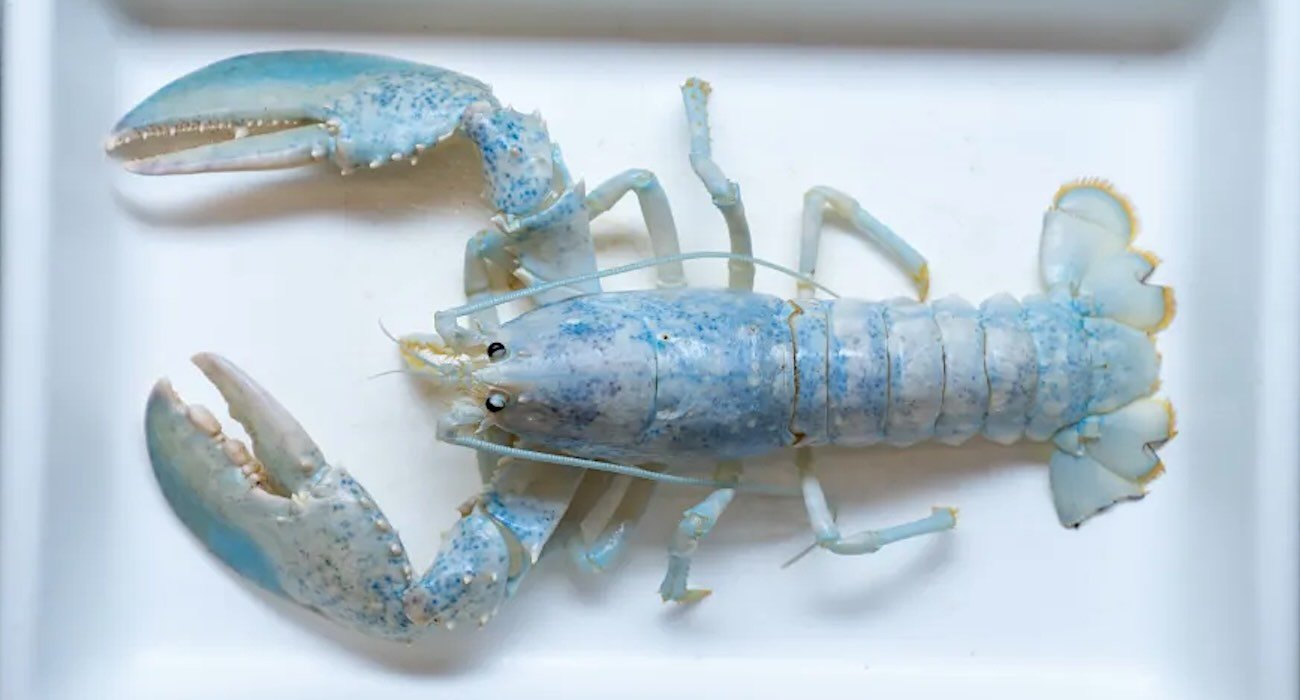
A ‘ghost’ lobster so rare that the odds of finding one are 1 in 100 million is going to school, at its new home in Maine’s Marine Science Center—arriving just in time for Halloween.
The rare white crustacean was welcomed to the University of New England after being donated by the Maine State Aquarium in Boothbay.
‘Casper’ the lobster will be donating a bit of its DNA to the school’s first-of-its-kind study into the genetic causes of rare lobster coloration—joining a collection that has included orange, blue, yellow, purple, calico, and the crazy split-colored lobsters, like the one that was found in April.
“The research program uses noninvasive methods to collect and analyze genetic material without harming the lobsters, so Casper will be studied without injury,” promised the school in its media release.
Led by Markus Frederich, Ph.D., professor of marine sciences, researchers are working to uncover the molecular mechanisms that cause some American lobsters to develop dramatically different shell colors from the species’ typical mottled brown appearance.
Casper arrived at University of New England’s Arthur P. Girard Marine Science Center (released)
UNE launched the effort in 2024 after several rare-colored lobsters arrived at the Girard Marine Science Center, including Peaches, an orange lobster estimated to occur in just 1 in 30 million animals.
Peaches later produced offspring ranging in color from typical brown to orange and blue, giving UNE researchers an unusual opportunity to study how rare coloration may be inherited.
Researchers subsequently collected genetic samples from the juvenile lobsters and are analyzing more than 15,000 genes as they work to identify differences associated with shell color.
Casper’s donation from the Maine State Aquarium was coordinated by UNE alum Rue Motulsky, whose work on the DNA project as a student has led to new insights into lobster coloration.
Casper’s arrival now gives the research team an opportunity to examine the rarest coloration in the spectrum.
CHECK OUT THIS ONE: Red Lobster Employee Saves a Rare Blue Lobster And Restaurant Finds a Zoo To Adopt It
“Animals like Casper capture people’s attention because they are so rare and beautiful,” said Frederich, director of the Invertebrate Physiology Lab at UNE. “But, for us, they also provide an amazing opportunity to ask fundamental biological questions.”
SHARE THE WONDERS OF NATURE With Friends on Social Media…
