

Close Menu

    Subscribe to Updates

    Get the latest creative news from FooBar about art, design and business.

    What's Hot

    San Antonio NICU doctor honors son by raising awareness about suicide prevention

    September 30, 2026

    October Monthly Motivational Message – Breaking Comparison Cycles

    September 30, 2026

    The Daily Herald – Back-to-school campaign: eat smart, sleep well, move more

    September 30, 2026
    Facebook X (Twitter) Instagram
    Trending
    • San Antonio NICU doctor honors son by raising awareness about suicide prevention
    • October Monthly Motivational Message – Breaking Comparison Cycles
    • The Daily Herald – Back-to-school campaign: eat smart, sleep well, move more
    • How your daily drink choice may be affecting your mental health
    • Google celebrates Fat Bear Week with special animation
    • New Gobi Desert Fossil Rewrites a Chapter of Mammal Evolution
    • A Complete Guide to Goal Setting
    • The Founder’s Guide to Term Life Insurance: Protecting Your Legacy
    Moving MountainsMoving Mountains
    Facebook X (Twitter) Instagram
    Wednesday, September 30
    • Home
    • Mental Health
    • Life Skills
    • Self-Care
    • Well-Being
    • Awareness
    • Inspiration
    • Workers Comp
    • Social Security
      • Injuries
      • Disability Support
      • Community
    Moving MountainsMoving Mountains
    Home » New Gobi Desert Fossil Rewrites a Chapter of Mammal Evolution
    Inspiration

    New Gobi Desert Fossil Rewrites a Chapter of Mammal Evolution

    TECHBy TECHSeptember 30, 2026No Comments4 Mins Read
    Facebook Twitter Pinterest LinkedIn Tumblr Reddit WhatsApp Email
    New Gobi Desert Fossil Rewrites a Chapter of Mammal Evolution
    Share
    Facebook Twitter LinkedIn Pinterest WhatsApp Email

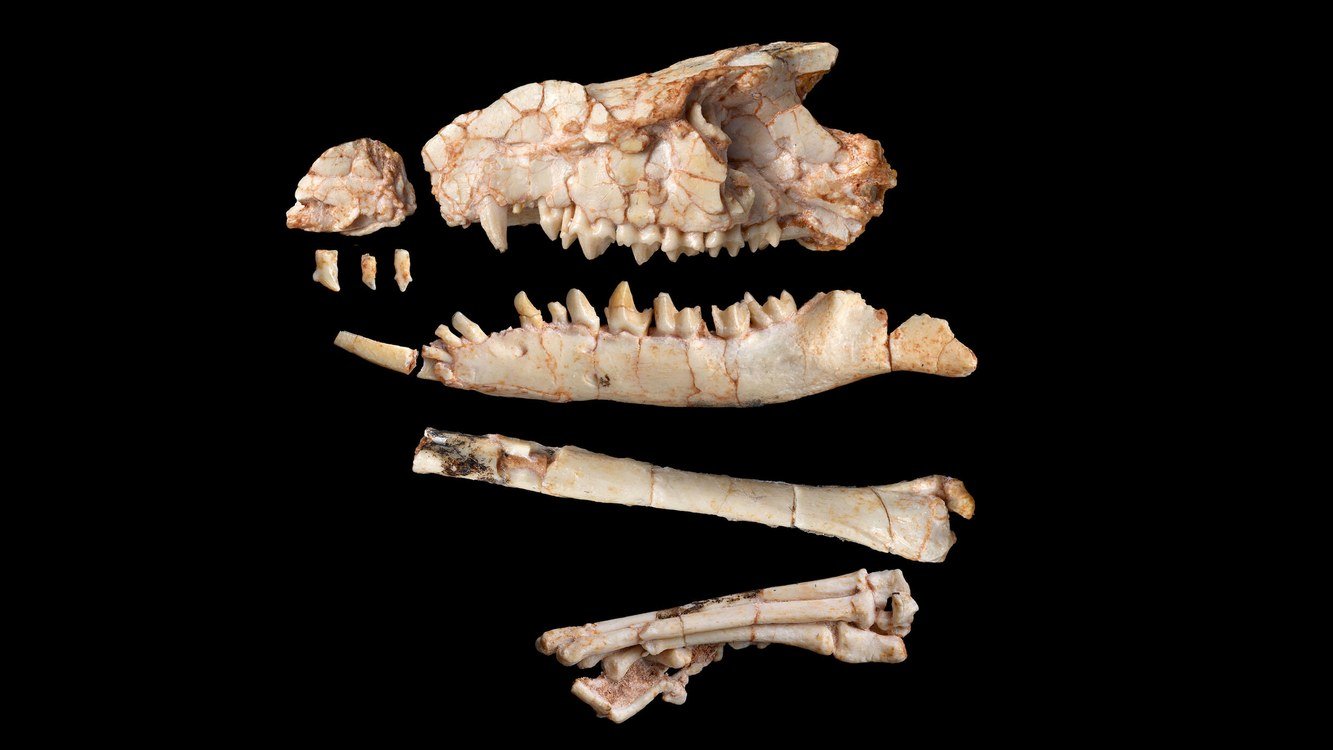
    Tamirkhan balcarceli (skull and partial hindlimb) – credit, Nicole Wong / © AMNH

    A remarkably well-preserved fossil from Mongolia’s Gobi Desert is reshaping scientists’ understanding of mammal evolution during the age of dinosaurs.

    The new species, described today in the journal Nature, reveals that a group of extinct mammals known as zhelestids were not close relatives of modern placental mammals as many researchers thought for decades. Instead, they belonged to an entirely different branch of early mammals, overturning a longstanding interpretation based primarily on fossil teeth.

    Scientists from the American Museum of Natural History, Stony Brook University, University of Arizona, and Arcadia University contributed to the work.

    Zhelestids have been known from isolated teeth and fragmentary fossils for nearly 40 years. Their distinctive teeth, which are more specialized for eating plants than the sharp, insect-eating teeth found in many Cretaceous mammals, led paleontologists to suggest that zhelestids represented an unknown group of hoofed mammals—a suggestion that would prove to be rather far from the mark.

    Researchers have debated whether these animals were examples of Cretaceous placental mammals—the group that today includes humans and most living mammals—or a separate lineage that evolved similar features independently. The idea that placental mammals existed during the Cretaceous is supported by molecular clock studies, which suggest that placentals originated long before the end of the Cretaceous, the final era in the age of the dinosaurs.

    “This discovery illustrates why fieldwork remains indispensable to understanding life’s history,” said the study’s lead author Andres Giallombardo, who found the specimen as a graduate student on an expedition sponsored by the museum in 2004.

    “It was the thrill of a career to find a new species so completely preserved that also solves a longstanding scientific problem, and a reminder that the Gobi Desert, which is well known for fossils, continues to change science.”

    Discovered in the eastern Gobi Desert, Tamirkhan balcarceli is the most complete zhelestid found yet and solves the mystery of what this group looked like. Although Tamirkhan possesses the low, rounded teeth characteristic of zhelestids, it also has long, ever-growing incisors and a suite of distinctive skull features found in a group of small, shrew-like insectivore mammals called zalambdalestoids.

    An impression of Zalambdalestes – credit, Nobu Tamura CC 4.0. BY-SA

    “Tamirkhan’s hind legs are long and slender with distinctive ankles, traits that are unmistakably zalambdalestoid,” said study author Shawn Zack, a paleontologist at the University of Arizona.

    Based on these findings, the researchers conclude that zhelestids were not placental mammals or particularly placental-like, but a subset of the zalambdalestoid group. The discovery also shows that the mammal species in the Cretaceous were not as anatomically diverse as might have been anticipated based on the teeth alone. Their distinctive rounded teeth—common to plant-eating mammals—is likely a case of convergent evolution, where unrelated animals evolve similar traits because they adapt to similar lifestyles.

    “More than 200 years ago, French naturalist Georges Cuvier famously argued that a single tooth could allow scientists to predict the anatomy of an entire animal,” said study coauthor Maureen O’Leary, a paleontologist at Stony Brook University and research associate at the Museum. “While teeth remain among the most informative fossils available, this work demonstrates that teeth cannot always tell us how the whole animal looked.”

    Measuring between 6-7 inches from head to tail, Tamirkhan had elongated hind limbs that gave it an almost rabbit-like appearance. Paleontologists have sometimes informally referred to zhelestids as “Cretaceous rabbits,” because they were rabbit mimics despite their distant relationship to modern rabbits.

    The study’s evolutionary conclusions were made possible through a comprehensive mammalian phylogenetic research platform called MorphoBank. First published in 2013, the database has expanded over more than a decade to include an ever-growing number of key fossil species, providing the most comprehensive framework yet assembled for analyzing early mammal relationships.

    SHARE This Story And Let Your Friends Dig Their Teeth Into Some Prehistoric News…

    Chapter Desert Evolution Fossil Gobi Mammal rewrites
    TECH
    • Website

    Related Posts

    October Monthly Motivational Message – Breaking Comparison Cycles

    September 30, 2026

    The Founder’s Guide to Term Life Insurance: Protecting Your Legacy

    September 30, 2026

    Coastal Golf Course Turned into Vital Wetland Habitat for Seabirds

    September 30, 2026
    Leave A Reply Cancel Reply

    Don't Miss
    Awareness

    San Antonio NICU doctor honors son by raising awareness about suicide prevention

    By TECHSeptember 30, 20260

    SAN ANTONIO – A San Antonio doctor who spends her days helping fragile newborns survive…

    October Monthly Motivational Message – Breaking Comparison Cycles

    September 30, 2026

    The Daily Herald – Back-to-school campaign: eat smart, sleep well, move more

    September 30, 2026

    How your daily drink choice may be affecting your mental health

    September 30, 2026
    Stay In Touch
    • Facebook
    • Twitter
    • Pinterest
    • Instagram
    • YouTube
    • Vimeo
    Our Picks

    San Antonio NICU doctor honors son by raising awareness about suicide prevention

    September 30, 2026

    October Monthly Motivational Message – Breaking Comparison Cycles

    September 30, 2026

    The Daily Herald – Back-to-school campaign: eat smart, sleep well, move more

    September 30, 2026

    How your daily drink choice may be affecting your mental health

    September 30, 2026

    Subscribe to Updates

    Get the latest creative news from SmartMag about art & design.

    About Us

    At Moving Mountains, we believe that every individual has strength, value, and purpose—regardless of mental health challenges or physical disabilities. This platform was created to inspire hope, promote understanding, and empower people to live meaningful and confident lives beyond limitations.

    Latest Post

    San Antonio NICU doctor honors son by raising awareness about suicide prevention

    September 30, 2026

    October Monthly Motivational Message – Breaking Comparison Cycles

    September 30, 2026

    The Daily Herald – Back-to-school campaign: eat smart, sleep well, move more

    September 30, 2026
    Recent Posts
    • San Antonio NICU doctor honors son by raising awareness about suicide prevention
    • October Monthly Motivational Message – Breaking Comparison Cycles
    • The Daily Herald – Back-to-school campaign: eat smart, sleep well, move more
    • How your daily drink choice may be affecting your mental health
    • Google celebrates Fat Bear Week with special animation
    Facebook X (Twitter) Instagram Pinterest
    • About Us
    • Contact Us
    • Privacy Policy
    • Terms & Conditions
    • Disclaimer
    © 2026 movingmountains. Designed by Pro.

    Type above and press Enter to search. Press Esc to cancel.