


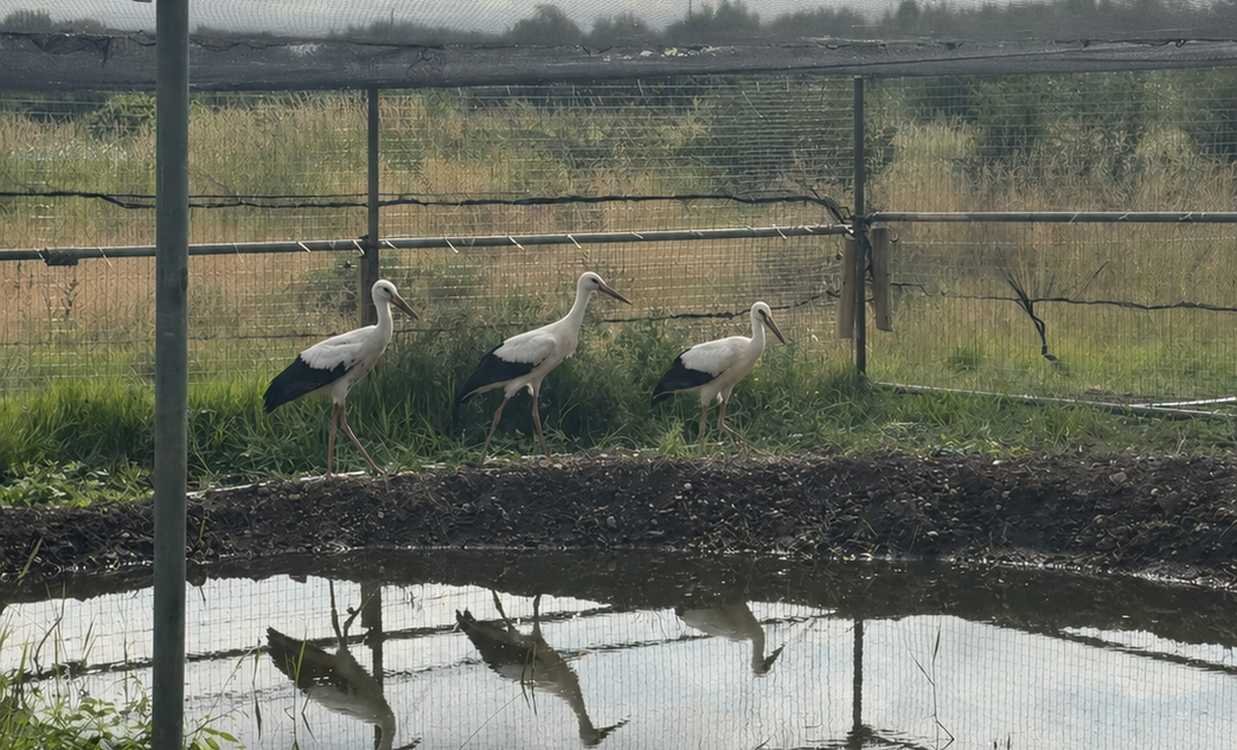
– credit, Derbyshire Wildlife Trust
The last time a white stork nested in Derbyshire in the English Midlands region, the country’s King Henry VI was declaring war against the Duchy of Brittany and the Kingdom of France, while an independent Venice won a war against Serbia at a city that’s now in Albania.
Indeed, the large white wings of the bringer of babies have been absent for 600 years, and have now arrived as part of an effort to establish a healthy, wild, breeding colony on the same river where British authorities recently reintroduced the beaver.
The beaver had been missing even longer—going back to the era of the Magna Carta, or 800 years ago.
It’s fair to say the return of both animals has been truly historic.
“From this nature-rich enclosure to the possibility of a future wild population, every step will help strengthen wetland habitats, enhance biodiversity, and inspire people of all ages to reconnect with nature on their doorstep,” said Katie Last, Living Landscape Officer at Derbyshire Wildlife Trust.
The Derbyshire Wildlife Trust manages the Willington Wetlands site where the storks are to be released. They will first undergo an acclimation period during which they will familiarize themselves with the wetlands from the safety of a predator-proof enclosure designed by Celtic Rewilding, a charity that runs a similar organization in nearby Staffordshire, where the storks arrived from.
£300,000 from Veolia Environmental Trust was put up for the translocation, and the site was chosen along the River Trent where wild storks were recorded flying over recently. The hope is that the sighting of the settled birds will encourage the wild ones to settle down and breed.
REBUILIDING ENGLAND’S BIRDS:
“This project offers a rare opportunity to facilitate the return of a key missing species,” added Harvey Tweats, Director of Celtic Rewilding, in a statement.
“The Trent Valley is uniquely placed to support white stork recovery in the Midlands, combining extensive wetland habitats with restoration opportunities in former gravel pits. Historical evidence, including archaeological finds and place names around the Humber, also points to the species’ former presence.”
FLAP Your Wings Over To Social Media And Share This Story…
